


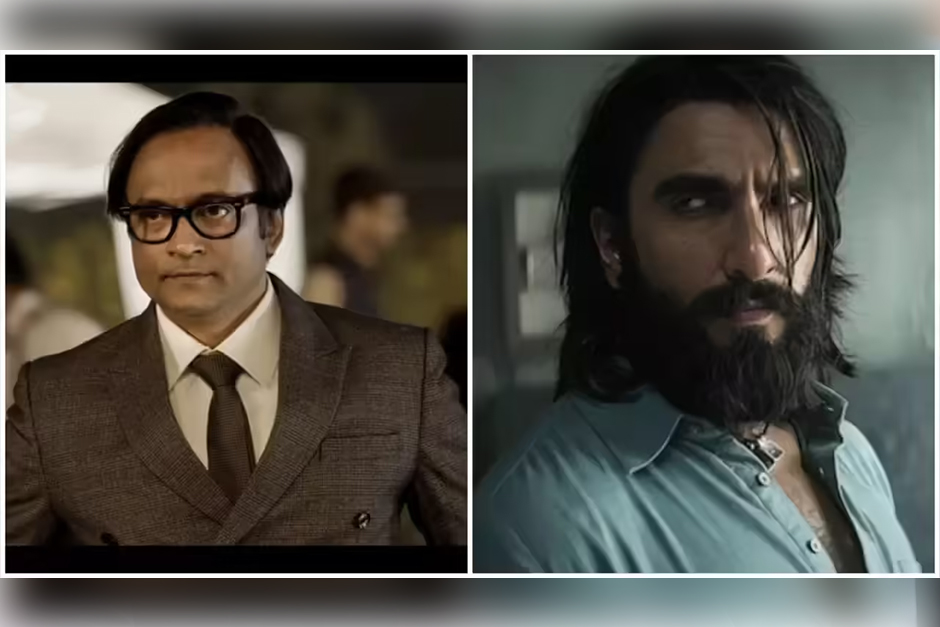
Veteran actor and keen observer of Indian cinema, Prashant Narayanan, recently found himself at the centre of a nuanced discussion regarding one of Bollywood’s most dynamic stars, Ranveer Singh. Narayanan, known for his impactful performances and candid insights, had previously made remarks about Singh’s portrayal in the film Dhurandhar, which garnered significant attention. Now, in a recent interaction, Narayanan has taken the opportunity to clarify and elaborate on his earlier comments, painting a more complete picture of his critical appreciation for Singh’s artistic courage while subtly reiterating his observation about the actor’s on-screen presence in the specific role.
Reclarifying the Nuance of Performance
The initial buzz stemmed from Narayanan’s observation that Ranveer Singh, while undoubtedly a formidable talent, might have been “too eye-catching” in his role in Dhurandhar. These comments sparked a conversation among film enthusiasts and industry insiders about the fine line between a compelling performance and one that potentially overshadows the narrative or other characters. Addressing these discussions, Narayanan expressed his admiration for Singh’s fearlessness in embracing diverse and often unconventional characters.
“Ranveer Singh is an extremely brave actor,” Narayanan stated emphatically, “He commits fully to every character he takes on, often pushing boundaries and taking significant risks with his roles and public image. That level of dedication and willingness to experiment is truly commendable and essential for the evolution of our cinema.” This statement serves to underscore Narayanan’s deep respect for Singh’s artistic integrity and his status as one of the most exciting performers of his generation in the Hindi film industry.
The ‘Eye-Catching’ Aspect in Dhurandhar
While praising Singh’s bravery, Narayanan returned to his original point concerning Dhurandhar, offering a deeper insight into what he meant by “too eye-catching.” His clarification was less a criticism of Singh’s acting prowess and more an observation on the overall impact of his performance within the film’s context.
According to Narayanan, an actor’s job sometimes involves a delicate balance: to embody a character so thoroughly that they become one with the role, allowing the story to unfold naturally. In some instances, a particularly charismatic or energetic performance, while brilliant in its own right, can inadvertently draw an excessive amount of focus, potentially altering the intended balance of the narrative. Narayanan’s remarks seem to suggest that in Dhurandhar, Singh’s natural effervescence and powerful screen presence might have, at times, led to him standing out in a way that perhaps shifted the audience’s attention more towards the performer than the character’s specific journey within the ensemble.
“When I said Ranveer was ‘too eye-catching’ in Dhurandhar, it was never a critique of his talent. It was an observation about how sometimes, an actor’s immense personal magnetism can make a character so vibrant that it momentarily pulls focus from the intricate tapestry of the film’s world. Ranveer is phenomenal, but perhaps in that particular role, a slightly more subdued approach could have further immersed the audience into the character’s specific reality, rather than the undeniable star power of Ranveer Singh himself.”
This perspective highlights a common discussion point among actors and directors: the challenge of a star actor embodying a character who might not necessarily be designed to be the absolute centre of attention in every frame. It’s a testament to Singh’s ability to command the screen that such a discussion arises, rather than a flaw in his acting technique.
A Dialogue on Craft and Perception
Prashant Narayanan’s clarification offers valuable insight into the nuances of film criticism and performance analysis in Indian cinema. It underscores that critical observations, especially from seasoned artists, are often multi-layered, reflecting not just what is seen but also how it impacts the broader artistic vision. His remarks highlight a respectful dialogue about craft, where admiration for an actor’s courage can coexist with a detailed analysis of their choices in a specific role. For Ranveer Singh, who has repeatedly shown a willingness to evolve and adapt, such discerning feedback from peers like Narayanan contributes to the ongoing conversation about pushing boundaries while maintaining narrative integrity.
Ultimately, Narayanan’s recent statements are a testament to the healthy exchange of ideas within the Indian film fraternity, where performances are debated, celebrated, and dissected with a shared passion for storytelling and cinematic excellence. It showcases a mutual respect between artists, fostering an environment where growth and critical understanding thrive.

