


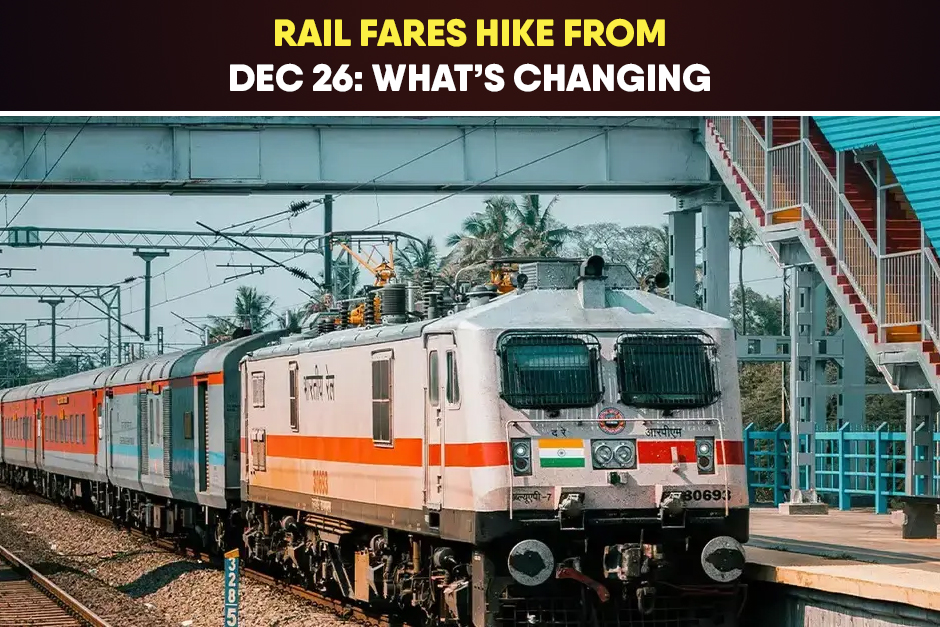
India’s sprawling railway network, often dubbed the lifeline of the nation, is set to undergo a significant change in its fare structure. The Ministry of Railways recently announced a revised tariff, with new ticket prices scheduled to come into effect nationwide from December 26. This move, aimed at bolstering the financial health of the vast public transporter and funding its ambitious modernization projects, marks a crucial juncture for millions of daily commuters and long-distance travellers across the country.
The decision, communicated through an official notification, outlines a marginal increase across various passenger categories, excluding specific segments to cushion the impact on regular suburban travellers. As the nation prepares for this adjustment, understanding the nuances of the new fare regime becomes essential for planning journeys and managing travel budgets.
Understanding the Revised Fare Structure
According to the notification issued by the Ministry of Railways, the fare hike primarily targets non-suburban passenger services. This encompasses a wide spectrum of train categories, ranging from unreserved general coaches to premium air-conditioned classes. Specifically, the ministry has implemented a per-kilometre increase, designed to be proportionate to the class of travel.
For unreserved non-suburban services, a nominal increase of 1 paisa per kilometre has been introduced. Sleeper class fares will see an increase of 2 paise per kilometre, while AC classes (AC Chair Car, AC 3-tier, AC 2-tier, and AC First Class) will experience a hike of 4 paise per kilometre. This tiered approach aims to distribute the burden more equitably, with higher-end services contributing a larger share towards the railway’s revenue generation.
Crucially, the Ministry has confirmed that suburban fares, including those for local trains and season tickets, remain unaffected by this revision. This exemption is a deliberate measure to safeguard the interests of daily commuters who rely heavily on these services for their livelihood and connectivity within metropolitan areas. Furthermore, tickets booked prior to December 26 will not be subject to the new pricing, ensuring that pre-planned travel arrangements remain unchanged. However, any new bookings or journeys commencing on or after the effective date will reflect the revised tariffs.
The Rationale Behind the Hike
The Ministry of Railways has underscored that the fare adjustment is a necessary step towards ensuring the sustainable growth and operational efficiency of Indian Railways. Years of under-recovery in passenger fares, coupled with escalating operational costs, have placed considerable strain on the national transporter’s financial resources. The hike is posited as a strategic move to bridge this widening gap and generate vital capital for critical infrastructure upgrades.
A significant portion of the additional revenue generated is earmarked for ambitious modernization projects. These include the accelerated development of high-speed corridors like the Bullet Train project, the introduction of advanced, semi-high-speed trains such as the Vande Bharat Express, and the comprehensive redevelopment of railway stations across the country into world-class transport hubs. Beyond aesthetic and technological enhancements, funds are also crucial for bolstering safety measures, including track renewal, upgrading signalling systems, and eliminating unmanned level crossings, which collectively aim to enhance passenger safety and operational reliability.
Speaking on the decision, a senior official from the Ministry of Railways, wishing to remain anonymous given ongoing public discourse, stated,
“This fare rationalization is not merely about increasing revenue; it’s about securing the future of Indian Railways. We have a monumental task of modernizing our infrastructure to meet the demands of a growing economy and ensuring the highest safety standards. These investments cannot be solely borne by the exchequer. A marginal adjustment from beneficiaries is essential for us to continue providing world-class services and infrastructure for generations to come.”
The Ministry also pointed out the increasing cost of fuel, electricity, and maintenance, alongside rising staff salaries and pension liabilities, which collectively contribute to the operational deficit. The fare revision, therefore, is presented as a pragmatic response to these economic realities, allowing Indian Railways to maintain its quality of service and embark on transformative projects.
Impact and Way Forward
While any fare hike inevitably brings discussions regarding affordability, the Ministry’s measured approach, particularly by exempting suburban fares, aims to mitigate the immediate impact on the most vulnerable sections of society. Long-distance travellers, who constitute a significant demographic, will experience a marginal increase, which, when calculated over longer distances, will be noticeable but is presented as a contribution towards improved facilities and services.
The success of this fare revision will largely depend on its ability to truly fuel the promised upgrades and translate into a tangible improvement in passenger experience. From cleaner coaches and better punctuality to enhanced safety features and modern station amenities, the public’s expectation will undoubtedly be for a visible return on this increased investment. Indian Railways, with its massive daily ridership, remains central to the nation’s connectivity and economic pulse. This fare adjustment is a step in its ongoing journey towards self-sustenance and global standards.
The revised fares, effective December 26, mark a new chapter for Indian Railways, balancing the imperative of financial prudence with the ongoing commitment to serve millions. As the nation adjusts to these changes, the focus remains on the long-term vision of a robust, modern, and efficient railway system that continues to be the pride and lifeline of India.

