


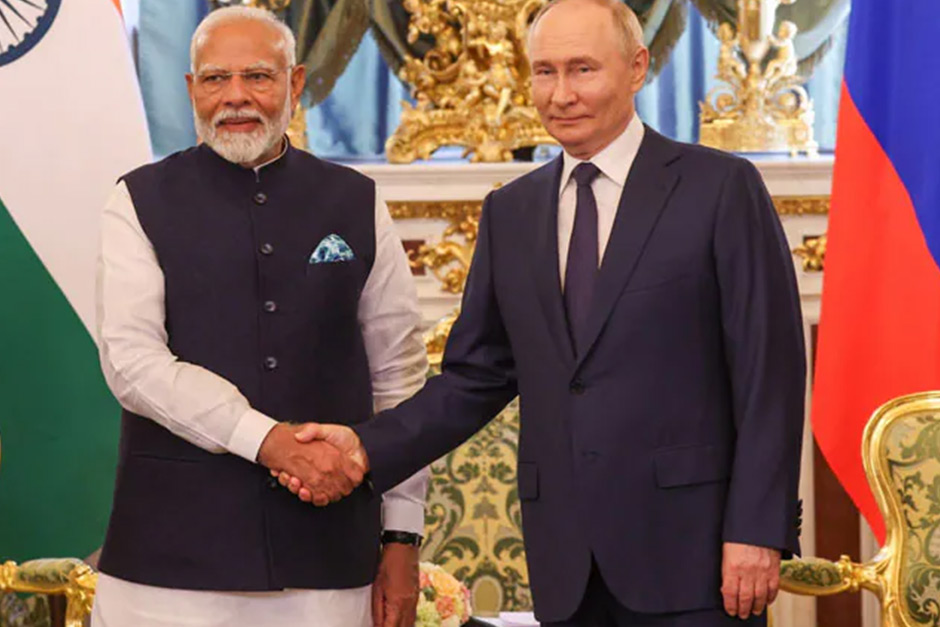
In a recent high-stakes press briefing following his discussions with Prime Minister Narendra Modi, Russian President Vladimir Putin underscored the critical importance of nations pursuing “independent foreign policies” while simultaneously highlighting robust energy cooperation between India and Russia. The statements, delivered amidst a complex global geopolitical landscape, reiterate the core tenets of the enduring strategic partnership between New Delhi and Moscow, echoing India’s long-standing commitment to strategic autonomy.
The bilateral interaction, a focal point for international observers, saw both leaders delve into a range of issues, with Putin’s emphasis on independent foreign policy resonating particularly strongly in India, a nation that has historically championed non-alignment and multilateralism. The discussions further solidified the comprehensive nature of their ties, particularly in the crucial energy sector, which remains a cornerstone of their mutually beneficial relationship.
Independent Foreign Policies: A Shared Imperative
President Putin’s assertion regarding the necessity of independent foreign policies is not merely a diplomatic platitude but a significant articulation of a shared philosophy underpinning the India-Russia relationship. For India, strategic autonomy has been a guiding principle, allowing it to navigate global power dynamics without subservience to any single bloc. This stance has enabled New Delhi to maintain robust partnerships across the spectrum, from Western democracies to nations like Russia, based on its national interests.
Putin’s remarks can be interpreted as an affirmation of Russia’s own foreign policy doctrine, which seeks to counter unipolar tendencies and promote a multipolar world order. In this context, India’s independent trajectory serves as a crucial partner in fostering a more balanced global framework. The shared emphasis on non-interference in internal affairs and adherence to international law, without external dictation, forms a strong ideological bridge between the two nations.
During the briefing, President Putin remarked, “Both Russia and India share a fundamental belief in the sovereign right of nations to define their own path. Our discussions reaffirmed our mutual commitment to independent foreign policies, free from external pressure, ensuring that our respective national interests remain paramount in an evolving global order.” This statement encapsulates the spirit of their engagement, highlighting a partnership built on mutual respect for sovereignty and strategic choice. India’s historical engagement with Russia, particularly in defense and technology, has often been a testament to this principle, demonstrating New Delhi’s resolve to diversify its strategic partnerships.
Energy Cooperation: Powering a Strategic Partnership
Beyond the geopolitical pronouncements, energy cooperation emerged as another pivotal area of discussion, underscoring its indispensable role in the India-Russia strategic partnership. India, as one of the world’s fastest-growing major economies, has an insatiable demand for energy, and Russia has consistently proven to be a reliable and significant supplier.
Oil and Gas: Ensuring India’s Energy Security
The energy dialogue focused extensively on crude oil and natural gas supplies. Russia has significantly ramped up its crude oil exports to India in recent years, becoming one of its top suppliers. This has been particularly crucial for India in managing global energy price volatility and ensuring a stable supply chain. The discussions likely explored avenues to further stabilize and potentially increase these supplies, possibly through long-term contracts and diversified payment mechanisms.
Beyond crude, cooperation in the liquefied natural gas (LNG) sector is also expanding, with a focus on enhancing India’s energy basket diversity. Both nations are exploring infrastructure development to facilitate smoother transportation and processing of energy resources, reinforcing India’s energy security goals.
Nuclear Energy: A Long-Standing Pillar
Nuclear energy remains a long-standing and highly successful dimension of India-Russia cooperation. The ongoing construction of the Kudankulam Nuclear Power Plant in Tamil Nadu, a flagship project, stands as a testament to this deep collaboration. Further discussions likely touched upon expediting existing projects, exploring new sites, and enhancing technological exchange in advanced nuclear power generation. This segment of cooperation is critical for India’s clean energy transition goals and its pursuit of energy independence.
The emphasis on energy cooperation at the briefing highlights a pragmatic and forward-looking approach, recognizing that a stable and affordable energy supply is fundamental to India’s economic growth and Russia’s economic interests. This partnership extends beyond mere buyer-seller dynamics, involving joint ventures, technological collaboration, and a shared vision for energy sustainability.
Conclusion: A Resilient and Evolving Alliance
The press briefing featuring President Putin and Prime Minister Modi serves as a powerful reminder of the multifaceted and resilient nature of the India-Russia strategic partnership. Putin’s stress on independent foreign policies reinforces a shared diplomatic ethos, while the robust discussions on energy cooperation underscore the tangible economic and strategic benefits both nations derive from their alliance. As the global order continues to shift, the ability of India and Russia to chart their own course and deepen collaboration in vital sectors like energy will be crucial not only for their bilateral prosperity but also for contributing to a more balanced and equitable international system. This evolving partnership remains a key determinant in the geopolitical landscape, demonstrating enduring relevance and adaptability.

