


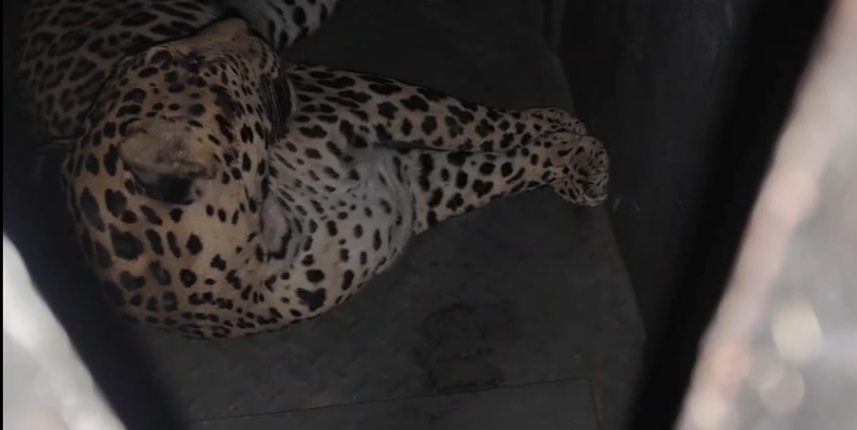
After a tense and prolonged cat-and-mouse game spanning several months, the elusive leopard that had been intermittently sighted within the premises of Pune Airport has finally been captured. The successful operation, executed by the Maharashtra Forest Department in close coordination with airport authorities, brings a significant sigh of relief to thousands of daily commuters, airport staff, and residents in the surrounding areas of Lohegaon.
The presence of a wild leopard at a high-security, civilian-military airport presented an unprecedented challenge, prompting a complex and cautious multi-agency response. The capture marks the culmination of an intensive surveillance and trapping effort, ensuring the safety of both human life and the magnificent predator.
The Elusive Predator: A Months-Long Saga
The saga began late last year when initial sightings of a leopard were reported near the perimeter walls and less-frequented areas of Pune Airport. As one of India’s busiest airports, handling both domestic and international flights alongside its military operations, the presence of a wild animal posed unique security and operational dilemmas. The leopard, often described as a sub-adult male, displayed remarkable stealth and adaptability, making its capture a formidable task.
For months, the Maharashtra Forest Department deployed a dedicated team, employing a range of strategies to track and capture the animal. Camera traps were installed at various strategic points, especially in green belts and abandoned structures within the airport premises. Regular patrols were conducted, and a perimeter watch was maintained, but the leopard proved incredibly wary, moving predominantly under the cover of darkness and avoiding direct confrontation.
The operation was further complicated by the need to ensure zero disruption to flight schedules and airport operations. The sheer scale of the airport complex, combined with its blend of open areas, hangers, and dense scrubland, provided ample hiding spots for the elusive big cat. Baited cages, using live poultry or goats, were strategically placed, but the leopard repeatedly evaded capture, showcasing its innate intelligence and caution.
Breakthrough: Strategy and Safe Capture
The breakthrough came after a renewed and intensified effort in recent weeks, focusing on specific patterns of movement identified through continuous monitoring. Forest department officials, bolstered by intelligence gathered from ground staff and increased camera trap footage, narrowed down the leopard’s likely nocturnal routes.
Sources indicate that the final capture took place near a less-active cargo area, close to the airport’s periphery, where a particularly effective trap had been set up. After days of patient waiting, the leopard finally entered the specially designed cage, baited with its preferred lure. Upon confirmation, a rapid response team, including veterinary experts, moved in to secure the animal. The leopard was tranquilized on-site to ensure its safe handling and transportation, displaying no injuries and appearing to be in good health.
The success of the operation is a testament to the meticulous planning, dedication, and inter-agency coordination. “This operation required immense patience and coordination between multiple agencies. The safety of both the airport community and the leopard was paramount throughout this challenging period, and we are incredibly relieved to have achieved a safe capture,” stated Rahul Sharma, a senior official with the Maharashtra Forest Department.
Relocation and The Larger Picture of Coexistence
Following its capture, the leopard underwent a thorough medical examination by veterinary specialists to assess its health and ensure it was fit for relocation. Once cleared, it is expected to be released into a suitable natural habitat, far from human habitation, likely within a protected forest area in Maharashtra. This swift and humane relocation aligns with standard protocol for handling such wildlife incidents.
While the immediate threat at Pune Airport has been neutralized, this incident underscores a growing challenge across India: the increasing proximity of wildlife, particularly leopards, to urban and semi-urban environments. Habitat fragmentation, human encroachment into forest areas, and the availability of easy prey (like stray dogs) often draw these adaptable predators closer to human settlements. The Pune Airport incident serves as a crucial reminder of the need for robust wildlife corridors, effective waste management in urban fringes, and sustained efforts in conservation and public awareness to foster a more harmonious coexistence between humans and wildlife in an increasingly shrinking natural world.
The successful capture at Pune Airport is not just a local triumph but a model for how complex human-wildlife conflicts can be resolved through scientific intervention, patience, and collaborative effort.

