


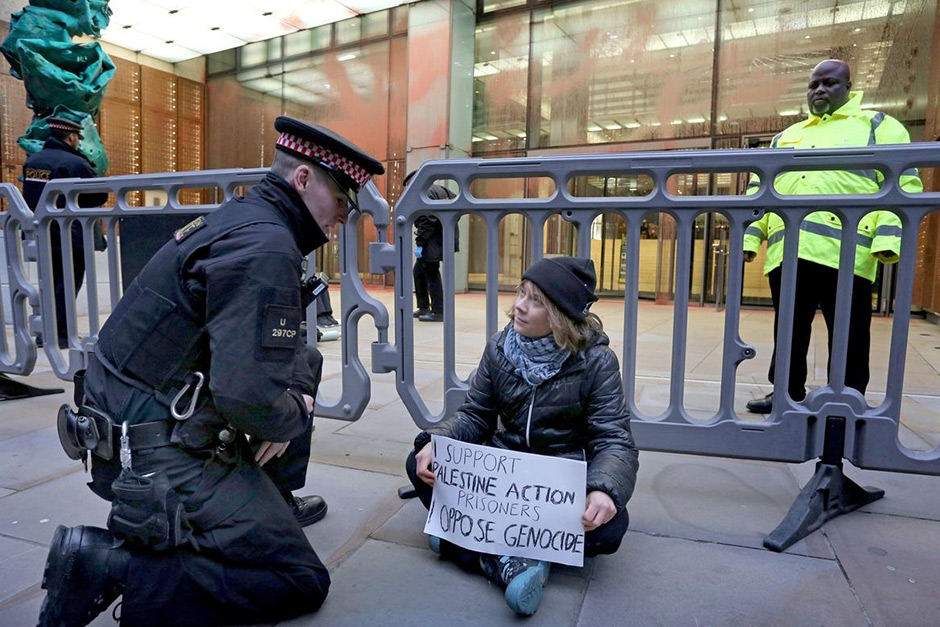
In a development that has captured global attention, prominent climate activist Greta Thunberg was arrested and briefly detained by UK police during a protest in London. The demonstration, organized in solidarity with Palestinians and under the banner of “Prisoners for Palestine,” targeted an energy industry conference. What has intensified the scrutiny around the incident is the controversial detail of her detention under powers associated with the UK’s Terrorism Act, sparking widespread debate about protest rights, free speech, and the evolving landscape of activism.
The London Protest and Thunberg’s Arrest
The incident unfolded on Tuesday outside the InterContinental Hotel in Mayfair, London, where the Energy Intelligence Forum was hosting top executives from the oil and gas industry. Activists, including members of “Fossil Free London” and “Palestine Action,” gathered to disrupt the conference, protesting against the fossil fuel industry’s role in climate change and simultaneously voicing solidarity with Palestinians amidst the ongoing conflict in Gaza. The protest specifically highlighted the plight of “Prisoners for Palestine,” drawing a direct link between environmental justice and human rights.
Greta Thunberg, a figure synonymous with youth climate activism, was at the forefront of the demonstration. Having previously been arrested for similar acts of civil disobedience, Thunberg was seen addressing the crowd before actively participating in blocking access to the hotel. Police initially arrested her along with several other protestors for a public order offence, specifically for failing to comply with conditions imposed to prevent serious disruption. However, the subsequent re-detention of Thunberg, reportedly under Section 14 of the Public Order Act 1986, which can involve powers often invoked under the broader framework of maintaining public safety and order, including those that might escalate to serious disruption or links to extremism, raised immediate red flags among civil liberties advocates.
Activists emphasized that their actions were non-violent and aimed at drawing attention to critical global issues. Thunberg herself reiterated her stance, stating, “We are here to protest against the ongoing occupation and genocide in Palestine. We will continue to stand in solidarity with Palestine.”
Detention and the Terrorism Act Controversy
The controversy deepened with reports indicating that Thunberg, after her initial arrest and release on bail, was subsequently re-detained under powers that some commentators and legal experts have linked to the UK’s Terrorism Act. While official statements from the Metropolitan Police clarified that the arrests were primarily for public order offences, the perception and reporting of specific powers being used, particularly in the context of a peaceful protest, ignited a fierce debate. Critics argued that using such a severe legal framework for environmental and human rights protests could have a chilling effect on legitimate dissent and criminalize activism.
Human rights organizations and civil liberties groups swiftly condemned the perceived overreach. A spokesperson from Amnesty International UK commented, “The right to protest is fundamental in a democracy. Using powers associated with terrorism legislation against peaceful climate activists is disproportionate and deeply concerning. It sends a dangerous message that the authorities are willing to curb legitimate dissent under the guise of security.” This sentiment resonated widely, raising questions about the proportionality of police response and the protection of civil liberties in the UK.
Indian Context and Global Echoes
For observers in India, an event like this sparks familiar discussions. India, a vibrant democracy with a robust history of protests and social movements, often grapples with the delicate balance between maintaining public order and upholding the right to peaceful assembly. Debates surrounding the use of sedition laws or other stringent legislation against activists, environmentalists, and those critical of government policies are not uncommon in the Indian public sphere. The international scrutiny over Thunberg’s detention thus resonates with ongoing conversations about the limits of state power and the space for dissent in democratic societies globally.
The incident also highlights the growing interconnectedness of global issues. Thunberg’s decision to extend her activism from climate change to solidarity with Palestine underscores a broader trend where activists increasingly link environmental justice with human rights, anti-colonial struggles, and social equity. This holistic approach to activism challenges traditional silos and calls for a more integrated understanding of global crises.
Conclusion
Greta Thunberg’s arrest and controversial detention in London underscore a critical juncture in the global discourse around activism, free speech, and state response. While authorities maintain their actions were necessary to prevent disorder, civil liberties advocates and a significant portion of the public view the invocation of such robust powers as a concerning precedent. The incident serves as a powerful reminder of the ongoing struggle to protect democratic freedoms and the right to peaceful protest, echoing concerns and conversations that are pertinent not just in the UK, but across diverse democracies like India, where the balance between security and liberty remains a constant, crucial debate.

