


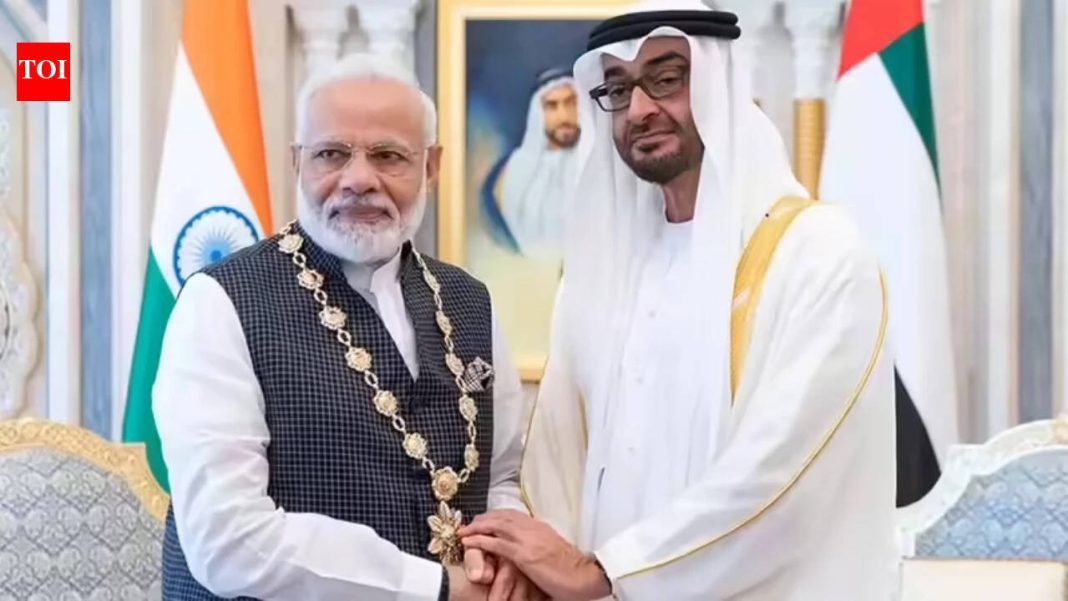
In a significant diplomatic outreach amidst escalating regional tensions, Prime Minister Narendra Modi recently engaged in a crucial telephone conversation with United Arab Emirates President Sheikh Mohamed bin Zayed Al Nahyan. The high-level discussion underscored shared concerns regarding the deteriorating security situation in the Red Sea and Gulf of Aden, with Prime Minister Modi unequivocally condemning recent attacks attributed to Iran-backed entities that have disrupted vital international shipping lanes. This conversation highlights India’s proactive stance in safeguarding its strategic interests and promoting regional stability.
The telephonic exchange, confirmed by official statements from both nations, saw leaders deliberate on the evolving geopolitical landscape in West Asia. PM Modi reportedly expressed strong disapproval of the ongoing attacks on commercial vessels, emphasizing the severe implications for global trade, energy security, and regional peace. While the official statements from the Indian side typically refer to “attacks on commercial shipping” without directly naming actors, the context of the region points towards the widely attributed Houthi assaults, supported by Iran, as the primary concern. The UAE, a key partner for India in the region, shares these anxieties, given its significant maritime trade and economic ties that rely heavily on these waterways.
Diplomatic Engagement Amidst Regional Tensions
The conversation between Prime Minister Modi and President Al Nahyan focused extensively on the need for concerted international action to de-escalate the situation and ensure the safety of maritime passage. Both leaders acknowledged the critical importance of the Red Sea and the Bab-el-Mandeb strait as indispensable arteries for global commerce, linking Asia with Europe and beyond. The disruption caused by recent incidents, including missile and drone attacks on vessels, has forced many shipping companies to reroute their journeys, leading to increased costs, longer transit times, and potential supply chain disruptions worldwide.
India’s strategic partnership with the UAE, deepened over recent years, plays a pivotal role in its West Asia policy. The two nations have robust economic, trade, and cultural ties, with a substantial Indian diaspora residing in the Emirates. Ensuring stability in the region is therefore not just an economic imperative for India but also a humanitarian one. During the call, PM Modi reiterated India’s commitment to working closely with the UAE and other like-minded partners to address these shared security challenges and uphold the principles of international law, including freedom of navigation.
India’s Principled Stance on Maritime Security and Trade
India’s condemnation of the attacks stems from a principled position that upholds international law and the freedom of navigation. As a major maritime nation with significant energy and trade dependencies on the Gulf region, the security of these sea lanes is paramount for India’s economic well-being. A substantial portion of India’s crude oil imports and merchandise trade transits through these waters, making any disruption a direct threat to its national interests. Furthermore, India has a long-standing commitment to maritime security in the Indian Ocean Region (IOR) and beyond, consistently advocating for a rules-based international order.
In response to the escalating threats, the Indian Navy has significantly augmented its presence in the Arabian Sea, deploying a contingent of warships, including destroyers and frigates, to conduct anti-piracy and anti-drone operations. This proactive measure, part of “Operation Sankalp,” underscores India’s resolve to protect its commercial shipping and ensure the safety of its seafarers. A senior diplomatic source, preferring anonymity due to the sensitivity of ongoing discussions, remarked, “The escalating situation in the Red Sea directly impacts India’s economic arteries. Our dialogue with key partners like the UAE is crucial for coordinating efforts to safeguard global trade and uphold the principles of freedom of navigation, which are paramount for our energy security and broader economic interests.” This reflects India’s dual approach of diplomatic engagement and enhanced operational readiness.
Broader Geopolitical Implications and India’s Regional Role
The ongoing Red Sea crisis carries broader geopolitical implications, potentially impacting ambitious regional projects like the India-Middle East-Europe Economic Corridor (IMEC). Envisioned as a transformative trade route, IMEC aims to connect India with Europe via the Middle East, bypassing traditional sea routes through the Suez Canal. While IMEC promises significant strategic and economic advantages, the current instability underscores the inherent vulnerabilities of such large-scale initiatives to regional conflicts. India’s active diplomacy seeks to mitigate these risks and ensure that long-term strategic projects remain viable in a challenging security environment.
India’s diplomatic balancing act in West Asia is also noteworthy. While condemning the Houthi attacks, which are widely seen as proxies for Iran, India maintains cordial relations with Tehran, particularly concerning its strategic Chabahar Port project. This complex web of relationships necessitates a nuanced approach, where India safeguards its interests without alienating key regional players. The conversation with President Al Nahyan signals India’s resolve to actively shape the narrative and contribute to solutions that promote stability and prevent a wider conflagration in a region critical to global prosperity.
The PM’s direct communication with the UAE President signals India’s deep concern over the Red Sea crisis and its potential to destabilize the broader West Asian region. By condemning the attacks and reinforcing its commitment to maritime security, India aims to protect its economic lifelines and uphold its reputation as a responsible global actor. As the situation continues to unfold, India’s diplomatic outreach and naval vigilance will remain crucial in navigating these turbulent waters and ensuring peace and security for all.

