


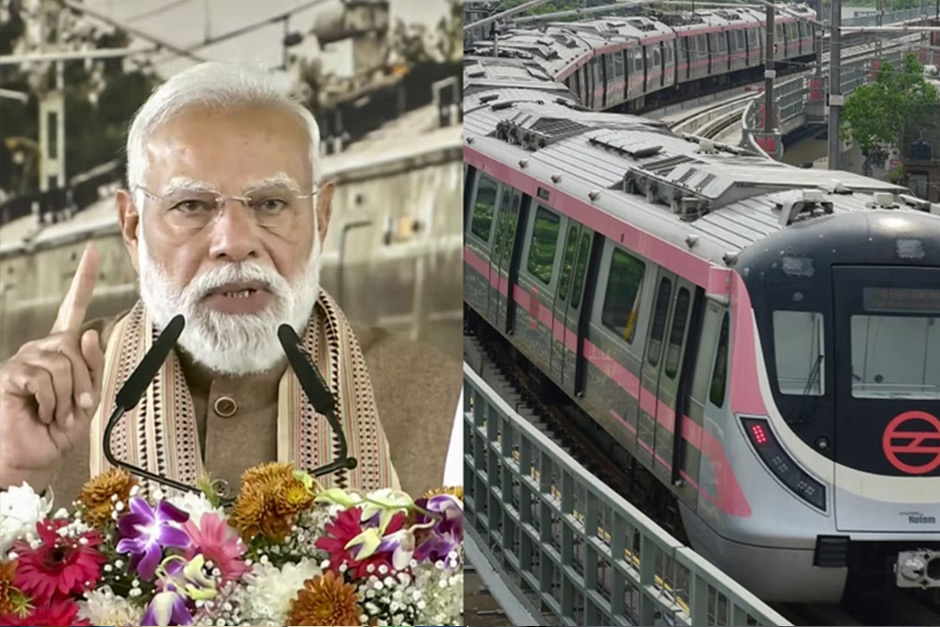
New Delhi – In a significant stride towards modernising India’s urban infrastructure, Prime Minister Narendra Modi today inaugurated the country’s first “Ring Metro” in the national capital, Delhi. The much-anticipated project, poised to redefine daily commuting for millions, marks a pivotal moment in the city’s ongoing efforts to enhance public transportation and combat traffic congestion. The inauguration ceremony, held amidst considerable fanfare, underscored the government’s commitment to developing world-class connectivity solutions for its rapidly urbanising population.
The concept of a ‘Ring Metro’ is designed to create a comprehensive circular network, seamlessly connecting various parts of the city without requiring commuters to travel through central hubs for cross-city journeys. This innovative approach promises not only to drastically cut down travel times but also to ease the burden on existing metro lines, offering a more efficient and user-friendly experience.
A New Era for Delhi’s Urban Mobility
The newly inaugurated Ring Metro project is not merely an expansion; it’s a strategic integration and a complete reimagining of urban transit flow. Leveraging existing lines while introducing crucial new segments and interconnections, the Ring Metro completes a full circular loop around Delhi, fundamentally altering how residents navigate the sprawling metropolis. It aims to significantly reduce the need for multiple transfers, particularly for commuters travelling between peripheral areas, thereby improving the overall journey experience.
This ambitious undertaking addresses one of Delhi’s most persistent challenges: the burgeoning traffic on its roads and the consequent environmental impact. By providing a robust, high-frequency alternative, the Ring Metro is expected to encourage a substantial modal shift from private vehicles to public transport. This shift is anticipated to lead to a noticeable reduction in vehicular emissions, contributing to cleaner air and a healthier urban environment for Delhiites. The operational efficiency of a circular line means fewer delays, higher average speeds, and a more predictable travel schedule, all critical factors for a city known for its dynamic pace.
Technological Integration and Passenger Comfort
Beyond its structural brilliance, the Ring Metro incorporates state-of-the-art technology to ensure optimal operational efficiency and passenger comfort. This includes advanced signalling systems, automatic train operations (ATO), and an integrated control centre that monitors the entire network in real-time. Stations along the Ring Metro corridor are equipped with modern amenities, including accessible infrastructure for persons with disabilities, improved security systems, and digital information displays, enhancing the overall commuting experience. The design prioritises seamless interchange facilities with existing metro lines, railway stations, and bus terminals, creating a truly multimodal transport ecosystem.
Strategic Vision and Future Implications
Prime Minister Modi, in his inaugural address, highlighted the strategic foresight behind projects like the Ring Metro. “This Ring Metro is more than just tracks and trains; it is a symbol of New India’s aspirations, a testament to our resolve to build world-class infrastructure that enhances ease of living and propels economic growth,” he stated. “It represents an integrated vision for urban development, where connectivity is not merely about reaching destinations but about creating opportunities and fostering sustainable growth for every citizen.”
The project aligns with the government’s broader vision of developing smart cities and enhancing urban infrastructure across the nation. It serves as a blueprint for similar projects that could be replicated in other major Indian cities grappling with rapid urbanisation and transportation challenges. The economic ripple effects are also significant, with potential for increased commercial activity along the new corridor, creating jobs and stimulating local economies.
Furthermore, the Ring Metro is expected to decentralise urban development by making peripheral areas more accessible, potentially leading to the growth of new residential and commercial hubs outside the traditionally congested city centre. This decentralisation can help distribute population density more evenly, reducing pressure on existing resources and infrastructure in core areas.
Conclusion
The inauguration of Delhi’s first Ring Metro by Prime Minister Modi marks a monumental step in India’s journey towards building a resilient, efficient, and sustainable urban transport network. It stands as a powerful example of how strategic infrastructure development can profoundly impact the daily lives of millions, foster economic growth, and address critical environmental concerns. As Delhi embraces this new era of enhanced connectivity, the Ring Metro is poised to become an indispensable artery, promising a future of smoother commutes and a more integrated urban landscape for one of the world’s largest metropolises.

