


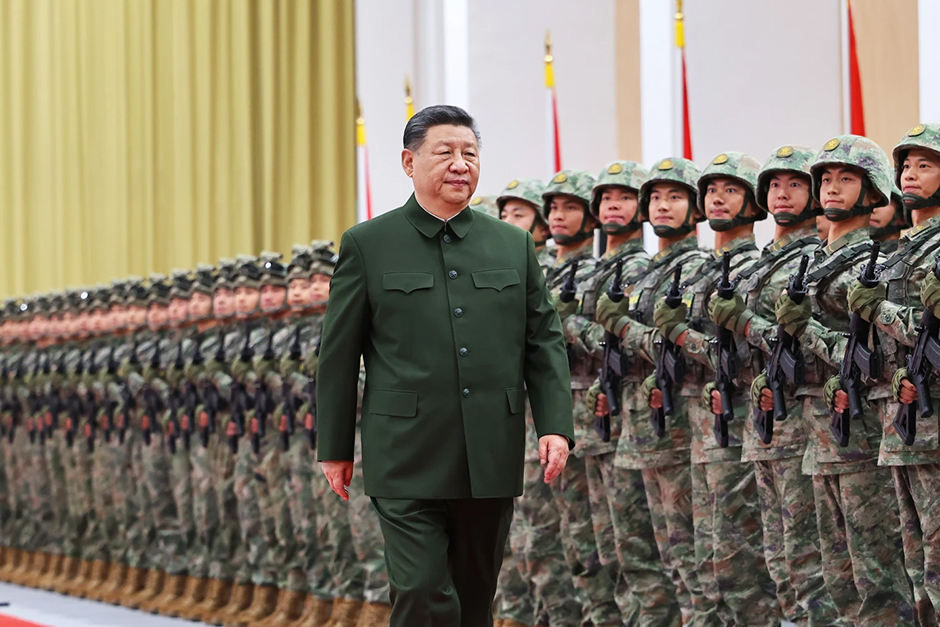
The People’s Liberation Army (PLA), a force synonymous with China’s rise as a global power, finds itself under an unprecedented internal spotlight. Over the past year, a series of high-profile disappearances, demotions, and outright dismissals within its ranks have sent tremors through Beijing’s military establishment. What began as a renewed anti-corruption drive under President Xi Jinping now appears to be a deeply entrenched purge, raising significant questions about the PLA’s combat readiness, morale, and overall effectiveness. For India and the wider Indo-Pacific, these developments introduce a new layer of uncertainty into an already complex geopolitical landscape.
The Deepening Purge: More Than Just Corruption?
The scale and speed of the recent purges are striking. Last summer, the entire top brass of the PLA Rocket Force, responsible for China’s conventional and nuclear missile arsenal, was replaced. Soon after, Defence Minister Li Shangfu vanished from public view, only to be formally removed from his post without explanation. Admiral Dong Jun has since assumed the role. These incidents follow a pattern seen since Xi Jinping took power, but the targeting of such high-ranking officials in critical branches suggests a deeper systemic issue beyond mere graft.
While official statements often attribute these actions to “serious violations of discipline and law,” implying corruption, many analysts suggest a more complex reality. The purges could be interpreted as Xi’s relentless drive to consolidate absolute power, ensuring unquestioning loyalty within the military. In an environment where political fidelity is paramount, even minor perceived deviations or independent power bases could be grounds for removal. This process, while ostensibly aimed at rooting out incompetence and disloyalty, risks undermining the very foundations of military professionalism and expertise needed for modern warfare.
Erosion of Capability: A Double-Edged Sword
A military purge, regardless of its stated intent, invariably carries significant operational risks. The removal of experienced commanders and specialists, particularly from highly technical branches like the Rocket Force or the aerospace industry, can create critical gaps in expertise and institutional memory. China has invested heavily in modernizing its military, developing advanced weaponry and strategic doctrines. However, if the personnel trained to operate and innovate these systems are constantly under suspicion or being replaced, the true potential of these investments may never be realized.
Furthermore, an atmosphere of fear and distrust can cripple morale and stifle initiative. Officers might become risk-averse, prioritising political correctness and loyalty tests over bold strategic thinking or honest reporting of challenges. This could lead to a ‘yes-man’ culture, where critical assessments are suppressed, and genuine combat readiness is overstated. As one strategic analyst, who preferred to remain anonymous given the sensitivity, observed, “While internal purges aim to forge a stronger, more loyal military, they often inadvertently breed an environment of self-preservation and political posturing, potentially at the cost of genuine operational competence and innovative thinking required for contemporary warfare.” The emphasis shifts from military effectiveness to political reliability, which can be a fatal flaw in a genuine combat scenario.
Regional Ripples: India’s Perspective and Beyond
For India, positioned directly on China’s western border with ongoing territorial disputes, these internal developments within the PLA are of critical importance. A PLA weakened by internal turmoil could present a dual challenge. On one hand, it might reduce immediate aggressive capabilities, allowing for a temporary easing of pressure along the Line of Actual Control (LAC). On the other, internal instability and a leadership focused on loyalty over capability could lead to unpredictable actions, perhaps even an external show of force to rally domestic support and test the resolve of its purified ranks.
Beyond the immediate border, the implications for the wider Indo-Pacific region are also significant. China’s military ambitions, particularly regarding Taiwan and its expansionist claims in the South China Sea, rely heavily on a cohesive and highly capable PLA. If the purges indeed cripple the PLA’s effectiveness, it could alter the strategic calculus for regional players and global powers alike. Countries like Vietnam, the Philippines, and even the US, might perceive a window of opportunity or, conversely, face a more unpredictable and politically driven Chinese military leadership. India must remain vigilant, strengthening its own defence capabilities while carefully observing how these internal purges translate into external behaviour.
In conclusion, Xi Jinping’s ambitious drive to purify the PLA, while consolidating his authority, presents a complex picture. While it may enhance the Party’s control, the potential for eroding combat effectiveness, stifling innovation, and fostering a culture of fear is a significant risk. For India, understanding these internal dynamics is crucial. It necessitates a nuanced approach, preparing for both a potentially less effective, yet more unpredictable, Chinese military, and adjusting its strategic posture to safeguard its national interests in a rapidly evolving geopolitical landscape.

