


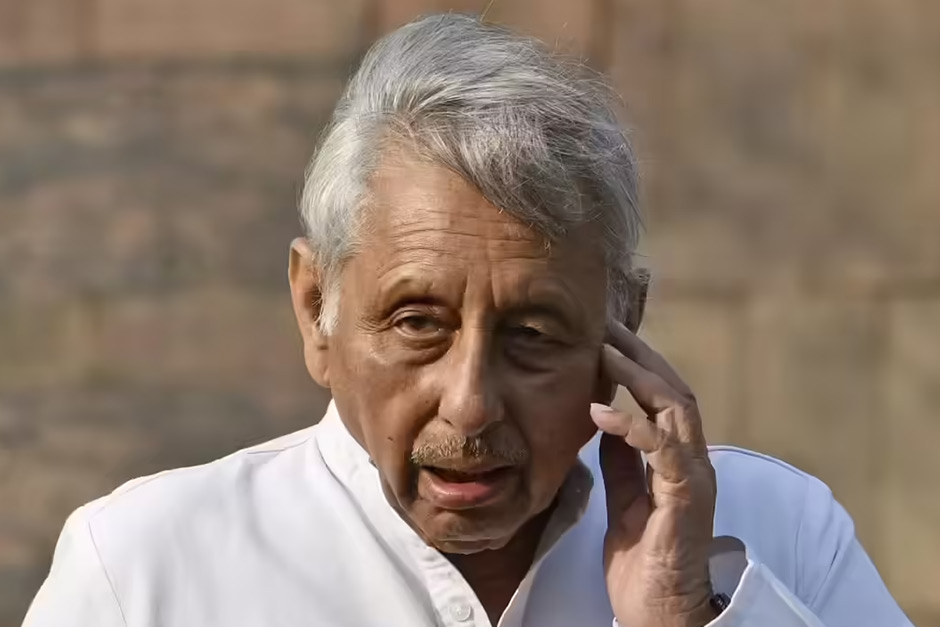
In a political landscape often shaped by intricate alliances and rivalries, veteran Congress leader Mani Shankar Aiyar once again found himself at the centre of a swirling controversy. His recent remarks, urging Kerala Chief Minister Pinarayi Vijayan to ‘pick up the baton’ and play a larger national role, have sent ripples through the Indian political sphere. The unexpected endorsement from a Congress stalwart for a leader of the Communist Party of India (Marxist), a direct political rival in Kerala, prompted a swift disavowal from Aiyar’s own party and reignited debates about inter-party dynamics within the INDIA bloc.
The ‘Baton’ Speech: A Pitch for National Leadership
The remarks in question were made by Mani Shankar Aiyar during the launch of a book titled ‘My Life as a Comrade: The Story of Pinarayi Vijayan’ in Thiruvananthapuram. Speaking at the event, Aiyar reportedly lauded Chief Minister Vijayan’s leadership, administrative capabilities, and his firm stand against communal forces. He went on to suggest that Vijayan possessed the qualities necessary to “pick up the baton” of national leadership, urging him to play a more significant role beyond Kerala’s borders. Aiyar, known for his articulate yet often provocative statements, praised Vijayan as a figure who could bridge divides and offer strong governance, qualities he deemed essential for national politics.
This endorsement from a prominent Congress figure for a leader of the CPI(M) immediately raised eyebrows across the political spectrum. Observers quickly pointed out the inherent contradiction, as the Congress and CPI(M) are locked in a fierce electoral battle within the state of Kerala. While both parties are constituents of the larger INDIA alliance at the national level, their relationship on the ground in Kerala is fundamentally adversarial. For many, Aiyar’s comments appeared to overlook this crucial state-level rivalry, creating a momentary but significant tremor in the delicate fabric of opposition unity.
Congress Swiftly Distances Itself
The reverberations of Aiyar’s comments were felt almost instantaneously within the Congress party. Recognising the potential for internal discord and external misinterpretation, the party leadership moved quickly to clarify its position. Several Congress spokespersons issued statements, unequivocally dissociating the party from Aiyar’s remarks. They reiterated that Aiyar’s views were his personal opinions and did not represent the official policy or sentiments of the Indian National Congress.
K.C. Venugopal, AICC general secretary (Organisation), explicitly stated, “This is not the view of the Congress party. In Kerala, we are fighting against the CPI(M) and will continue to fight against them. These are Mani Shankar Aiyar’s personal views.” This immediate damage control aimed to prevent any perception that the Congress was diluting its opposition to the CPI(M) in Kerala, particularly with crucial electoral battles on the horizon. The party’s swift action underscores the importance it places on maintaining a clear stance against its principal adversary in a state where it holds significant political stakes.
For the Congress, such an endorsement from a senior leader for a rival chief minister could be deeply demoralising for its state unit and confusing for its voter base. It complicates the party’s narrative against the incumbent Left Democratic Front (LDF) government and potentially undermines its efforts to consolidate anti-incumbency votes. The party leadership understands the imperative of reassuring its cadre and supporters in Kerala that its fight against the CPI(M) remains unwavering, irrespective of national alliance considerations.
Navigating the Labyrinth of Alliance Politics
Aiyar’s latest pronouncements highlight the intricate and often contradictory nature of India’s alliance politics. While the Congress and CPI(M) are key constituents of the INDIA bloc, formed with the primary objective of challenging the BJP at the national level, their relationship in states like Kerala is fundamentally adversarial. Here, the two parties are direct competitors, vying for political dominance, with their cadres often engaged in fierce on-ground contests. This dual reality—cooperation at the national level and competition at the state level—is a delicate balancing act for all alliance members, and public statements that blur these lines can cause significant discomfort.
Mani Shankar Aiyar, a seasoned diplomat and politician, has a history of making controversial statements that have often put his party in an awkward position, leading to public disavowals or even temporary suspensions. While his intellectual candour is often acknowledged, his timing and choice of words have sometimes been perceived as out of sync with his party’s strategic imperatives. This incident further illustrates the challenges inherent in managing a diverse coalition like the INDIA bloc, where individual opinions can inadvertently expose fault lines or create perceived inconsistencies in the larger narrative against the ruling dispensation.
The incident also prompts a discussion on the evolving nature of political leadership within the opposition. While the INDIA bloc seeks to present a united front, the question of who might lead it or who possesses the qualities for national leadership remains a subject of internal deliberation and external speculation. Aiyar’s pitch, irrespective of its immediate rejection by his party, adds another layer to this ongoing debate.
The ‘baton’ controversy, while quickly contained by the Congress leadership, serves as a poignant reminder of the delicate tightrope walk that alliance politics entails. Parties like the Congress and CPI(M) must reconcile their national imperatives of unity against a common opponent with their deeply entrenched state-level rivalries. Mani Shankar Aiyar’s personal pitch for Pinarayi Vijayan, though swiftly dismissed as an individual opinion, momentarily exposed the fault lines within the broader opposition front. As the political calendar moves towards more significant electoral contests, the ability of these disparate parties to manage such internal contradictions will be crucial to the sustained credibility and effectiveness of the INDIA bloc.

