


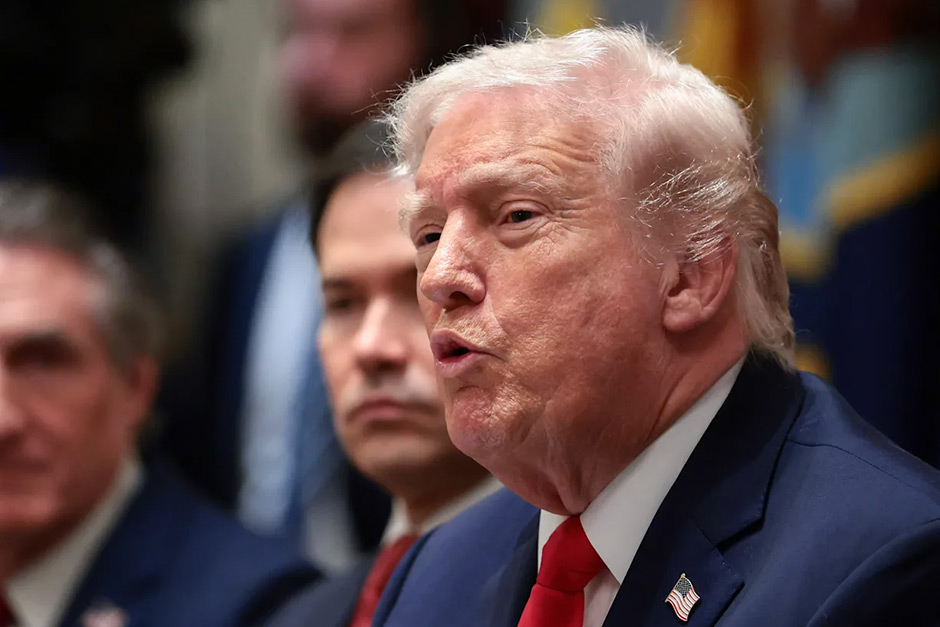
The global financial world is bracing for a significant announcement from former US President Donald Trump, who has indicated he will reveal his nominee for the Federal Reserve chair next week. The move signals a potential replacement for incumbent Jerome Powell, a figure Trump has repeatedly criticised during his previous term for what he perceives as overly aggressive interest rate hikes. This decision, if Trump were to be re-elected, carries substantial implications not just for the American economy but also for interconnected global markets, including India.
Trump’s discontent with Powell has been a recurring theme, rooted in the belief that higher interest rates stifled economic growth and made borrowing more expensive. His forthcoming announcement underscores a desire to install a leader at the helm of the US central bank who aligns more closely with his economic philosophy, particularly regarding monetary policy easing. For India, a nation deeply integrated into the global financial ecosystem, the shifting dynamics at the US Federal Reserve warrant close observation.
The Federal Reserve’s Pivotal Role and Trump’s Stance
The Federal Reserve, often referred to as the Fed, is the independent central bank of the United States. Its primary mandates are to maintain maximum employment, stable prices (control inflation), and moderate long-term interest rates. The Fed achieves these goals primarily through adjusting the federal funds rate, which influences borrowing costs across the economy. Its decisions ripple through financial markets worldwide, affecting everything from bond yields to currency values.
During his presidency, Donald Trump frequently and vocally criticised Jerome Powell, whom he himself had appointed in 2017. Trump’s frustration stemmed from Powell’s decisions to raise interest rates, especially during periods when Trump sought to stimulate the economy further. He often argued that the rate hikes were a drag on economic growth and made American exports less competitive. This push for lower rates often put Trump at odds with the Fed’s traditional independence, leading to unprecedented public pressure on the central bank.
Trump’s repeated public remarks, such as his assertion, “We’re paying too much interest,” highlighted his core argument that the Fed was hindering economic prosperity. This stance indicates a clear preference for a more dovish monetary policy – one that prioritises lower interest rates to encourage borrowing, investment, and economic expansion. A new Fed chair appointed by a future Trump administration would likely be expected to align with this philosophy, potentially marking a significant departure from Powell’s measured and often data-driven approach.
Potential Shifts in Monetary Policy and Global Ramifications
The prospect of a new Fed chair brings with it speculation about potential changes in US monetary policy. A nominee aligned with Trump’s views would likely advocate for lower interest rates, possibly even before inflation fully subsides to the Fed’s target. Such a shift could lead to a variety of outcomes: an immediate boost to equity markets due to cheaper borrowing, but also potential risks of reigniting inflationary pressures if the economy overheats. Conversely, a more dovish Fed might find itself with less ammunition to combat future economic downturns if interest rates are already near zero.
The independence of the Federal Reserve is a cornerstone of its credibility and effectiveness. Any perception of political influence in its decisions can erode trust and introduce greater volatility into financial markets. While a President can appoint the Fed chair, the institution’s historical design prioritises long-term economic stability over short-term political gains. A new chair’s approach to navigating this delicate balance will be closely scrutinised by investors and policymakers globally.
Implications for India’s Economy
For India, changes at the US Federal Reserve are not merely distant headlines; they have tangible domestic implications. When the Fed raises interest rates, it typically makes dollar-denominated assets more attractive, leading to capital outflows from emerging markets like India. This can put depreciation pressure on the Indian Rupee, making imports more expensive and potentially fueling inflation. Conversely, a dovish Fed, with a preference for lower interest rates, could potentially reverse this trend, encouraging foreign institutional investors (FIIs) to return to higher-yielding emerging markets like India, bolstering the rupee and the equity markets.
A prolonged period of lower US interest rates could reduce the cost of borrowing for Indian corporations that raise funds abroad. However, it also presents challenges. If global liquidity becomes excessively abundant without corresponding growth, it could lead to asset bubbles. The Reserve Bank of India (RBI) constantly monitors global financial conditions, especially the Fed’s stance, to formulate its own monetary policy. Any drastic shift in the Fed’s trajectory would require the RBI to carefully calibrate its approach to manage inflation, maintain financial stability, and support economic growth in India.
The looming announcement from Donald Trump regarding the next Fed chair nominee is a development of immense importance. It signals a potential ideological shift at one of the world’s most powerful economic institutions. For India, understanding the implications of a potentially more politically aligned or dovish Fed is crucial for policymakers, businesses, and investors alike, as the ripples from Washington’s monetary decisions inevitably reach New Delhi.

