


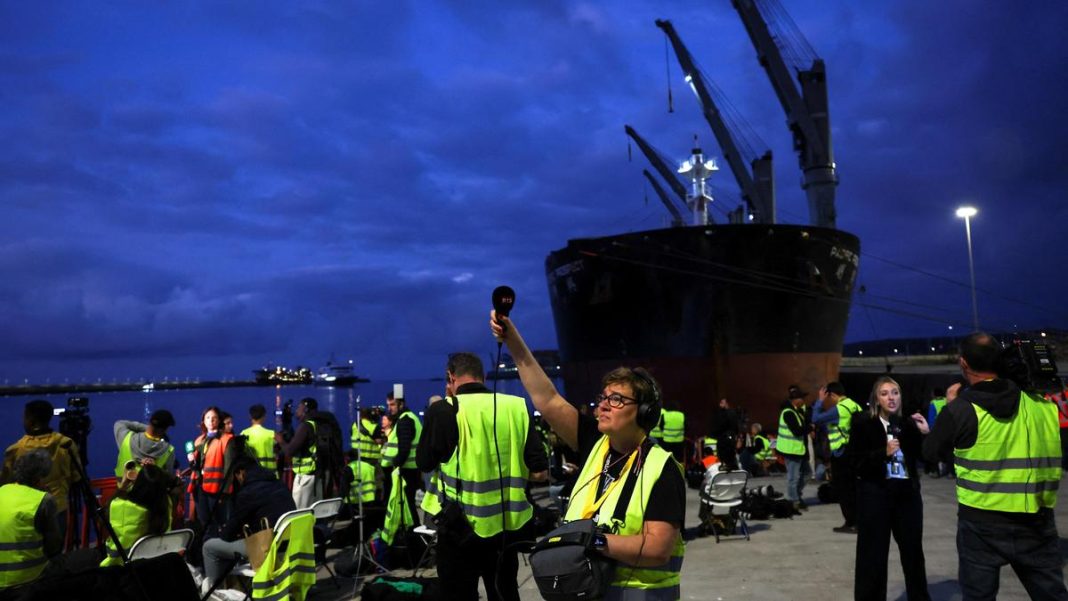
In a development that has once again brought global health protocols into sharp focus, passengers have begun disembarking from a cruise ship docked in Spain’s Canary Islands, following reports of a confirmed hantavirus case on board. The incident, while rare, underscores the intricate challenges of public health management in international travel, especially in the wake of recent global pandemics. For Indian travelers and public health officials alike, this event serves as a stark reminder of the continuous need for vigilance and robust response mechanisms in an increasingly interconnected world.
The Unexpected Disembarkation in the Canaries
The scene at the port in the Canary Islands unfolded with a mixture of relief and apprehension as passengers, some having spent an extended period under monitoring, were cleared to leave the vessel. The situation escalated when health authorities confirmed a case of hantavirus among the crew or passengers, prompting immediate isolation protocols and a thorough assessment of the ship’s environment. While details surrounding the exact nature of the case and the individual’s condition remain under strict medical confidentiality, the precautionary measures taken reflect a heightened global awareness of infectious disease control. Cruise ships, by their very nature, are densely populated environments, making rapid response crucial to prevent any potential spread, even for viruses not typically associated with human-to-human transmission.
The disembarkation process has been meticulously managed, involving comprehensive health screenings for all departing passengers and crew. Authorities are working in conjunction with international health bodies to ensure that all individuals receive appropriate guidance and, if necessary, further medical evaluation or self-monitoring instructions. This coordinated effort highlights the complex logistics involved in managing a health crisis aboard a vessel carrying individuals from various nationalities, including, potentially, Indian citizens who form a significant segment of global cruise tourism.
Understanding Hantavirus: A Rare Cruise Ship Threat
Hantavirus is a group of viruses carried by rodents, which can cause severe illness in humans. Unlike many common respiratory viruses, hantavirus is primarily transmitted to humans through contact with infected rodent urine, droppings, or saliva, or by inhaling aerosolized particles from these sources. It does not typically spread from person to person. Symptoms can vary but often begin with flu-like signs such as fever, fatigue, muscle aches, and headaches, progressing in some cases to severe respiratory distress, a condition known as Hantavirus Pulmonary Syndrome (HPS), or kidney complications, as seen in Hemorrhagic Fever with Renal Syndrome (HFRS).
The presence of hantavirus on a cruise ship is exceptionally unusual, as these environments are generally well-maintained and not typically prone to rodent infestations. This anomaly prompts questions about the potential source of exposure – whether it occurred prior to boarding, or if there was an isolated incident of rodent presence on board the vessel. Regardless, the confirmed case has triggered an intense investigation into the ship’s sanitation and pest control protocols. “This incident, though isolated, serves as a powerful reminder that global health threats can emerge in unexpected environments,” stated Dr. Priya Sharma, a Mumbai-based epidemiologist specializing in zoonotic diseases. “Vigilance, robust sanitation, and rapid epidemiological investigation are paramount, whether on land or at sea.” For India, which has vast coastal areas and a growing interest in cruise tourism, understanding such rare events is critical for strengthening its own public health preparedness and port surveillance systems.
Implications for Global Health and Indian Travelers
The incident in the Canary Islands serves as a crucial case study for international travel and public health preparedness. For countries like India, with a large diaspora and a significant number of outbound travelers, monitoring such events is vital. While hantavirus is not typically found in tropical regions, understanding its potential spread and the necessary containment measures is key for any nation involved in global tourism and trade.
Indian health authorities and travel agencies will be closely observing the outcomes and lessons learned from this disembarkation. This includes reviewing existing protocols for handling infectious disease outbreaks on international carriers, ensuring effective communication channels for Indian citizens abroad, and advising travelers on health precautions. The emphasis will remain on maintaining high standards of hygiene, rapid detection, and international collaboration to mitigate risks. As global travel resumes its pre-pandemic pace, such incidents, however rare, highlight the continuous need for every nation, including India, to invest in resilient public health infrastructure and adaptive response strategies to safeguard its citizens both at home and abroad.
The disembarkation in the Canary Islands is more than just a logistical exercise; it’s a testament to the ongoing challenges in a world where diseases can travel as fast as people. It reinforces the message that preparedness and cooperation are the strongest defenses against emergent health threats.

