


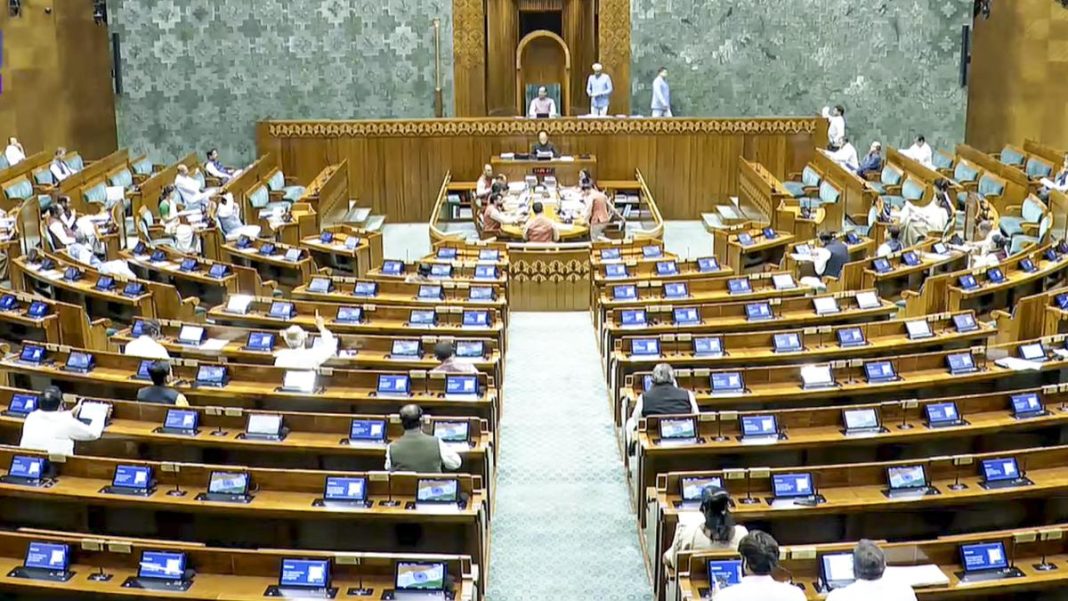
In a development underscoring the profound constitutional and political implications of its task, an Indian Parliamentary Committee has been granted an extension to submit its report on a set of critical bills. These bills propose establishing new mechanisms for the removal of the Prime Minister and Chief Ministers from office, a subject that delves deep into the bedrock of India’s democratic framework and executive accountability.
The Parliamentary Standing Committee on Personnel, Public Grievances, Law and Justice, responsible for scrutinizing these proposals, now has additional time to deliberate on what many consider one of the most significant legislative challenges of recent times. The extension reflects the intricate legal, constitutional, and political considerations involved in contemplating such a fundamental shift in governance.
The Bills: Redefining Accountability?
Currently, the removal of a Prime Minister or Chief Minister in India is primarily governed by their ability to command the confidence of the respective legislative assembly. A no-confidence motion, if passed, is the established parliamentary mechanism. Beyond this, an electoral defeat or resignation are the main avenues. Unlike the President or Supreme Court judges, whose removal processes are explicitly detailed in the Constitution (impeachment), there isn’t a separate, explicit constitutional provision for the removal of a Prime Minister or Chief Minister based on specific grounds other than loss of legislative support.
The bills under examination aim to fill this perceived void. While the exact details of each bill vary, their common thread is the introduction of a structured process for removal based on grounds such as grave misconduct, constitutional violations, or demonstrated incapacity. Proponents argue that such mechanisms could enhance accountability, deter corruption, and provide a vital check against potential abuses of power, irrespective of a leader’s numerical majority in the house. Critics, however, voice concerns about potential political weaponisation and the destabilising effect on executive leadership.
The Committee’s Deliberative Challenge and the Extension
The Parliamentary Standing Committee on Personnel, Public Grievances, Law and Justice faces an arduous task. Its mandate extends beyond merely examining the text of the bills; it must consider their broader ramifications on India’s constitutional architecture, the separation of powers, and the delicate balance between executive stability and democratic accountability. Key questions that demand thorough consideration include:
- What specific grounds would warrant such a removal? How would these grounds be defined without being vague or open to subjective interpretation?
- What would be the procedural safeguards to prevent politically motivated or frivolous removal attempts?
- How would such a mechanism interact with the existing parliamentary system and the principle of collective responsibility?
- What impact would it have on the federal structure, particularly concerning the removal of Chief Ministers by a central parliamentary process or similar state-level enactments?
- Would it necessitate constitutional amendments, and if so, what would be their scope and impact?
The decision to grant an extension underscores the complexity and sensitivity of these issues. Committee members are likely engaged in extensive consultations with constitutional experts, legal luminaries, political scientists, and possibly even former administrators. Crafting a report that balances the need for greater accountability with the imperative of executive stability, while upholding the tenets of parliamentary democracy, requires meticulous deliberation. It’s a testament to the gravity of the subject that the committee deemed more time essential to produce a comprehensive and well-considered recommendation.
“The proposed mechanisms for removing a Prime Minister or Chief Minister, while laudable in their intent for greater accountability, delve into profoundly sensitive areas of our constitutional setup,” remarked Dr. Shanta Raman, a prominent constitutional expert. “The committee’s extension signals a responsible approach to a matter that could fundamentally alter the balance of power and the stability of governance in India. Hasty decisions here could have unforeseen long-term consequences for our democracy.”
Implications for Indian Democracy
The eventual report of the Parliamentary Committee will be a landmark document, regardless of its recommendations. Should it propose such mechanisms, it would initiate a profound debate within Parliament and across the nation, potentially leading to significant legislative or constitutional changes. The discussions around these bills are not merely about procedural adjustments; they are about reinforcing or redefining the core principles of governance, accountability, and the very nature of political leadership in India.
The ongoing deliberation is a crucial exercise in parliamentary democracy, demonstrating the rigorous process involved in contemplating changes that could reshape the nation’s political landscape. As the committee continues its work, all eyes will be on its findings, which promise to spark a vital national conversation on the future of accountability at the highest echelons of Indian executive power.

