


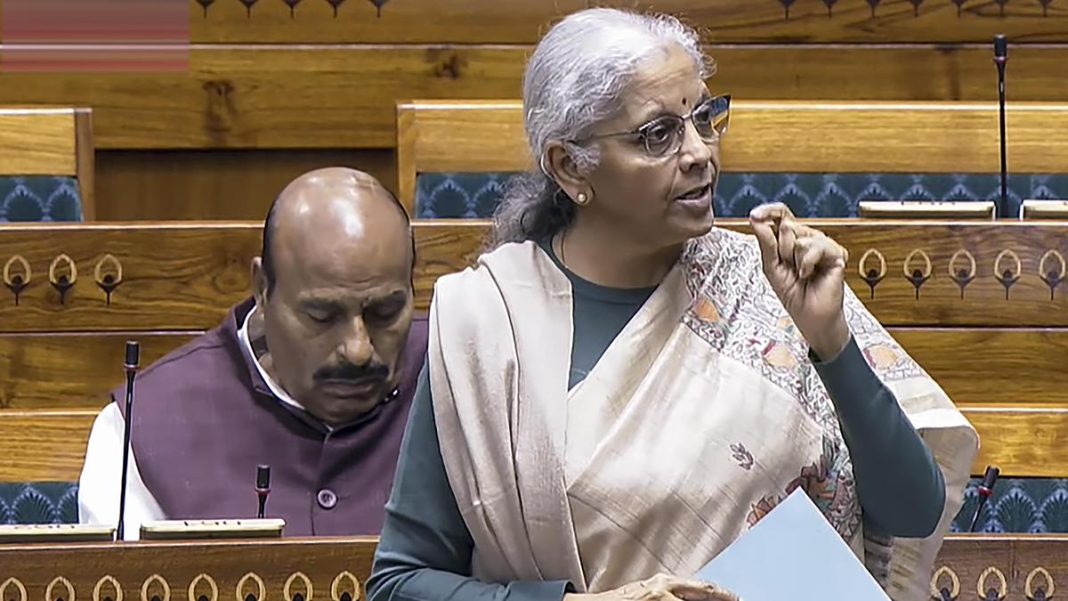
New Delhi – The Winter Session of Parliament continued its intense legislative schedule on Day 4, with the Lok Sabha witnessing a robust and often impassioned debate on a landmark piece of legislation: the Health Security se National Security Cess Bill, 2025. As the nation keenly watched, parliamentarians grappled with a proposal that seeks to interlink public health resilience with the country’s strategic defence preparedness, highlighting the evolving priorities of national governance in a post-pandemic, geopolitically complex world.
The corridors of power buzzed with discussions surrounding the Bill, which proposes a new cess aimed at generating dedicated funds for bolstering India’s healthcare infrastructure and simultaneously enhancing its national security capabilities. The debate underscored the government’s perceived need for innovative financing mechanisms to address critical national priorities, while the opposition raised pertinent questions regarding fiscal burden, transparency, and federal financial implications.
Understanding the Health Security se National Security Cess Bill, 2025
The Health Security se National Security Cess Bill, 2025, introduced by the government, posits a dual-purpose revenue generation mechanism. Under its provisions, a new cess would be levied on specific goods and services, with the collected revenue earmarked exclusively for two critical sectors: strengthening public health systems and fortifying national security assets. The Bill’s title itself – “Health Security se National Security” – suggests an integrated approach, recognizing that a healthy populace is fundamental to national resilience, and a secure nation provides the framework for public well-being.
Government sources indicate that the rationale behind this consolidated cess stems from lessons learned during the recent global health crisis, which exposed vulnerabilities in public health infrastructure, alongside an increasing need for defence modernization in the face of evolving geopolitical challenges. The cess aims to create a dedicated, non-lapsable fund that can be utilized for upgrading hospitals, research and development in healthcare, indigenous defence production, cybersecurity enhancements, and border infrastructure development. Unlike taxes that are part of the divisible pool shared with states, cesses are typically retained by the central government, allowing for direct allocation to specified projects.
A Vigorous Debate: Voices from the Floor
The Lok Sabha floor became the arena for a spirited exchange of views. Speaking on behalf of the government, Finance Minister Nirmala Sitharaman emphasized the long-term strategic vision behind the Bill. “This is not merely an additional levy; it is an investment in our future,” she stated. “The pandemic taught us the invaluable lesson that health security is inextricable from national security. A nation cannot be truly strong if its citizens are vulnerable to disease, or if its borders are unprotected. This Bill provides a robust and predictable funding stream for these foundational pillars.” The Minister highlighted how the funds would catalyze indigenous capacities, reduce reliance on imports, and ensure preparedness for unforeseen emergencies.
However, the opposition benches articulated significant concerns. Several Members of Parliament (MPs) questioned the timing of the cess, given prevailing economic conditions and the potential burden on common citizens. Rahul Gandhi, a prominent opposition leader, voiced strong reservations: “While we all agree on the importance of health and security, imposing yet another cess directly impacts the pockets of ordinary Indians already struggling with inflation. Where is the transparency in the utilization of existing funds? This move risks further centralizing financial power, bypassing states that are on the frontline of both healthcare delivery and internal security challenges.”
Other MPs echoed these sentiments, pointing to the disproportionate impact a new cess might have on lower-income households and small businesses. There were also calls for a more detailed breakdown of how the funds would be allocated between health and national security, demanding greater accountability mechanisms to prevent potential misuse or misdirection of public money.
“The Bill, while aspirational in its intent, must not overlook the practical realities faced by our citizens. Financial stability at the household level is also a form of national security. We need clearer assurances on fiscal burden and equitable distribution of development.” – Priya Sharma, MP, during the debate.
Implications and the Road Ahead
The debate on the Health Security se National Security Cess Bill, 2025 is far from over. Its passage would signify a significant shift in India’s approach to funding critical public goods, moving towards a dedicated cess mechanism for what the government deems essential, interlinked national priorities. For citizens, it would mean an additional financial contribution, but theoretically, it promises enhanced services in health and a stronger security apparatus.
The Bill now faces further scrutiny, potentially in a parliamentary standing committee, where detailed clauses will be discussed, and expert opinions may be sought. The government will likely need to address the opposition’s concerns regarding fiscal transparency and the impact on federal financial relations to ensure broader consensus. The outcome of this legislative endeavor will not only redefine funding mechanisms but also set a precedent for how India strategically invests in its human capital and territorial integrity in the years to come.
The Lok Sabha is expected to continue its deliberations on the Bill in the coming days, with amendments and further clarifications anticipated before it can move towards a vote. The discussions of Day 4 certainly highlighted the complex balance between national aspiration and public burden that Indian policymaking continually navigates.

