


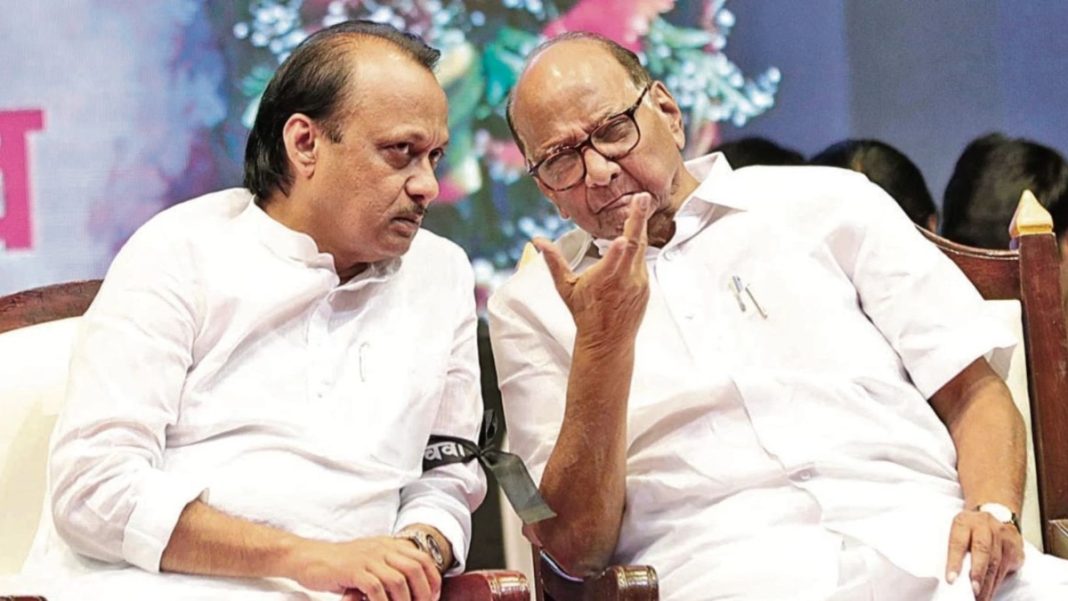
In a surprising development that has set political circles abuzz across Maharashtra, Ajit Pawar, Deputy Chief Minister and leader of the Nationalist Congress Party (NCP) faction allied with the BJP-Shiv Sena government, has announced a strategic alliance with his uncle, Sharad Pawar, for the upcoming local body elections. This unexpected ‘parivar together‘ move signals a pragmatic shift in the state’s intricate political landscape, coming months after the dramatic split within the Nationalist Congress Party that saw the nephew align with the ruling coalition, leaving his veteran uncle to lead a separate faction.
The announcement, made by Ajit Pawar himself, underlines a potential recalibration of political strategies at the grassroots level, distinct from the broader state and national alliances. It suggests that despite fierce ideological and power struggles at the apex, family ties and local electoral compulsions might still dictate ground-level political maneuvering in the Pawar family bastion of Maharashtra. This decision could have significant ramifications for all major political players as they brace for a series of crucial local polls.
A Strategic Reunion at the Grassroots
The decision by Ajit Pawar to join forces with Sharad Pawar’s faction for local elections, including municipalities, zilla parishads, and gram panchayats, is being interpreted as a shrewd tactical move aimed at consolidating the family’s traditional voter base and preventing a split in the anti-incumbency vote where necessary. The formal split of the NCP last year, followed by the Election Commission of India ruling recognising Ajit Pawar’s faction as the legitimate NCP and awarding it the ‘clock’ symbol, had created an unprecedented schism within one of Maharashtra’s most influential political families.
However, local body elections often operate on different dynamics than state assembly or parliamentary polls. Personal relationships, local development issues, and the influence of established political families frequently outweigh broader party affiliations. An alliance at this level could allow both factions to leverage the ‘Pawar brand’ which still holds considerable sway in many parts of Maharashtra, particularly in its western regions. It also potentially avoids a situation where two factions of the same family directly compete, thus splitting their core vote bank and inadvertently benefiting rival parties. “While our political paths at the state level may differ significantly, the well-being of our people and local development remain paramount. For the upcoming local elections, we believe working together, under the guidance of elders, will best serve the interests of Maharashtra’s grassroots,” stated Ajit Pawar, emphasizing the distinct nature of local body politics.
Ripples Across Maharashtra’s Political Landscape
This development is likely to send ripples across Maharashtra’s already complex political landscape. For the opposition Maha Vikas Aghadi (MVA) — comprising the Shiv Sena (Uddhav Thackeray faction), Congress, and Sharad Pawar’s NCP faction — the announcement presents a dual challenge. While it might simplify seat-sharing negotiations in some areas by unifying the Pawar family’s influence, it also raises questions about the MVA’s internal coherence, particularly if Sharad Pawar’s faction prioritizes this family alliance over broader MVA commitments in certain local contexts.
Conversely, for the ruling Mahayuti alliance, which includes the BJP, Shiv Sena (Eknath Shinde faction), and Ajit Pawar’s NCP, the implications are equally complex. While Ajit Pawar’s faction is part of the state government, this local alliance with his uncle could create awkward situations where allies are seen to be working with the opposition at the grassroots. It highlights the deeply personal and often unpredictable nature of Maharashtra politics, where family loyalties can occasionally transcend rigid party lines, especially when electoral success at the local level is at stake. The move could also be seen as an attempt by Ajit Pawar to maintain his connection to the larger Pawar legacy, even while pursuing a separate political trajectory at the state level.
The ‘Parivar together‘ strategy for local polls underscores the enduring strength of the Pawar family’s political capital and their pragmatic approach to electoral politics. It’s a testament to the belief that in India’s diverse and deeply rooted electoral system, local dynamics, and family influence can often dictate alliances that may seem contradictory at a higher political plane. How this strategic alliance plays out on the ground and its long-term impact on the larger political equations in Maharashtra will be keenly observed.

