


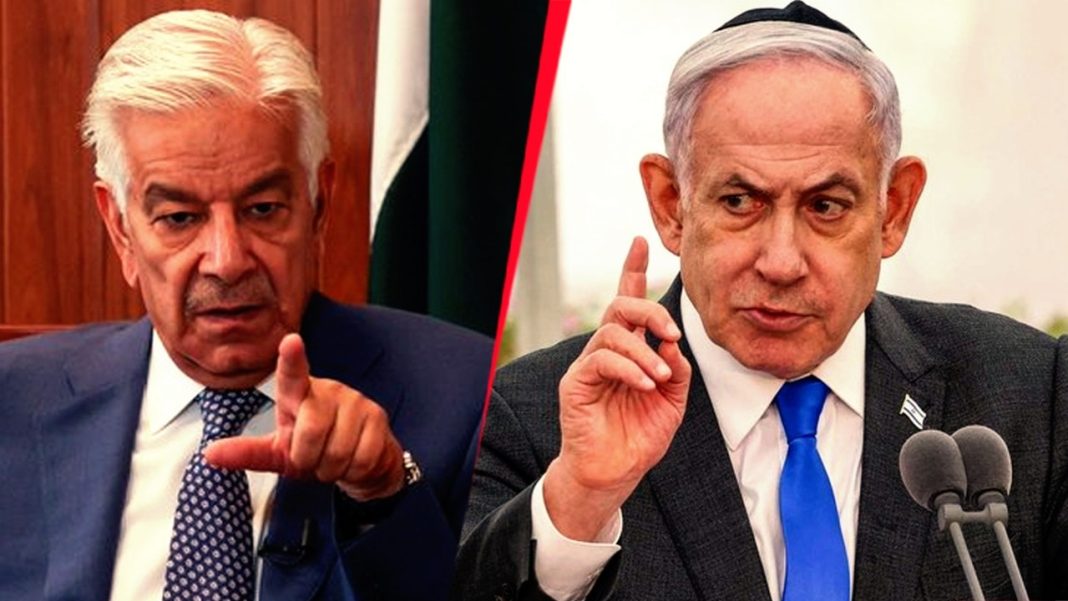
In an increasingly interconnected world, where diplomatic exchanges often unfold in real-time across digital platforms, a recent incident involving Pakistan’s former Defence Minister, Khawaja Asif, underscored the volatile nature of social media diplomacy. Asif, a senior leader of the Pakistan Muslim League-Nawaz (PML-N), ignited a significant diplomatic stir after posting a strongly worded anti-Israel message on a social media platform, only to retract it swiftly following a fiery response from Israeli Prime Minister Benjamin Netanyahu.
The episode, which unfolded rapidly across global news feeds, offers a potent lesson in the delicate art of international communication, especially for nations navigating complex geopolitical landscapes. From an Indian perspective, such events highlight the tightrope walk many countries must perform, balancing domestic sentiments with international relations, and the increasing scrutiny public figures face in the digital age.
The Incendiary Post and Swift Retraction
The controversy began when Khawaja Asif took to social media, reportedly stating, “Israel is evil,” alongside strong condemnations of Israeli actions. While the exact wording of the original post has become secondary to its impact, its intent was unmistakably critical and condemnatory of the Israeli state. Such a direct and provocative statement from a prominent political figure, particularly one with a history of holding key ministerial portfolios, quickly drew attention.
The response from Tel Aviv was almost immediate and uncompromising. Israeli Prime Minister Benjamin Netanyahu, known for his robust defence of his nation’s policies, reportedly issued a stern rebuke. Though the precise content of Netanyahu’s counter-response was not widely disseminated, its impact was clear: it prompted Asif to delete his controversial post. This rapid deletion suggests either an acknowledgment of a diplomatic misstep, external pressure, or a recalculation of the potential repercussions from the Pakistani politician’s camp.
The swiftness of both the original post’s circulation and its subsequent removal highlights the dual-edged sword of social media in foreign policy. While it offers an unparalleled platform for direct communication, it also presents an arena where uncalculated remarks can escalate into international incidents in mere moments, demanding equally swift damage control.
Navigating Geopolitical Complexities and Digital Diplomacy
The incident involving Khawaja Asif is not an isolated event but rather indicative of broader challenges in modern international relations. For Pakistan, which officially does not recognise Israel, any public statement on the Israel-Palestine conflict is inherently sensitive. The country has historically aligned itself with the Palestinian cause, a stance rooted in Islamic solidarity and geopolitical considerations. However, unofficial remarks from a high-profile politician can carry implications beyond official policy, potentially complicating future diplomatic manoeuvres or perceptions.
In India, a nation that has carefully cultivated robust strategic ties with Israel while historically maintaining support for Palestinian self-determination, such digital diplomatic skirmishes are observed with keen interest. India’s evolving foreign policy stance, characterised by strategic autonomy and multi-alignment, often contrasts with more overtly ideological positions taken by some of its neighbours. The incident serves as a reminder of how quickly public statements can be misconstrued or magnified, underscoring the need for precision and foresight in international discourse, especially on platforms where context can be easily lost.
Digital diplomacy, or ‘Digi-plomacy,’ has become a critical tool and a potential minefield for foreign policy. Governments and political figures worldwide are grappling with how to effectively leverage social media for communication without inadvertently creating diplomatic crises. “In an era of hyper-connectivity, every public statement by a political figure carries immediate global weight, demanding greater circumspection than ever before,” observes Dr. Alok Sharma, a Delhi-based expert in international relations. He adds, “The Khawaja Asif incident is a stark reminder that the informal nature of social media doesn’t diminish the formal consequences of diplomatic gaffes.”
Implications for Regional Stability and Future Engagement
While Khawaja Asif’s deleted post might seem like a fleeting digital blip, it carries broader implications for regional stability and the conduct of diplomacy. Such public pronouncements, even when retracted, contribute to the ongoing narrative surrounding sensitive geopolitical flashpoints. They can harden existing stances, complicate potential backchannel discussions, or simply add to the general noise in an already contentious environment.
For nations like Pakistan, navigating the delicate balance between domestic political imperatives and international diplomatic etiquette remains a perpetual challenge. The episode underscores the constant vigilance required from political leadership in an age where a single tweet or post can reverberate globally, demanding immediate strategic responses. As the world continues to integrate digitally, the line between personal opinion and national policy, particularly for high-profile individuals, blurs considerably. This incident serves as a critical case study on the evolving nature of international relations, where social media platforms are not just communication channels but active theatres of diplomatic engagement and potential conflict.
The episode ultimately serves as a powerful reminder of the profound impact of digital communication on global politics. It reiterates the critical need for thoughtful, measured, and strategic engagement by public figures, especially concerning sensitive international issues, to prevent fleeting digital expressions from escalating into significant diplomatic challenges.

