


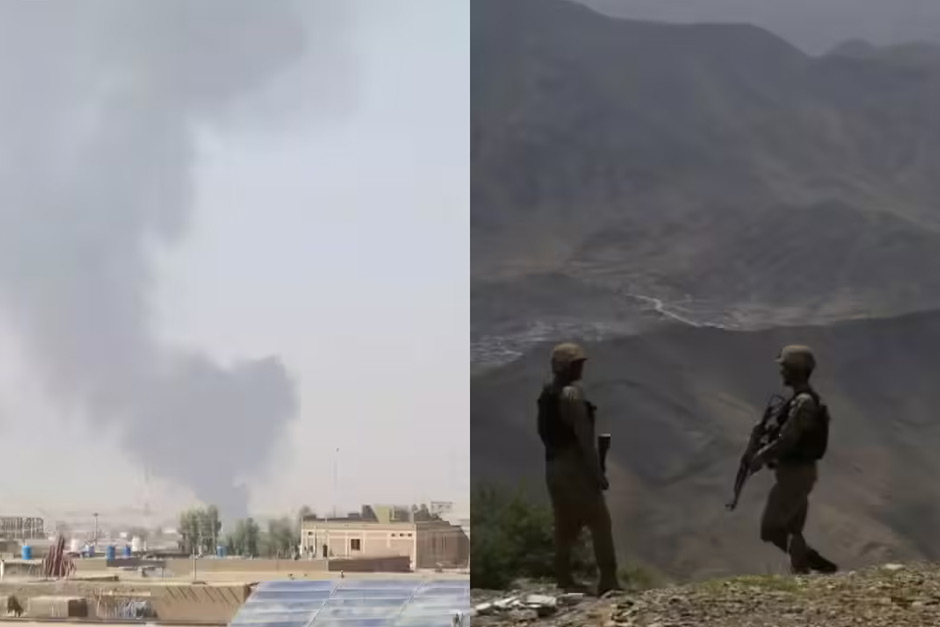
The already volatile border region between Pakistan and Afghanistan has once again erupted in conflict, as Pakistan launched a series of “intelligence-based anti-terrorist operations” against alleged militant hideouts inside Afghan territory. The strikes, confirmed by Pakistan’s military, came swiftly after a surge in deadly suicide attacks on Pakistani soil, including a recent incident that claimed the lives of five Chinese engineers in Khyber Pakhtunkhwa. This dramatic escalation underscores the deep-seated security challenges plaguing the region and raises significant concerns about broader stability, a matter keenly observed by India.
Escalation and Retaliation: A Cycle of Violence
The Pakistani military’s operations, reportedly targeting hideouts of the banned Tehrik-i-Taliban Pakistan (TTP) and its affiliates, were a direct response to a series of high-profile terrorist attacks. The most recent and particularly galling incident involved a suicide bomber targeting a convoy of Chinese workers en route to the Dasu Dam hydropower project in Shangla district. The attack, which killed five Chinese nationals and their Pakistani driver, not only highlighted the persistent threat posed by militant groups but also strained Pakistan’s crucial relationship with China, a key economic and strategic partner.
Pakistan has long accused the Afghan Taliban government of providing safe haven to TTP militants, who frequently cross the porous 2,670-kilometre border to launch attacks. Islamabad asserts that the Afghan Taliban, despite pledges, has failed to rein in these groups, leading to a significant uptick in cross-border terrorism. The retaliatory strikes included both air assaults and artillery fire, hitting what Pakistan described as “terrorist sanctuaries.” This aggressive posture marks a significant shift, demonstrating Pakistan’s growing impatience and willingness to take unilateral action, which risks further inflaming relations with its western neighbour.
The Complex Cross-Border Dynamic and Regional Impact
The situation along the Durand Line is a microcosm of a deeply entrenched geopolitical struggle. For decades, the border has been a source of contention, exacerbated by shared ethnic populations and the fluid movement of militant groups. The Afghan Taliban, while condemning Pakistan’s strikes as a violation of sovereignty, denied sheltering any group hostile to Pakistan. They instead accused Pakistan of internal failures and warned against further incursions, suggesting that such actions would lead to “uncontrollable consequences.” This blame game highlights the profound lack of trust and cooperation between the two nations.
The TTP, an ideologically aligned but operationally independent offshoot of the Afghan Taliban, has found renewed strength since the Taliban’s takeover of Kabul in 2021. Its fighters, often using Afghan territory as a launchpad, have intensified their insurgency against the Pakistani state, particularly targeting security forces and Chinese interests. The Afghan Taliban’s inability or unwillingness to effectively counter the TTP has become a major point of friction, leading to border closures, diplomatic expulsions, and now, military action. This dynamic creates a volatile security vacuum that can easily be exploited by various extremist elements, posing a threat to the wider region.
From an Indian perspective, the escalating tensions and military actions along the Pakistan-Afghanistan border are a matter of serious concern. India has consistently advocated for a stable and terror-free regional environment. The proliferation of militant groups and the inability of states to control their borders only exacerbate the regional security complex. As a prominent voice against cross-border terrorism, India emphasizes that no nation should allow its territory to be used for launching attacks against another. The current situation underscores the difficulty of achieving lasting peace when fundamental issues of state control and counter-terrorism cooperation remain unresolved.
“This cycle of cross-border accusation and retaliation is unsustainable,” noted Dr. Rohan Kumar, a Delhi-based geopolitical analyst. “Until there’s genuine political will and actionable intelligence sharing to dismantle terrorist networks on both sides, this regional instability will persist. The military option alone, without a comprehensive strategy, often only deepens mistrust and empowers extremist narratives.”
Looking Ahead: A Precarious Path to Stability
The immediate aftermath of Pakistan’s strikes will likely see heightened border security and increased rhetoric. While the tactical objectives of the operations may be met in the short term, the long-term implications for regional stability are complex. The strikes risk alienating the Afghan Taliban further, potentially pushing them to a more defiant stance regarding the TTP. Moreover, any civilian casualties or widespread displacement could generate a humanitarian crisis, adding another layer of complexity to an already fragile region.
For India, the unfolding events reinforce the need for vigilance regarding regional security. The porous nature of borders in this part of the world, coupled with the ideological fluidity of militant groups, means that instability in one area can quickly spill over. A stable Afghanistan, free from the clutches of extremist groups, remains crucial for India’s strategic interests, including connectivity and humanitarian efforts. The current situation serves as a stark reminder that sustained regional peace requires sincere and coordinated efforts against all forms of terrorism, irrespective of their origin or target.
The path forward for Pakistan and Afghanistan is precarious. De-escalation, diplomatic engagement, and credible cooperation on counter-terrorism remain the only viable long-term solutions to break this dangerous cycle. The international community, including regional stakeholders like India, will be closely watching for any signs of restraint and dialogue, hoping to avert a wider conflict that could have devastating consequences for an already troubled part of the world.

