


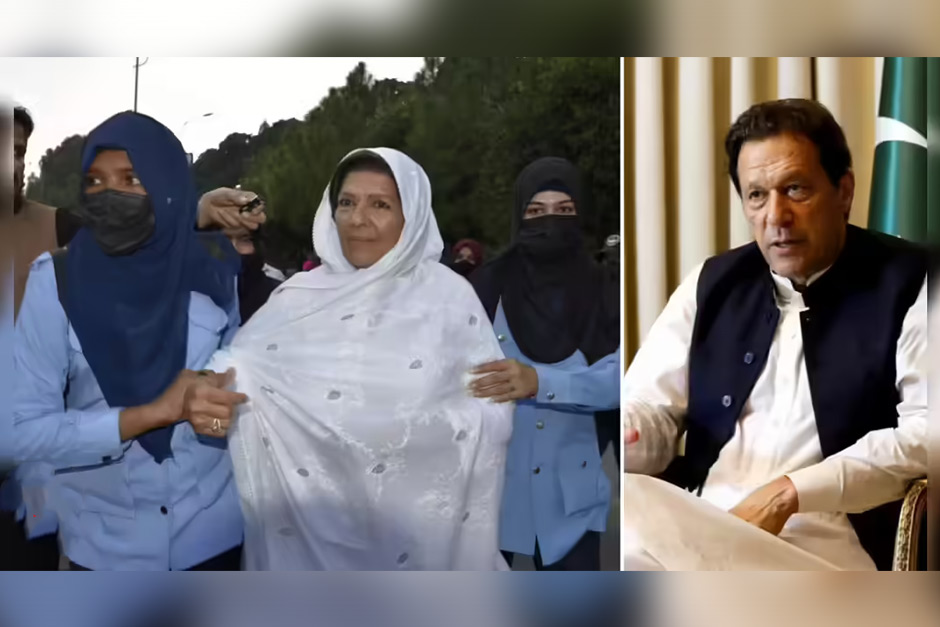
In a significant escalation of Pakistan’s ongoing political turmoil, former Prime Minister Imran Khan’s sisters, Uzma Khan and Aleema Khan, alongside numerous supporters of his Pakistan Tehreek-e-Insaf (PTI) party, have been booked under anti-terrorism laws. This development marks a new phase in the government’s vigorous crackdown following the widespread protests and violence that erupted across the nation on May 9th. The move signals a broadening of legal actions against the PTI leadership and cadre, intensifying the already volatile political landscape in the nuclear-armed nation, a situation closely observed by regional neighbours, including India.
The Genesis of Charges: May 9th Unrest and Anti-Terrorism Act
The anti-terrorism charges against Uzma Khan, Aleema Khan, and hundreds of other PTI workers stem directly from the violent demonstrations that engulfed Pakistan after Imran Khan’s dramatic arrest on May 9th, 2023. Khan was apprehended on corruption charges, sparking immediate and fierce backlash from his supporters. The protests quickly escalated, with angry mobs targeting key military installations, including the General Headquarters (GHQ) in Rawalpindi and the Corps Commander’s House (Jinnah House) in Lahore, alongside other public and private properties.
Pakistani authorities, particularly the powerful military establishment, viewed these attacks as an unprecedented assault on state symbols and national prestige. In response, the caretaker government and the military leadership vowed a stringent crackdown on all those involved, terming the perpetrators “terrorists” and calling for trials under military laws in certain cases. The Anti-Terrorism Act (ATA) of 1997 is a comprehensive legal framework designed to combat terrorism and allows for harsher penalties and expedited trials for a wide range of offences deemed to be terrorism-related, including incitement to violence and damaging state property. The booking of Imran Khan’s sisters and other prominent female party members under these severe charges highlights the government’s resolve to prosecute even those perceived to be indirectly involved or instigating the unrest.
Deepening Political Chasm and Legal Ramifications
The application of anti-terrorism charges against the former Prime Minister’s family members and party loyalists underscores the deep chasm that has opened up in Pakistan’s political arena. For the PTI, this represents a relentless assault aimed at dismantling the party and silencing its dissent. Many of the party’s top leaders, including Shah Mahmood Qureshi and Asad Umar, have already been arrested, and some have even announced their departure from the party, citing insurmountable pressure.
Critics argue that the broad application of anti-terrorism laws risks stifling legitimate political dissent and shrinking the democratic space within Pakistan. The government, however, maintains that its actions are necessary to uphold law and order and to protect national institutions from sabotage. The legal battle is expected to be protracted and complex, with profound implications for the future of the PTI and the broader political landscape. “The sweeping use of anti-terrorism statutes against political figures, including family members, indicates a concerning escalation in Pakistan’s political repression,” states Dr. Ayesha Siddiqa, a prominent Pakistani political analyst. “It poses serious questions about due process and the health of democratic institutions, casting a long shadow over the upcoming elections.”
Regional Scrutiny and Future Uncertainty
From an Indian perspective, the intensifying internal political strife in Pakistan is a matter of close observation. India has historically maintained a cautious stance on Pakistan’s domestic issues, but political instability in the neighbouring country often carries regional implications, particularly concerning security and cross-border dynamics. The prospect of sustained unrest and a weakening of civilian political institutions in Pakistan raises concerns about regional stability and potential ripple effects.
Internationally, human rights organizations and democratic watchdogs have expressed apprehension over the scale of arrests and the use of stringent laws. The crackdown on PTI, particularly against its female members and family of the former premier, adds another layer of complexity to Pakistan’s already fragile democratic narrative. As Pakistan grapples with severe economic challenges and attempts to navigate a path towards general elections, the current political crackdown adds significant uncertainty. The legal actions against Khan’s family and supporters are not just isolated incidents; they are symptomatic of a nation at a critical political juncture, with its future trajectory hanging precariously in the balance.
The unfolding events in Pakistan highlight the fragility of its political system and the persistent struggle between civilian leadership and the powerful establishment. As the nation moves forward, the impact of these anti-terrorism bookings on its political fabric and democratic future will undoubtedly be profound, and closely monitored by observers worldwide.

