


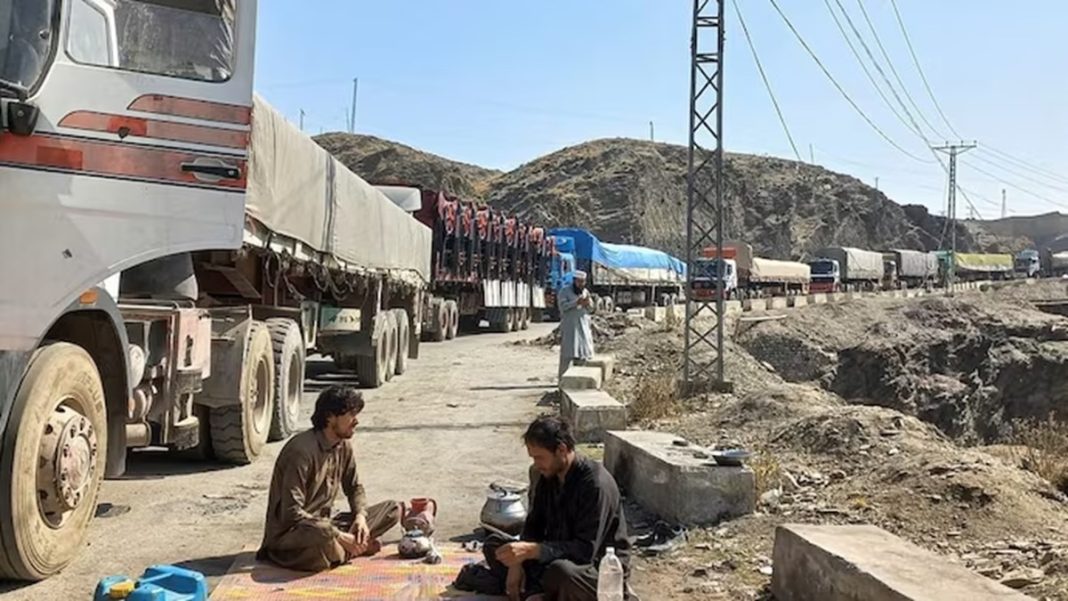
The already volatile border region between Pakistan and Afghanistan has once again erupted in heavy exchanges of fire, following the dramatic collapse of crucial peace talks. This recent escalation underscores the profound fragility of relations between the two neighbours and sends a worrying signal across South Asia, highlighting the enduring challenges to stability in a strategically vital corridor.
For weeks, diplomatic channels had been buzzing with efforts to de-escalate tensions and address long-standing grievances, primarily focused on border management and the persistent issue of cross-border militancy. However, optimism quickly evaporated, giving way to renewed hostilities that saw artillery shells and small arms fire exchanged along various points of the porous Durand Line, confirming fears that dialogue alone might not suffice to mend a deeply fractured relationship.
Escalation After Diplomatic Deadlock
Reports from both sides confirm that the border regions, particularly in Pakistan’s Khyber Pakhtunkhwa province and Afghanistan’s Nangarhar and Kunar provinces, witnessed intense clashes. Eyewitness accounts and official statements, albeit often contradictory, indicate that the exchanges involved heavy weaponry, leading to concerns over potential casualties and displacement of local populations already accustomed to sporadic violence. While specific details remain contested, the scale of the recent firing suggests a significant deterioration from routine skirmishes.
This flare-up comes directly on the heels of several rounds of high-level meetings between Pakistani and Afghan delegations, which reportedly stalled over core disagreements. Pakistan has consistently voiced concerns about militant groups, notably the Tehrik-i-Taliban Pakistan (TTP), operating from Afghan soil and launching attacks on its territory. Afghanistan, in turn, has often pushed back, citing its own security challenges and, at times, accusing Pakistan of harbouring elements hostile to its government. The failure to bridge this trust deficit, particularly on intelligence sharing and coordinated counter-terrorism efforts, appears to be the immediate trigger for the resumption of overt hostilities. Both capitals have issued strong condemnations, with Islamabad accusing Kabul of inaction against militants and Kabul alleging unprovoked aggression from Pakistani forces.
A Volatile Frontier: Historical Grievances and Regional Repercussions
The current crisis is not an isolated incident but rather a symptom of deeply entrenched historical grievances and competing geopolitical interests. The 2,670-kilometre Durand Line, a legacy of British colonial rule, remains a point of contention, with Afghanistan never formally recognising it as an international border. This historical dispute complicates efforts at effective border management and fuels nationalist sentiments on both sides, often exploited by non-state actors.
Beyond the border demarcation, the presence of various militant groups operating across the frontier poses an existential security threat to both nations. The TTP, a Pakistani Taliban splinter group, has found sanctuary and operational space, according to Pakistani claims, leading to frequent demands for action from Afghanistan. The inability to forge a unified strategy against these groups is a major impediment to peace.
The ripple effects of this instability extend far beyond the immediate border. For India, a stable and peaceful Afghanistan-Pakistan frontier is crucial for regional security. Prolonged conflict or a breakdown in law and order directly impacts India’s strategic interests, including connectivity projects and counter-terrorism efforts. An already complex regional security landscape, involving major powers and various stakeholders, can ill afford further destabilisation. As a seasoned South Asian security analyst, Dr. Alok Kumar, recently observed, “The inherent mistrust between Islamabad and Kabul, exacerbated by the TTP’s resurgence, creates a dangerous vacuum. This instability not only threatens their respective national securities but also casts a long shadow over the broader regional quest for peace and economic integration, including India’s strategic calculations.”
The Path Forward: Precarious Stability and Missed Opportunities
The immediate challenge lies in de-escalating the current military confrontation and preventing further loss of life. Both nations are under immense pressure to find a way back to the negotiating table, but the renewed firing has further eroded an already thin layer of trust. The lack of a strong, impartial mediator, or an established international mechanism for dispute resolution, complicates the path to a lasting solution.
For regional stability to prevail, a fundamental shift in approach is required. This would involve a mutual recognition of security concerns, a willingness to engage in genuine intelligence sharing, and a concerted, collaborative effort to tackle cross-border militancy without geopolitical one-upmanship. The current trajectory, marked by diplomatic failures followed by military flare-ups, only ensures a continuation of a perilous cycle that impedes development, displaces communities, and allows extremist groups to thrive.
The renewed exchange of heavy fire between Pakistan and Afghanistan is a stark reminder of the region’s enduring fragilities. The failure of peace talks, combined with historical grievances and the persistent threat of militancy, has pushed two crucial neighbours to the brink. For India and the wider international community, the implications are clear: continued instability on this critical frontier poses a significant threat to regional peace and security, underscoring the urgent need for a renewed diplomatic push towards sustainable dialogue and cooperation.

