


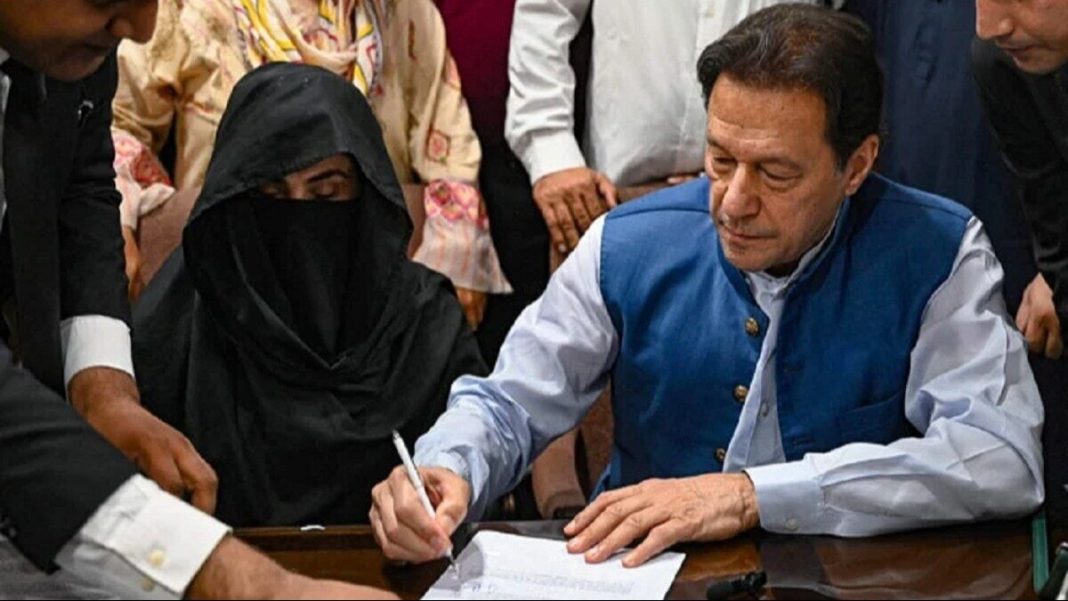
In a significant development that further deepens Pakistan’s already turbulent political landscape, an accountability court in Rawalpindi has sentenced former Prime Minister Imran Khan and his wife, Bushra Bibi, to 17 years in jail in a corruption case. The verdict, delivered just days before the nation is set to hold general elections, marks another severe blow to Khan, who has been embroiled in numerous legal battles since his ouster from power in April 2022. For India, the internal political stability of its western neighbour remains a critical point of observation, given the regional implications of such profound upheaval.
The Al-Qadir Trust Case: A Deep Dive into the Charges
The latest conviction stems from the controversial Al-Qadir Trust case. The charges allege that Imran Khan, while serving as Prime Minister, and his wife Bushra Bibi, illegally acquired land worth billions of rupees for the Al-Qadir University Trust. Prosecutors contended that the land was obtained as a “quid pro quo” from a prominent real estate developer, Malik Riaz, who reportedly transferred approximately 458 kanals of land to the trust. This transaction allegedly involved a settlement agreement between the Pakistani government and Riaz, leading to a significant financial benefit for the businessman in exchange for the land donation.
The National Accountability Bureau (NAB) initiated the inquiry, claiming that Khan and Bushra Bibi misused their positions and influence to benefit the trust, which also involved Bushra Bibi’s friend, Farah Gogi. The court found them guilty of corruption and corrupt practices under the National Accountability Ordinance, 1999. In addition to the 17-year imprisonment, the couple has also been disqualified from holding any public office for a period and fined significantly, a move that effectively bars Khan from participating in the upcoming elections, further weakening his political party, the Pakistan Tehreek-e-Insaf (PTI).
A Cascade of Legal Challenges and Political Fallout
This latest verdict is not an isolated incident but rather the latest in a series of legal challenges and convictions against Imran Khan. Earlier, he was handed a 10-year sentence in the cipher case, accused of revealing state secrets, and previously disqualified from politics for five years in the Toshakhana corruption case, which involved illegally selling state gifts. The rapid succession of these judgments has led to widespread criticism from Khan’s supporters and international observers regarding the fairness and expediency of the trials, often described as politically motivated.
Since his removal via a no-confidence vote, Khan has become Pakistan’s most prominent opposition figure, attracting massive rallies and support. However, his arrest in May 2023, followed by widespread protests and a subsequent crackdown on the PTI, has severely crippled his party’s ability to contest elections effectively. Many senior PTI leaders have either been arrested, gone underground, or defected, leaving the party in disarray. The removal of PTI’s electoral symbol, the ‘bat’, by the Election Commission of Pakistan, further underscores the challenges faced by Khan’s political apparatus. This string of events has undeniably reshaped Pakistan’s political landscape, pushing it closer to an election marred by deep division and uncertainty.
Implications for Pakistan and Regional Dynamics
The continued legal battles and convictions of Imran Khan signal profound instability within Pakistan’s political system. For a nation grappling with severe economic challenges and security concerns, such internal turmoil can have far-reaching consequences. The judiciary’s role and perceived independence have come under intense scrutiny, with critics arguing that the processes are being weaponised to sideline political opponents.
From an Indian perspective, the political health and stability of Pakistan are always closely monitored. A stable, democratic Pakistan is generally seen as conducive to regional peace and security, even amidst bilateral tensions. The ongoing political instability, the marginalisation of popular political figures, and the deepening polarisation within Pakistani society raise concerns about governance, policy consistency, and potential ripple effects across the region. “This verdict, delivered so close to the general elections, casts a long shadow over Pakistan’s democratic process and highlights the fragility of its political institutions,” observed a prominent Indian political analyst, underscoring the regional apprehension.
As Pakistan heads towards an election without one of its most popular leaders actively participating, the future remains highly uncertain. The verdicts against Imran Khan and his wife are set to be appealed, but their immediate impact is to intensify the political crisis, further challenging the prospects of a fair and inclusive democratic exercise.

