


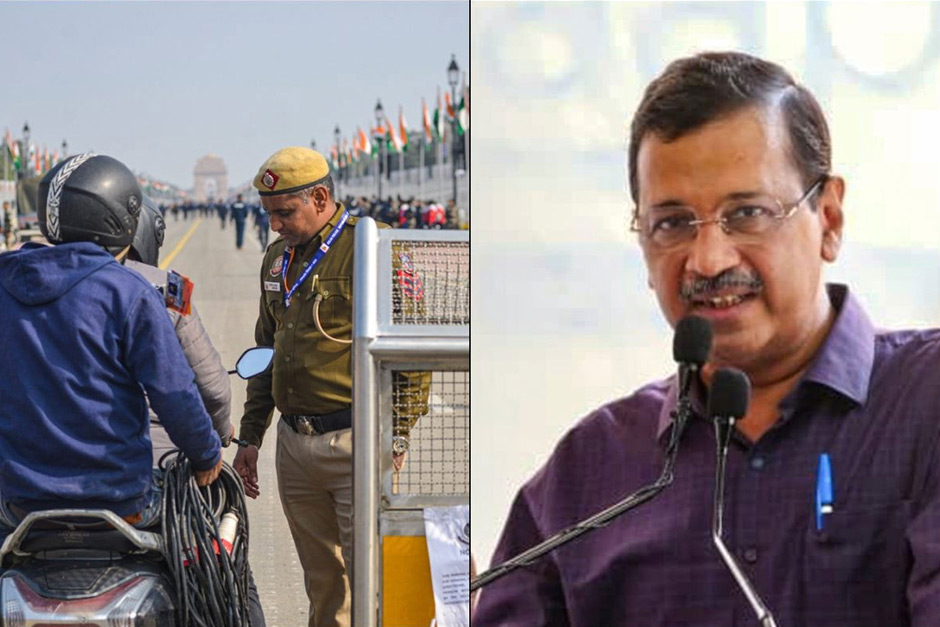
New Delhi, India – A recent political statement by Delhi Chief Minister Arvind Kejriwal regarding allegedly “missing girls” in the national capital quickly escalated into a significant public debate, prompting a swift and strong rebuttal from the Delhi Police. The police force not only refuted Kejriwal’s claims but also characterised them as “paid promotion,” suggesting a deliberate attempt to spread misinformation. This incident highlights the growing tension between political rhetoric and the authoritative response of law enforcement, particularly concerning public safety and official data.
The Chief Minister’s Concerns
The controversy ignited when Delhi Chief Minister Arvind Kejriwal, during a public interaction or official statement (specific context to be verified, but generally during a public forum), raised concerns about the alleged disappearance of a substantial number of girls from Delhi. While the precise figures quoted by the Chief Minister were not always consistent in various reports, the underlying message was one of alarm regarding the safety of women and girls in the city and an implicit critique of the law and order situation, which falls under the purview of the Union Home Ministry and Delhi Police.
Kejriwal’s statements, often amplified through social media and political discourse, tapped into existing public anxieties about crime and safety, particularly for women, in a bustling metropolis like Delhi. Such concerns, when voiced by a prominent political leader, naturally draw considerable attention and often demand an official response to either confirm or deny the veracity of the claims. The timing and nature of these allegations also hinted at the ongoing political tussle between the Delhi government and the central administration over various governance issues, including the control and functioning of the police force.
Delhi Police’s Vehement Rebuttal: ‘Paid Promotion’ Allegation
The Delhi Police wasted no time in addressing the Chief Minister’s allegations, issuing a comprehensive clarification that directly contradicted the claims. Senior police officials, citing detailed internal records and official statistics, stated unequivocally that there was no such widespread phenomenon of “missing girls” as suggested by Kejriwal. They emphasised that all reported cases of missing persons, including girls, are promptly registered, investigated, and efforts are continuously made for their recovery.
In a strongly worded statement, a Delhi Police spokesperson conveyed the department’s position. “The claims made about a large number of girls missing in Delhi are absolutely baseless and misleading. Our records show a consistent and high recovery rate for missing persons. Such unsubstantiated allegations appear to be nothing short of a paid promotion or a politically motivated narrative designed to create panic and defame the force without any factual basis.” This direct accusation of “paid promotion” by the Delhi Police added a sharp edge to their rebuttal, implying a deliberate and possibly funded campaign to propagate false information.
The police further detailed their procedures for handling missing persons cases, highlighting the integration of technology and inter-state coordination for faster tracing and recovery. They provided statistics on the number of missing persons registered and subsequently found, aiming to demonstrate their effectiveness and transparency. The data presented by the police often starkly contrasts with the figures cited in political rhetoric, underscoring the gap between public perception fueled by unverified claims and official records.
The Broader Implications: Information Warfare and Public Trust
This incident transcends a mere disagreement over statistics; it delves into the realm of information warfare, where political narratives can significantly influence public perception and trust in institutions. When a Chief Minister raises such grave concerns, it naturally creates alarm among citizens. Conversely, when the police vehemently deny these claims and label them as “paid promotion,” it questions the intent behind the original statements.
The episode highlights the critical importance of verifiable information in public discourse. In an age dominated by social media and rapid dissemination of news, distinguishing between fact and politically charged rhetoric becomes increasingly challenging. For ordinary citizens, navigating these conflicting narratives can erode trust in both political leadership and law enforcement agencies. The Delhi Police’s firm stance was not just about correcting facts but also about safeguarding their credibility and preventing undue panic within the community.
In conclusion, the clash between Chief Minister Arvind Kejriwal’s concerns about “missing girls” and the Delhi Police’s unequivocal dismissal of these claims, branding them as “paid promotion,” underscores a deeper struggle for narrative control. While public safety remains paramount, the incident serves as a stark reminder of the need for political statements to be grounded in verifiable facts and for official responses to be transparent and data-driven, ensuring that public discourse remains constructive and truly serves the citizens’ best interests.

