


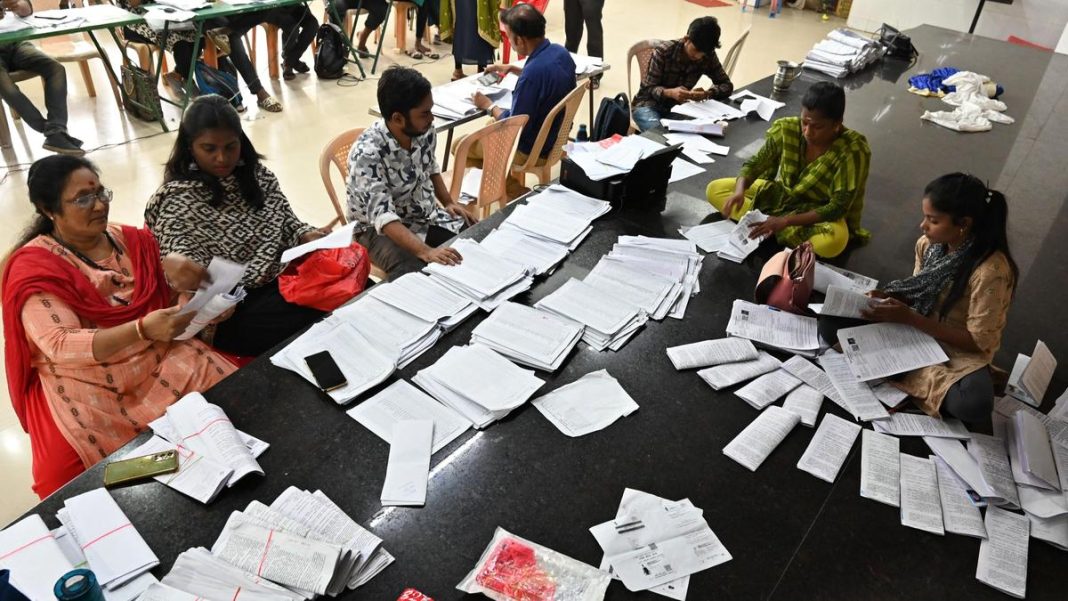
Recent data concerning Tamil Nadu’s electoral rolls has unveiled a striking pattern: over half of the elector deletions across the state are concentrated in a mere eight districts. This significant concentration, forming two distinct geographical clusters, has brought the intricate process of electoral roll management into sharper focus, sparking discussions about transparency and the integrity of democratic exercises.
For a state that registered over 6.2 crore voters in its final rolls, the purification process involving additions and deletions is a continuous and critical exercise. The Election Commission of India (ECI) regularly updates these rolls to ensure accuracy, primarily to remove deceased voters, individuals who have relocated, or duplicate entries. However, the lopsided distribution of these deletions in Tamil Nadu warrants a closer examination.
The Concentrated Deletions: A Closer Look at the Clusters
Analysis of the latest electoral roll revisions indicates that out of the substantial number of deletions across Tamil Nadu – estimated to be around 10 lakh individuals over recent periods – more than 50% occurred in just eight districts. These districts are not randomly spread but form two discernible clusters: one primarily located in the northern and western industrial and urban belts, and another situated in certain agrarian and semi-urban regions of the south.
This geographical clustering suggests that the factors driving these deletions might be localized, rather than uniformly distributed across the state. In the northern cluster, rapid urbanization, migration for employment, and changes in residential patterns could be significant contributors. Meanwhile, the southern cluster might reflect demographic shifts, internal migration within the state, or intensive verification drives in specific electoral constituencies.
The sheer volume of deletions within these confined areas highlights the intensity of the revision process in these regions, impacting a substantial segment of the state’s potential electorate. Understanding the specific socio-economic and demographic realities of these eight districts is crucial to fully comprehending the underlying dynamics of these significant changes.
Unpacking the Reasons and the Purification Drive
Elector deletions are a standard and necessary component of maintaining a clean and accurate voting list, which is fundamental to the principle of ‘one person, one vote’. The primary reasons cited by the Election Commission for such deletions typically include:
- Demise of Voters: The most common reason, where the names of deceased individuals are removed to prevent fraudulent voting.
- Duplicate Entries: Instances where a voter might be registered in more than one constituency or multiple times within the same list, often due to changes in address or errors during enrollment.
- Relocation: Voters who have permanently moved out of a constituency and registered in a new one, or those who have shifted residences within the same area without updating their details.
The ECI undertakes regular ‘electoral roll purification drives’ to systematically identify and address these discrepancies. This process involves Booth Level Officers (BLOs) conducting door-to-door surveys, cross-referencing data, and processing applications for deletion (Form 7). The objective is always to ensure that the electoral roll reflects the current reality of eligible voters, thereby enhancing the credibility of elections.
However, the concentrated nature of deletions in Tamil Nadu’s two clusters naturally prompts questions from electoral watchdog groups and political stakeholders. While purification is essential, the possibility of unintended disenfranchisement due to errors or overzealous application of rules is a perennial concern. Transparency in the deletion process and robust verification mechanisms are vital to maintaining public trust.
“Maintaining a clean and accurate electoral roll is paramount for a robust democracy, ensuring every vote counts and preventing electoral malpractice,” stated a senior official involved in electoral management, emphasizing the rigorous verification processes. “Every deletion undergoes multi-stage verification, often involving public display of draft rolls and objection periods, to ensure no eligible voter is inadvertently removed.”
Ensuring Integrity and Addressing Concerns
The Election Commission has established several safeguards to ensure the integrity of the deletion process. These include mandatory field verification by BLOs before any deletion is finalized, the requirement for specific forms (like Form 7 for deletion requests), and a period for public objections to be raised against proposed changes to the electoral roll. Citizens also have the right to re-enroll if their name has been erroneously deleted.
The unique concentration in Tamil Nadu’s eight districts, however, may necessitate a deeper dive into local specificities. Are there particular demographic trends, intensified administrative drives, or perhaps more pronounced migration patterns at play in these areas compared to others? The answers could provide valuable insights for refining electoral roll management practices nationwide.
The dialogue surrounding these deletions underscores the continuous tension between the need for an absolutely accurate electoral roll and the imperative to ensure universal adult suffrage without undue obstacles. As India’s electoral machinery constantly evolves, striking this delicate balance through transparent processes and responsive grievance redressal mechanisms remains a critical objective.
The focused attention on these clusters in Tamil Nadu will undoubtedly contribute to a broader understanding of electoral dynamics and the ongoing efforts to uphold the sanctity of the democratic process in one of India’s most politically vibrant states.

