


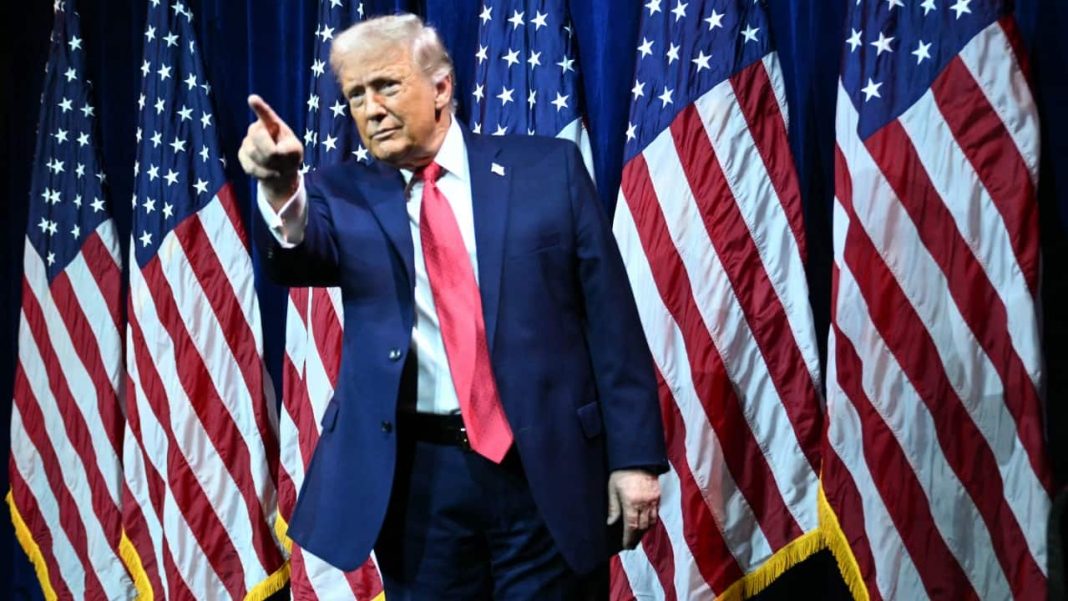
In a series of recent statements that have reverberated across global diplomatic circles, former US President Donald Trump has articulated a profoundly unilateralist vision of executive power, asserting that his personal morality alone would guide his actions on the international stage, largely independent of established international law. The controversial remarks, notably his claim that he “doesn’t need international law” and that “only my morality can stop me” from certain actions, challenge decades of global legal frameworks and raise significant questions about the future of a rules-based international order.
Unfettered Power? Trump’s Vision of Executive Authority
Trump’s comments, made during recent interviews and rallies, represent a stark departure from conventional understandings of presidential authority and international obligations. Historically, US presidents, while possessing significant executive power, have generally operated within the confines of domestic laws, constitutional checks, and, crucially, international treaties and conventions to which the United States is a signatory.
The concept that a leader’s personal morality could supersede international legal frameworks – such as the UN Charter, the Geneva Conventions, or customary international law concerning armed conflict – has drawn widespread concern. These global instruments were painstakingly developed over centuries to establish common standards of conduct, mitigate conflicts, protect human rights, and ensure a degree of predictability in interstate relations. Trump’s assertion implies a skepticism, if not outright rejection, of these established norms, preferring an individualistic interpretation of justice and power.
Critics argue that such a stance, if implemented by a major global power, could dismantle the very foundations of international cooperation and peace. It suggests a world where power dictates right, rather than shared principles. For many, this rhetoric is not merely political posturing but signals a fundamental threat to the legal architecture underpinning global stability.
Global Order Under Strain: An Indian Perspective
The implications of Trump’s statements are particularly salient for nations like India, which have consistently advocated for a multilateral, rules-based international order. India, as a rising global power and the world’s largest democracy, has long anchored its foreign policy on principles of respect for international law, sovereignty, and the peaceful resolution of disputes.
From an Indian standpoint, any move by a major global actor to disregard international law is deeply concerning. India relies on these frameworks for its own security and prosperity, whether in addressing border disputes, ensuring freedom of navigation in the Indo-Pacific, or participating in global efforts against terrorism and climate change. A unilateralist approach by the United States, a key strategic partner, could destabilize regions, undermine alliances, and create a dangerous precedent for other nations contemplating similar actions.
“My morality, my sense of what’s right, is what will stop me. I don’t need international law to tell me what to do,” Trump reportedly stated, asserting a radical view of executive authority. Such declarations complicate India’s strategic autonomy and its efforts to build a stable, predictable international environment. India has been a strong proponent of institutions like the United Nations and the World Trade Organization, viewing them as essential for collective security and economic growth. The erosion of respect for their foundational principles by a prominent global player could weaken these institutions and the collective security they aim to provide.
The Erosion of Norms and the Future of Multilateralism
Trump’s claims are part of a broader global trend where populist and nationalist movements in various countries have expressed skepticism towards international institutions and treaties. However, when such sentiments are articulated by the leader of a nation with unparalleled military and economic might, their potential impact is magnified.
The risk lies in creating a vacuum of accountability. If major powers selectively adhere to international law based on their perceived moral compass, it can encourage other states to do the same, leading to an unpredictable and potentially anarchic global landscape. This scenario is particularly worrying for countries like India that navigate complex geopolitical realities, including territorial disputes and regional power dynamics, where established legal norms are crucial for maintaining peace and preventing escalation.
For India, which envisions itself as a Vishwaguru – a global teacher – upholding international law is not just a matter of foreign policy but also a reflection of its civilizational ethos. The challenge posed by such unilateralist rhetoric from powerful nations necessitates a concerted effort by like-minded countries to reinforce the importance of multilateralism and the sanctity of international legal frameworks.
In conclusion, Donald Trump’s assertions regarding his war powers and disregard for international law represent a significant challenge to the existing global order. While his presidency concluded years ago, the ongoing discourse around such statements serves as a critical reminder of the fragility of international norms. For India and its pursuit of a stable, rules-based world, these remarks underscore the vital importance of advocating for and upholding the very principles that ensure collective security and global cooperation.
—

