


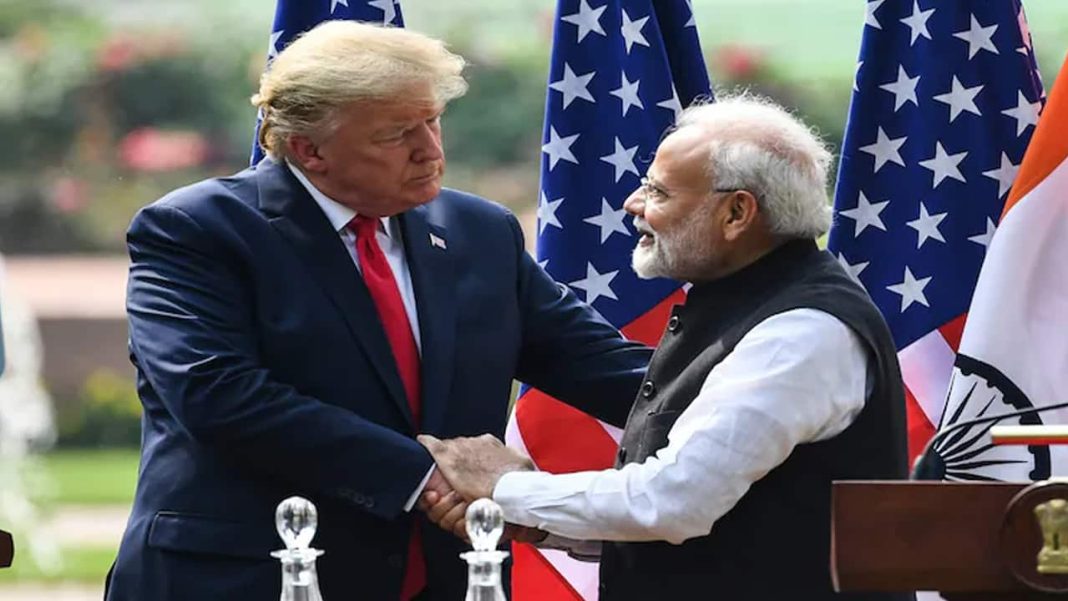
The intricate dance of international diplomacy often finds its rhythm in the personal equations between leaders. Recently, remarks by the US Ambassador to India, Eric Garcetti, rekindled discussions around the dynamics of India-US trade relations during a specific era. Ambassador Garcetti credited Prime Minister Narendra Modi and former US President Donald Trump as the “only two dealmakers” capable of having potentially forged a comprehensive trade agreement between their nations. His statement offers a retrospective lens on a period marked by both ambition and significant challenges in bilateral trade negotiations, underscoring the enduring strategic importance of the India-US economic partnership.
The Diplomatic Nod to ‘Dealmakers’
Ambassador Garcetti’s comments, made in a public forum, highlighted what he perceived as a unique confluence of leadership styles. He suggested that the distinct approaches and personal chemistry between PM Modi and President Trump created a unique window for a substantive trade pact. During Trump’s presidency, both leaders frequently met and expressed mutual admiration, fostering a perception of strong personal rapport. This period saw intense negotiations aiming for a limited trade deal, often referred to as a “mini-deal,” which would have addressed key market access issues and tariff reductions.
The idea of “dealmakers” points to a particular brand of political leadership characterised by direct negotiations, a willingness to bypass traditional bureaucratic channels, and a focus on tangible outcomes. Both PM Modi and President Trump are known for their decisive styles and a keen emphasis on national economic interests. For India, a trade deal with the US, its largest trading partner, holds immense potential for economic growth, technology transfer, and deeper integration into global supply chains. For the US, expanding market access in India, a rapidly growing economy, is a strategic imperative. The Ambassador’s remarks, therefore, serve as a testament to the belief that such leadership could cut through complexities to forge agreements.
Navigating the Tides of Trade Policy
Despite the apparent personal rapport and the “dealmaking” capacity attributed to both leaders, a comprehensive India-US free trade agreement (FTA) remained elusive. Discussions during their tenures often grappled with thorny issues such as tariffs on Indian steel and aluminium, US demands for greater market access for agricultural products and medical devices, and India’s concerns over the withdrawal of its Generalized System of Preferences (GSP) status. The complexity lay not just in differing tariff structures but also in regulatory frameworks, intellectual property rights, and divergent perspectives on e-commerce rules.
India, while seeking enhanced trade, has historically prioritised protecting its domestic industries and agricultural sector, a stance often clashing with US demands for lower trade barriers. Conversely, the US sought greater reciprocity, arguing that India’s tariffs were disproportionately high in certain sectors. These fundamental differences, combined with the sheer scale and diversity of both economies, proved to be significant hurdles.
A senior trade analyst, commenting on the period, observed, “While the leaders’ personal rapport undeniably injected momentum, the bedrock of any sustainable trade agreement lies in harmonizing the complex economic interests of both nations, ensuring mutual benefit and long-term stability.” This perspective underscores that beyond individual leadership, the institutional and economic realities often dictate the pace and scope of trade agreements.
Beyond the ‘Dealmakers’: The Future Trajectory
Fast forward to the present, and India-US trade relations continue to evolve, albeit under different leadership in the US. The current Biden administration, while maintaining a strong strategic partnership with India, has shifted its focus from traditional FTAs to more targeted frameworks like the Indo-Pacific Economic Framework for Prosperity (IPEF). This approach prioritises areas like supply chain resilience, clean energy transition, digital economy, and anti-corruption, moving beyond conventional tariff reductions.
Bilateral trade between India and the US has already surpassed $191 billion in goods and services in 2022-23, making the US India’s largest trading partner. This robust economic engagement highlights a natural synergy driven by growing economies, complementary needs, and shared strategic interests. The conversation has broadened to include critical and emerging technologies (CET), defense cooperation, and collaborations in areas like semiconductors and artificial intelligence.
Ambassador Garcetti’s remarks serve as a reminder of the ambition and the challenges that characterised past trade dialogues. While a comprehensive trade deal may not have materialised then, the foundation for stronger economic ties was undoubtedly laid. The path forward for India-US trade will likely involve continuous, meticulous negotiation across various sectors, focusing on deepening strategic alignment and fostering mutual prosperity, irrespective of who sits in the highest office. The synergy between two democratic powers remains a cornerstone of global economic stability.
The narrative of “dealmakers” offers a fascinating glimpse into the human element of international relations. Yet, the enduring strength of the India-US economic partnership ultimately rests on a robust framework of shared values, complementary economic strengths, and a long-term vision for collaborative growth.

