


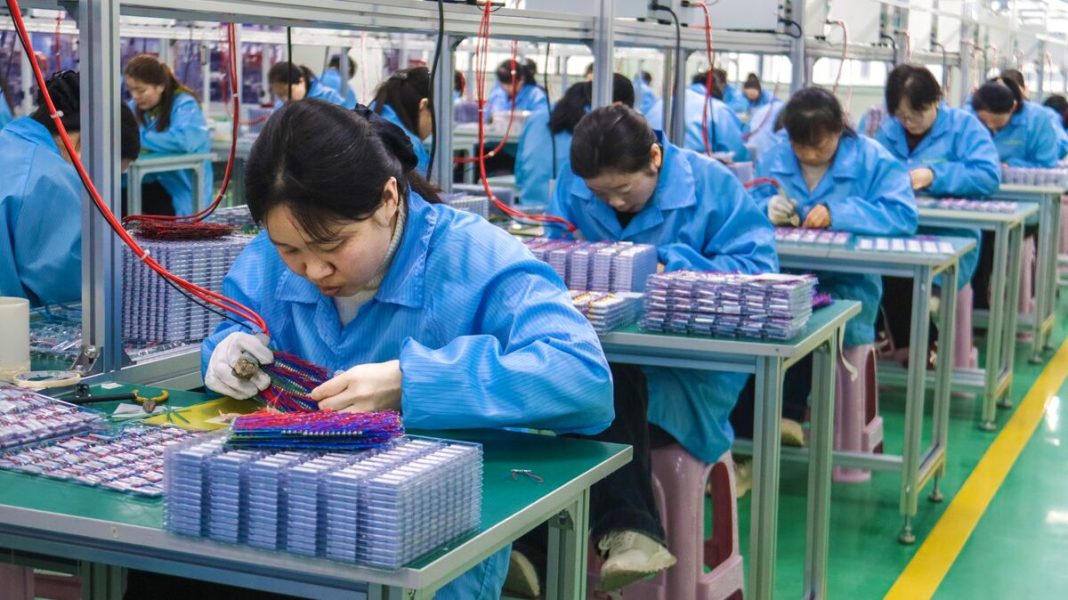
An official survey has recently highlighted a challenging period for China’s factory sector during the recent holiday. The findings paint a nuanced picture, suggesting that while some slowdown is typical during festive seasons, the extent of the struggle points to deeper currents at play within the world’s second-largest economy. This isn’t just a brief pause; it’s a signal that manufacturers are grappling with significant headwinds, impacting everything from production lines to global supply chains.
Deciphering the Official Data
The official purchasing managers’ index (PMI) data, a key gauge of manufacturing activity, reportedly showed a contraction, indicating that the sector shrank rather than expanded. Key metrics like new orders and production output saw a notable decline. This doesn’t simply mean factories took a break; it suggests a struggle to maintain momentum, even when accounting for reduced holiday working days. A dip in new orders can be particularly concerning, as it foreshadows future production levels and reflects underlying demand both domestically and internationally. For many, this data reinforces observations of a cautious consumer base and a global economy still finding its footing.
As one seasoned market observer put it, “While holiday slowdowns are expected, the official figures suggest underlying demand weakness that goes beyond mere seasonal adjustments. Businesses are clearly navigating a cautious landscape, reflected in their order books.” This perspective underscores the complexity, moving beyond simple seasonal shifts to look at broader economic health.
Underlying Pressures Beyond the Holiday Rush
Several factors likely contributed to the manufacturing sector’s struggles. Firstly, domestic demand, while showing signs of recovery in some areas, may not be robust enough to drive factory expansion at pre-pandemic levels. Consumers might be prioritizing services over goods, or simply being more conservative with their spending amidst economic uncertainties. Secondly, global demand remains uneven. Key export markets in Europe and North America are contending with their own inflationary pressures and slower growth, leading to reduced international orders for Chinese goods.
Furthermore, structural challenges within China’s economy, such as ongoing adjustments in the property sector and efforts to shift towards higher-value manufacturing, can create transitional pains. Manufacturers may also be facing increased competition, rising input costs, or difficulties in securing skilled labor after the holiday period, all of which can impede smooth operations and output.
Implications for the Road Ahead
The latest survey findings serve as a crucial barometer for China’s economic health and carry implications far beyond its borders. For the domestic economy, a struggling manufacturing sector can impact employment, income stability, and overall growth targets. It may prompt policymakers to consider further stimulus measures or targeted support for industries most affected.
Globally, given China’s pivotal role as the “world’s factory,” sustained weakness could ripple through international supply chains, affecting availability and pricing of goods worldwide. Businesses relying on Chinese components or finished products will be watching closely, potentially diversifying their sourcing strategies or adjusting inventory levels. The challenge now lies in how quickly factories can rebound from this holiday lull and whether the underlying demand pressures ease in the coming months. The road ahead for China’s manufacturing might require more than just a restart; it may demand a re-evaluation of strategies in a shifting global economic landscape.

