


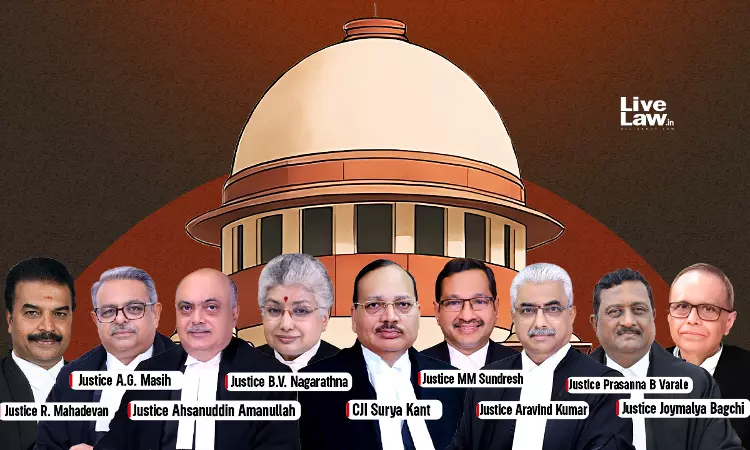
The Supreme Court of India recently issued a significant clarification regarding its approach to the Sabarimala temple entry case, a matter that has deeply resonated across the nation. Far from merely reviewing its own landmark 2018 verdict that allowed women of all ages to enter the revered Lord Ayyappan shrine, the apex court has unequivocally stated that its current focus is on deliberating a broader set of constitutional questions. This shift marks a pivotal moment, transforming the specific temple dispute into a nationwide examination of fundamental rights, religious freedom, and gender equality within India’s diverse socio-religious landscape.
Beyond Review: A Constitutional Conundrum
The 2018 judgment, delivered by a 4:1 majority, had lifted the decades-old ban on women aged 10 to 50 from entering the Sabarimala temple in Kerala, declaring the practice unconstitutional. This verdict, while celebrated by many as a stride towards gender equality, sparked widespread protests and numerous review petitions, citing infringement on religious traditions and the unique nature of the deity. Following these petitions, a five-judge bench referred the matter to a larger seven-judge bench in November 2019, broadening the scope beyond just Sabarimala. The latest clarification from the Supreme Court underscores that this larger bench is not engaged in a mere re-evaluation of the 2018 decision’s merits, but rather is poised to address intricate legal and constitutional principles that extend far beyond a single temple.
The court’s primary objective now is to establish a clear constitutional framework that can be applied uniformly across various religious practices and institutions in India. This nuanced approach acknowledges the complexity of balancing fundamental rights guaranteed by the Constitution, especially when they appear to be in conflict within religious contexts. It is a move from adjudicating a specific dispute to formulating overarching legal principles.
The Spectrum of Constitutional Questions Identified
The larger bench has framed several key constitutional questions that will guide its deliberations. These questions aim to resolve the intricate interplay between individual rights and collective religious freedoms, potentially setting precedents for how such issues are handled nationwide. Among the crucial points of consideration are:
- Whether the term ‘morality’ in Articles 25 and 26 of the Constitution, pertaining to freedom of religion, refers only to constitutional morality or includes specific societal or religious morality.
- The exact scope and definition of a ‘religious denomination’ and the extent of its rights to manage its own affairs under Article 26(b), particularly when these rights conflict with individual rights under Article 14 (equality) and Article 15 (non-discrimination).
- The power of the judiciary to determine what constitutes an “essential religious practice” of a denomination or a religion.
- Whether the rights of a religious denomination under Article 26 are subject to or can override the rights of individuals under Article 25(1).
- The extent to which all places of public worship can deny entry to women, purely based on custom and tradition, without violating constitutional principles.
These questions are not merely academic; their answers will have profound implications for other ongoing cases and future disputes concerning gender entry into mosques for Muslim women, Parsi women’s entry into Agiaries (fire temples), and the rights of Dawoodi Bohra women regarding female genital mutilation. The court is essentially seeking to establish a definitive constitutional yardstick.
Towards a Harmonious Interpretation of Rights
This reorientation by the Supreme Court reflects a mature and deliberative approach to complex socio-legal issues. It acknowledges that many religious practices, deeply embedded in India’s cultural fabric, require careful examination through the lens of constitutional principles without unduly infringing upon the legitimate exercise of faith. As constitutional expert Dr. Maya Sharma noted, “The Supreme Court’s decision to focus on fundamental constitutional questions rather than just the Sabarimala review indicates a profound understanding of its role as the guardian of the Constitution. It’s about crafting enduring legal principles for the nation, not just settling one contentious issue.”
The outcome of these deliberations will be critical for the future of religious freedom and equality in India. It promises to provide much-needed clarity on the limits of judicial intervention in religious matters, the boundaries of religious autonomy, and the constitutional imperative of equality in a pluralistic society. As the Supreme Court embarks on this intricate journey, the nation watches intently, hopeful for a resolution that upholds both the letter and spirit of the Indian Constitution, fostering harmony between diverse beliefs and fundamental rights.

