


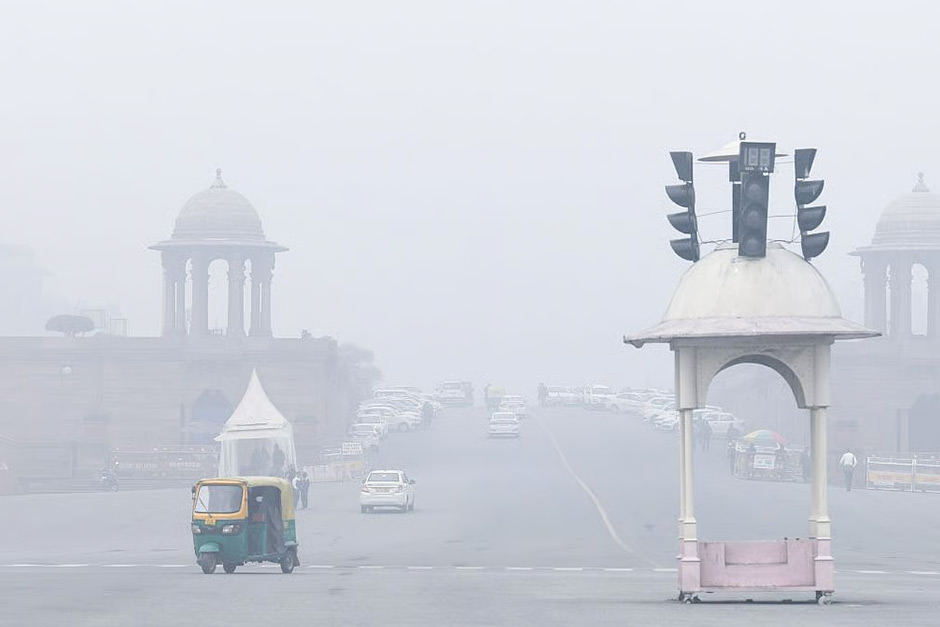
North India is currently experiencing a severe grip of winter, with a relentless cold wave combining with dense to very dense fog, creating challenging conditions across several states. From the national capital, Delhi, to the plains of Punjab, Haryana, Uttar Pradesh, and parts of Rajasthan, daily life has been significantly impacted. The pervasive fog has dramatically reduced visibility, leading to widespread disruptions in air, rail, and road transportation, causing immense inconvenience for commuters and travelers.
Temperatures have plummeted significantly below seasonal averages, prompting authorities to issue advisories for residents to take extreme precautions. The combination of intense cold and minimal visibility has not only brought economic activities to a crawl but also posed serious health risks, particularly for vulnerable populations. As the region braces for several more days of these harsh conditions, the focus remains on navigating the logistical nightmares and ensuring public safety.
The Chilling Reality: Minimums Plunge, Fog Persists
The mercury has dipped to alarming lows across North India, turning daytime into a prolonged struggle against biting cold. Several areas have reported minimum temperatures hovering between 2 to 5 degrees Celsius, with some pockets even recording temperatures close to freezing point. Delhi, for instance, has frequently witnessed minimums in the range of 3-4°C, significantly lower than hill stations like Shimla. The India Meteorological Department (IMD) has declared “severe cold day” conditions in many regions, characterized by maximum temperatures being at least 4.5°C below normal, alongside minimum temperatures below 10°C.
Adding to the cold, the dense fog has become a persistent feature, especially during the morning and late-night hours. This fog, a result of high humidity and low temperatures, often reduces visibility to merely 0 to 50 meters, making navigation extremely perilous. Satellite imagery frequently depicts a thick blanket of fog stretching across the Indo-Gangetic plains, from Punjab to Bihar. The persistent fog layer also traps pollutants, leading to a noticeable deterioration in air quality, adding another layer of concern for public health.
“The current cold wave is exacerbated by the protracted spell of dense fog, which not only brings down surface temperatures but also hinders the sun’s rays from reaching the ground, preventing any significant rise in day temperatures,” explained Dr. Anant Sharma, a senior meteorologist. “This phenomenon creates a vicious cycle, prolonging the severe cold conditions and making relief elusive in the short term.”
Transportation Networks Grapple with Gridlock
The most visible and immediate impact of the severe weather has been on transportation. Air travel, which relies heavily on clear visibility, has borne the brunt of the fog-induced disruptions.
Air Travel: Delays, Diversions, and Cancellations
Major airports, particularly Delhi’s Indira Gandhi International (IGI) Airport, a crucial hub for both domestic and international flights, have seen operations severely impacted. Hundreds of flights have been delayed, diverted, or outright cancelled. Passengers arriving at the airport have faced agonizing waits, often extending for several hours, with some left stranded overnight. Airlines have issued advisories, urging passengers to check their flight status before heading to the airport. While CAT-III B compliant runways allow for landings with very low visibility (down to 50 meters), the sheer density and persistence of the fog have often surpassed even these capabilities, leading to diversions to airports with clearer conditions.
Rail and Road: Slowed to a Crawl
Indian Railways, the lifeline of the nation, has also struggled. Numerous long-distance trains originating from or passing through North India have been running several hours late, causing immense inconvenience to passengers. Many trains have been rescheduled, and some have even been cancelled, leaving thousands of travelers scrambling for alternative arrangements. Railway authorities have activated special helplines and are regularly updating passengers on train statuses.
On the roads, the situation is equally grim. The near-zero visibility has made driving treacherous, leading to a significant increase in road accidents across the affected states. Highways are often dotted with slow-moving traffic, as drivers navigate cautiously. Police departments have issued strict warnings against speeding and advised against unnecessary night travel. Inter-state bus services have also experienced significant delays, further contributing to the travel chaos.
Conclusion: Await for Clearer Skies
As North India endures this challenging phase of winter, the focus remains on managing the disruptions and ensuring public safety. Authorities are working to mitigate the impact on transportation and provide relief to those most affected by the cold. While the IMD predicts a gradual improvement in visibility and a slight rise in temperatures in the coming days, the region is bracing for at least another week of cold wave conditions. Residents are urged to follow official advisories, dress warmly, and prioritize safety, especially when venturing out or commuting, as the region collectively awaits the return of clearer skies and a break from the intense chill.

