


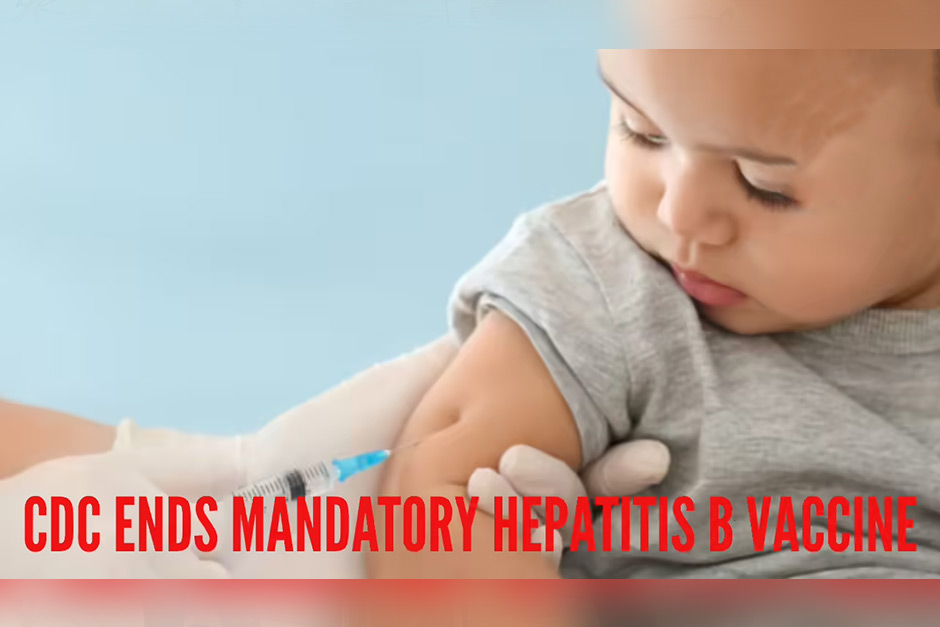
A significant shift in global health recommendations is prompting discussions within India’s medical community. The U.S. Centers for Disease Control and Prevention (CDC) has recently revised its long-standing guideline of mandatory Hepatitis B vaccination for all newborns within 24 hours of birth. While not directly binding for India, such international pronouncements often initiate a ripple effect, prompting review and debate in countries that have historically aligned with universal vaccination policies. The CDC’s updated stance, aiming for a more targeted approach, is designed to reduce unnecessary interventions, but it has simultaneously ignited concerns among many physicians, particularly in nations like India where the public health landscape presents unique challenges.
A Paradigm Shift: The CDC’s Revised Stance
For decades, the CDC advocated for a universal policy: administering the Hepatitis B vaccine to all newborns within 24 hours of birth. This strategy served as a crucial safety net, particularly for infants whose mothers’ Hepatitis B status was unknown or unconfirmed. The primary goal was to prevent perinatal transmission of the virus, a leading cause of chronic Hepatitis B infection, which can lead to severe liver disease and cancer later in life. The rationale was simple: vaccinate everyone early to catch those at risk, ensuring no child slipped through the cracks.
The updated CDC guidance now suggests a more nuanced approach. It recommends vaccinating newborns within 24 hours only if the mother is Hepatitis B surface antigen (HBsAg) positive, or if her status is unknown. If the mother is confirmed to be HBsAg negative, the vaccine can be safely delayed until the baby’s first doctor’s visit, typically between one to two months of age. The CDC’s reasoning stems from improved maternal screening rates in the U.S. and a desire to optimize healthcare resources. The argument is that for infants born to mothers confirmed negative, the immediate birth dose may be redundant, allowing for a slight deferral without compromising protection.
Anxieties in India’s Medical Fraternity: Why Universal Remains Crucial
While the CDC’s intentions might be rooted in data-driven precision for the American context, the implications for a country like India are viewed with considerable apprehension by many medical professionals. India carries a significant burden of Hepatitis B, with an estimated 40 million chronic carriers. The Universal Immunization Programme (UIP) in India includes the Hepatitis B vaccine at birth (or as early as possible within 24 hours), followed by doses at 6 and 14 weeks. This universal approach has been instrumental in reducing the incidence of perinatal transmission and overall disease prevalence.
Doctors in India fear that a move towards a selective, rather than universal, birth dose could unravel years of progress. The primary concern revolves around the practical challenges of ascertaining maternal Hepatitis B status for every delivery. In India, a substantial number of births occur at home, in rural settings with limited medical infrastructure, or are unbooked, meaning mothers do not receive antenatal care. Even in well-equipped urban hospitals, emergency deliveries or inadequate record-keeping can hinder immediate access to accurate maternal HBsAg status. Delaying vaccination based on unconfirmed status could create dangerous windows of vulnerability.
“The CDC’s recommendation, while well-intentioned for a developed healthcare system, poses significant risks in our context,” explains Dr. Priya Sharma, a leading paediatrician in Delhi. “In India, ensuring every pregnant woman is screened for Hepatitis B, and that these results are accurately documented and available at the time of birth, is a monumental task. A universal birth dose acts as an invaluable safety net. Removing that blanket protection could lead to a resurgence of neonatal Hepatitis B infections, particularly among vulnerable populations who lack consistent access to healthcare.” The logistical complexities of tracking and ensuring follow-up vaccinations for every child whose birth dose is delayed also presents a formidable challenge in a country with India’s population density and diverse healthcare access.
Navigating Policy: India’s Path Forward Amidst Global Debates
The debate sparked by the CDC’s revised guidelines underscores the critical importance of tailoring public health policies to local realities. While international guidelines offer valuable insights, their direct applicability must be rigorously evaluated against a nation’s unique epidemiological profile, healthcare infrastructure, and socio-economic factors. For India, maintaining the universal Hepatitis B birth dose seems to be the safer and more effective strategy given the high disease burden and the operational challenges of a selective approach.
The discussion highlights the continuous tension between precision public health interventions and broad, protective strategies. As India’s medical community observes and evaluates these global shifts, the emphasis will likely remain on strengthening existing immunization programmes and ensuring high coverage, rather than adopting policies that might inadvertently compromise the gains made in preventing Hepatitis B transmission. Any reconsideration of the current policy would require extensive deliberation, robust data analysis, and a consensus among national health authorities and experts, always prioritizing the health and safety of every newborn.

