


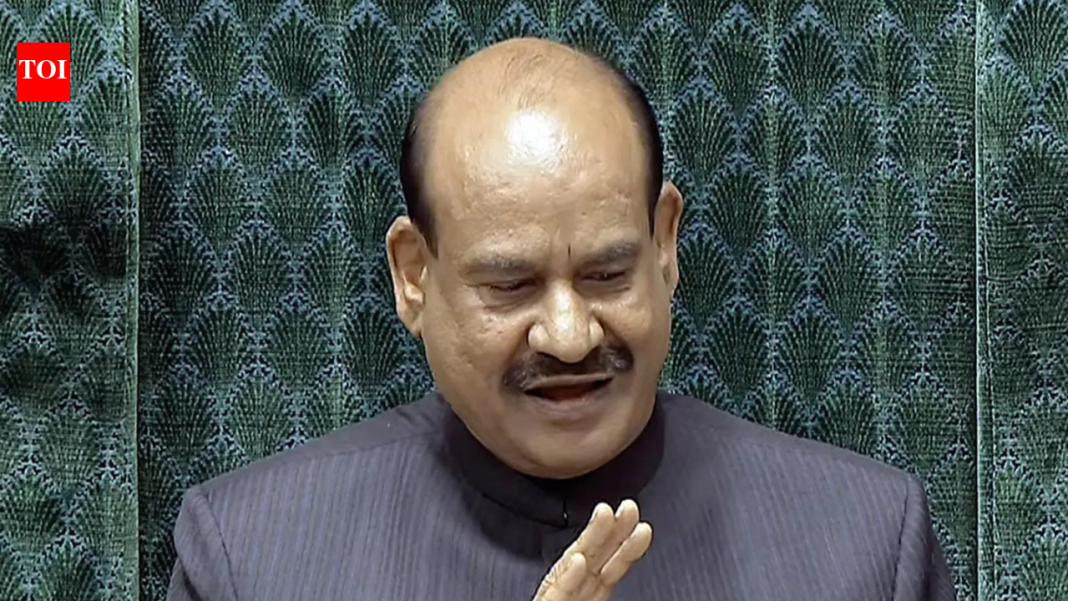
The political landscape of India’s Parliament is once again at the forefront of national discourse, with a significant development brewing in the Lok Sabha. Reports indicate that the Trinamool Congress (TMC) Members of Parliament are poised to support a no-confidence motion being considered against the current Lok Sabha Speaker, Om Birla. This potential move by a prominent opposition party underscores the escalating tensions and procedural disagreements that have marked recent parliamentary sessions, signaling a united front by a section of the opposition against the Speaker’s conduct and management of proceedings.
The Genesis of the Motion: Censure and Procedure
A no-confidence motion against the Lok Sabha Speaker is a rare and constitutionally significant event, reflecting a deep-seated dissatisfaction with the impartiality or conduct of the presiding officer. While the specifics of the motion itself are still crystallising, the underlying reasons are widely understood to stem from recent contentious parliamentary sessions. The opposition, particularly the INDIA bloc, has frequently voiced concerns over the Speaker’s handling of disruptions, the alleged stifling of debate on critical issues, and, most notably, the unprecedented suspension of a large number of opposition MPs.
The Speaker, as the guardian of the House’s dignity and the arbiter of its proceedings, is expected to remain above partisan politics. However, the opposition has repeatedly accused the Speaker of favouring the ruling dispensation, a charge that the government and Speaker’s office have consistently denied. The no-confidence motion, if formally moved and accepted, would initiate a debate on these very concerns. While the government’s considerable majority makes the success of such a motion in terms of actual removal highly improbable, its significance lies in the political message it sends and the formal platform it provides for the opposition to articulate its grievances on record.
According to parliamentary procedures, a motion of no-confidence against the Speaker can be moved with the support of at least 50 members. Once admitted, a date is set for its discussion, followed by a vote. Historically, such motions are exceedingly uncommon, reflecting the high regard and constitutional protection afforded to the Speaker’s office. The very act of moving it, therefore, is a powerful statement of dissent and a challenge to the established order of parliamentary functioning.
TMC’s Stance and the Broader Opposition Calculus
The Trinamool Congress, a key constituent of the INDIA alliance, has been a vocal critic of the government and, more recently, of the Speaker’s management of the Lok Sabha. Their likely decision to vote in favour of the no-confidence motion against Om Birla is a calculated move that serves multiple strategic objectives. Firstly, it solidifies their position within the broader opposition front, demonstrating unity on a procedural issue that has garnered collective concern. The INDIA bloc has been striving to present a cohesive challenge to the ruling Bharatiya Janata Party (BJP), and a unified stance on a motion against the Speaker reinforces this narrative.
Secondly, the TMC’s support amplifies the opposition’s collective voice regarding what they perceive as an erosion of democratic norms and parliamentary decorum. By aligning with other opposition parties, the TMC aims to highlight the alleged partisan actions within the Lok Sabha and draw national attention to the challenges faced by dissenting voices in Parliament. A senior political analyst, speaking on the condition of anonymity, noted, “The TMC’s anticipated support for the no-confidence motion against Speaker Birla is less about his actual removal and more about a strategic political assertion. It’s a clear message from the opposition that they believe parliamentary procedures are being undermined, and they are willing to take extraordinary steps to protest it. It also tests the unity of the INDIA bloc on a procedural rather than purely policy-driven issue.”
This move is also critical in the context of the upcoming general elections. By taking a strong stand on parliamentary integrity, the opposition hopes to resonate with voters who value democratic principles and institutional fairness. It allows them to frame the narrative around the sanctity of Parliament and the alleged overreach of the ruling party, positioning themselves as defenders of democracy. The TMC’s robust presence in the Lok Sabha, despite not being the largest opposition party, lends significant weight to this collective endeavour.
Implications and the Road Ahead
While the outcome of a no-confidence motion against Speaker Om Birla, given the government’s commanding majority, is almost certainly predetermined, its ramifications extend far beyond the immediate vote. It serves as a stark reminder of the deep divisions plaguing Indian parliamentary politics and the increasing acrimony between the treasury benches and the opposition.
For the government, it presents another challenge to its narrative of smooth parliamentary functioning and underscores the persistent opposition criticism. For the Speaker, it is an unprecedented formal censure, even if it does not lead to his removal, potentially impacting the perceived impartiality of the chair in future sessions. For the INDIA bloc, it’s a crucial test of their ability to maintain unity and coordinate action on high-stakes political manoeuvres.
The focus will now shift to the formal submission and acceptance of the motion, the ensuing debate, and how each party articulates its position. Regardless of the numerical outcome, this no-confidence motion against the Lok Sabha Speaker, with the anticipated support from TMC, will undoubtedly be a pivotal moment in contemporary Indian parliamentary history, shaping discussions on democratic accountability and institutional integrity for the foreseeable future.

