


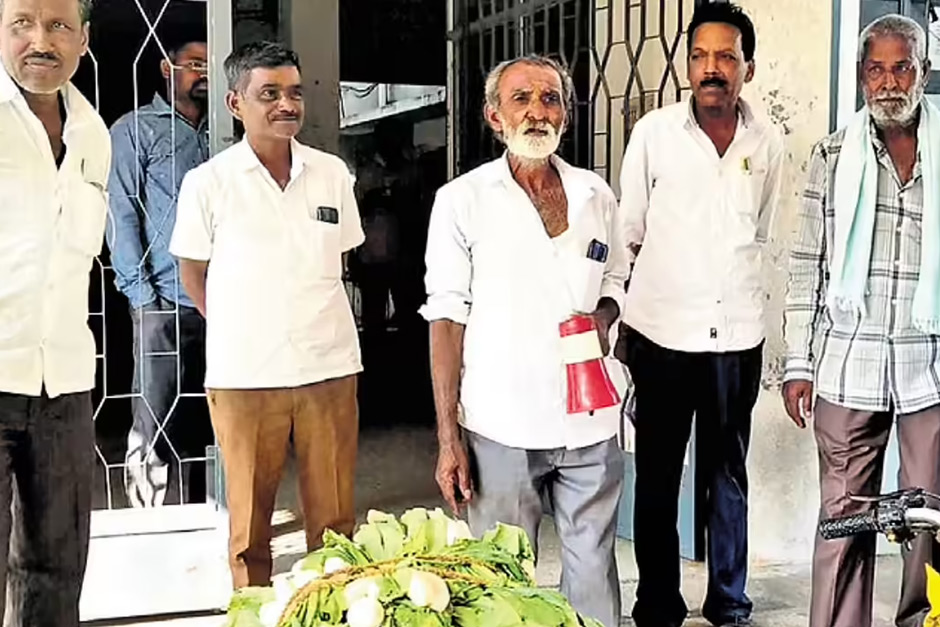
In a powerful and poignant display of defiance, a farmer in Karnataka recently captured national attention by offering radishes instead of cash to officials allegedly demanding a bribe for the completion of a long-pending farm road. This extraordinary act, encapsulated by the phrase “No cash, take my radish,” has quickly become a symbol of the deep-seated frustrations faced by India’s agricultural community against bureaucratic inertia and pervasive corruption. The incident sheds light on the daily struggles farmers endure to access basic infrastructure vital for their livelihoods, often compounded by demands for illegal gratification.
The ‘Radish Protest’: A Farmer’s Desperate Plea
The scene unfolded in the village of Anjaneyanagar, part of the Koppal district in Karnataka, where farmer Kumaraswamy Gowda, exasperated by years of delays and alleged bribe demands, decided to take a stand. His farm road, a critical link for transporting his produce to the market, had remained incomplete despite repeated appeals and the allocation of funds. According to local reports, officials were allegedly demanding a bribe to release the remaining funds and complete the work, a common hurdle for many small-scale projects across rural India.
On the day of his unique protest, Kumaraswamy arrived at the local administrative office not with cash, but with a large bundle of freshly harvested radishes. As he confronted the officials, he reportedly stated, “We don’t have cash to give you as a bribe. Our livelihood depends on what we grow. If you want a bribe, take these radishes. This is all we have.” His actions, quickly filmed and circulated online, struck a chord with millions, highlighting the often-invisible burden of petty corruption on the most vulnerable segments of society.
For farmers like Kumaraswamy, a functional farm road is not a luxury but a necessity. It enables timely transport of perishable goods, reduces post-harvest losses, and ensures better access to markets, potentially fetching fairer prices for their hard-earned produce. Without it, farmers often incur higher transportation costs, face delays, and risk spoilage, eroding their already thin profit margins.
A Symptom of Systemic Challenges
Kumaraswamy’s “radish protest” is more than an isolated incident; it serves as a stark reminder of systemic issues plaguing rural development and governance. The alleged demand for a bribe for a public project underscores the deep-rooted corruption that can permeate various levels of bureaucracy, stalling progress and directly impacting the lives of ordinary citizens. Despite numerous government initiatives aimed at boosting rural infrastructure and agricultural prosperity, such incidents reveal significant gaps in implementation and accountability.
The farmer’s courageous act has ignited a broader discussion about transparency in public works and the efficacy of grievance redressal mechanisms. Experts suggest that such informal “commissions” or bribes significantly inflate project costs and timelines, ultimately burdening taxpayers and undermining the very purpose of developmental schemes. Agricultural economist Dr. Ramesh Singh, commenting on similar incidents, stated,
“Farmers are already grappling with fluctuating market prices, climate change, and rising input costs. Adding the pressure of illegal gratification for basic infrastructure pushes them to the brink. This isn’t just about a road; it’s about dignity and the right to earn a livelihood without extortion.”
The Road Ahead: Ensuring Accountability and Dignity
The ‘No cash, take my radish’ protest is a powerful symbol of resistance, forcing a public reckoning with the realities on the ground. It calls for greater vigilance, stronger anti-corruption measures, and a more responsive administration that prioritizes the welfare of its citizens, particularly those in the agricultural sector who form the backbone of the Indian economy. While the immediate aftermath saw local authorities promising swift action on Kumaraswamy’s road and an investigation into the allegations, the challenge lies in ensuring that such promises translate into sustainable systemic change.
The incident should serve as a catalyst for a renewed commitment to ethical governance and the timely completion of vital public projects without illegal hurdles. Farmers, who toil tirelessly to feed the nation, deserve an environment where their efforts are supported by efficient infrastructure and a transparent system, free from the indignity of having to offer their harvest as a bribe. Only then can the true potential of India’s agricultural sector be fully realized, ensuring prosperity from farm to market.

