


“`html
In a geological spectacle unfolding at an unprecedented pace, the Earth is demonstrating its dynamic nature in East Africa. What scientists once observed as a sluggish, millennia-long process is now accelerating, suggesting that a new ocean is forming as the African continent slowly but surely breaks apart. This monumental shift, previously understood to operate on timescales beyond human comprehension, is showing signs of speeding up, offering scientists invaluable real-time data on planetary evolution.
The Grand Rift: A Continent in Flux
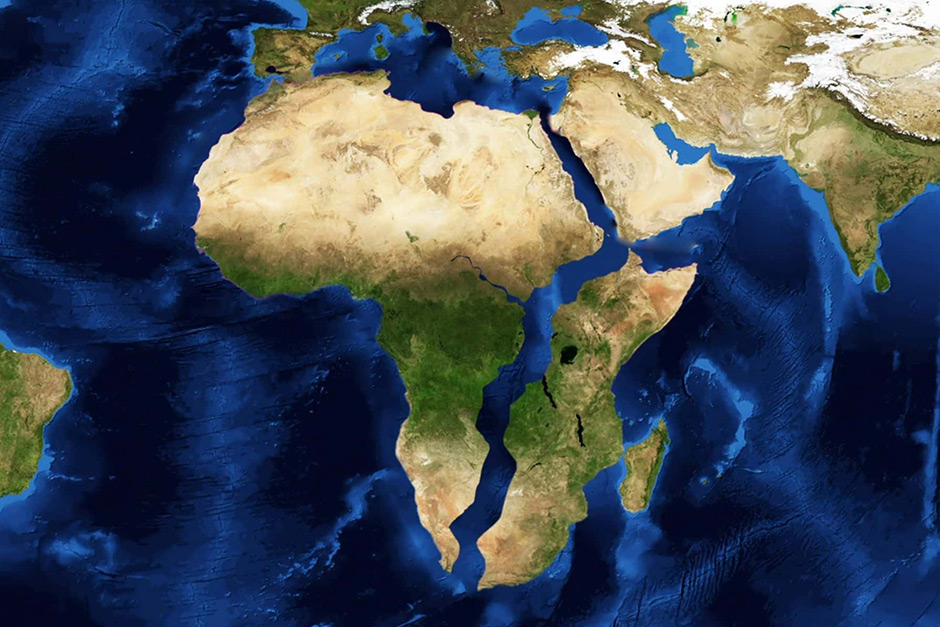
The East African Rift Valley is one of Earth’s most dramatic geological features, a colossal scar stretching thousands of kilometres from the Afar region in Ethiopia through Kenya, Tanzania, and into Mozambique. For millions of years, this immense crack in the Earth’s crust has been a testament to the planet’s restless interior, where the African tectonic plate is in the process of splitting into two new plates: the Nubian (or Somali) plate to the west and the Somali plate to the east. This ongoing separation is marked by intense volcanic activity, frequent earthquakes, and a landscape dotted with deep valleys and nascent basins.
For decades, geologists have meticulously tracked this continental breakup, primarily through GPS measurements, seismic activity monitoring, and geological mapping. The consensus was that this process would culminate in a new ocean basin forming over tens of millions of years. However, recent studies, particularly those focusing on the Afar Depression, a triple junction where the Nubian, Somali, and Arabian plates meet, indicate a significantly faster rate of divergence than previously estimated. Areas are observed to be pulling apart by several millimetres to a few centimetres annually, a pace that, while still slow by human standards, is remarkably quick in geological terms.
Cracks in the Earth: The Mechanism Unveiled
The mechanism driving this continental rupture is the upwelling of superheated magma from the Earth’s mantle beneath the crust. This rising molten rock exerts immense pressure, thinning and stretching the overlying continental plate. As the plate thins, it eventually cracks, creating fault lines and rift valleys. Water from the Red Sea and Gulf of Aden is already beginning to seep into the lowest points of the Afar Depression, hinting at the future inundation that will complete the birth of a new ocean.
The acceleration of this process is what has particularly captivated the scientific community. Events such as a major rift propagation in 2005, where a 60-kilometre crack opened up in just days, have provided unprecedented opportunities to observe continental breakup in action. Such rapid events challenge traditional models of gradual, continuous rifting, suggesting periods of intense, episodic activity.
Dr. Anya Sharma, a geophysicist studying plate dynamics at the Indian Institute of Science, Bangalore, notes, “While continental rifting is a known geological process, the recent data indicating an accelerated pace in the East African Rift offers invaluable insights. It suggests that the forces at play might be more dynamic or localized than previously modelled, challenging some long-held assumptions about the timescales of such monumental changes. For Indian scientists, observing such phenomena is crucial, as it provides a modern analogue to understand our own continent’s ancient breakup from Gondwana.”
The insights gained from East Africa have global implications. They help us better understand not only the Earth’s past geological events, such as the breakup of supercontinents like Pangea, but also how current tectonic stresses might influence future landscapes and climate patterns. The formation of new ocean basins fundamentally alters global ocean circulation and weather systems over vast spans of time.
A Glimpse into the Deep Future
While the new ocean remains millions of years from full formation, the accelerated rifting in East Africa is a powerful reminder of Earth’s continuous transformation. The ongoing process will eventually reshape the continent, creating an island continent for East Africa and a new ocean that will connect the Red Sea to the vast Indian Ocean. For now, the East African Rift Valley continues to be a living laboratory, offering scientists a rare opportunity to observe the birth of an ocean and the fundamental forces that sculpt our planet, unfolding at a pace that is both ancient and surprisingly swift.
The geological clock might operate on scales we struggle to grasp, but events in East Africa underscore that even these grand processes can surprise us with their dynamism. It is a testament to the Earth’s ongoing evolution, a majestic dance of continents and oceans that continues to unfold before our very eyes.

