


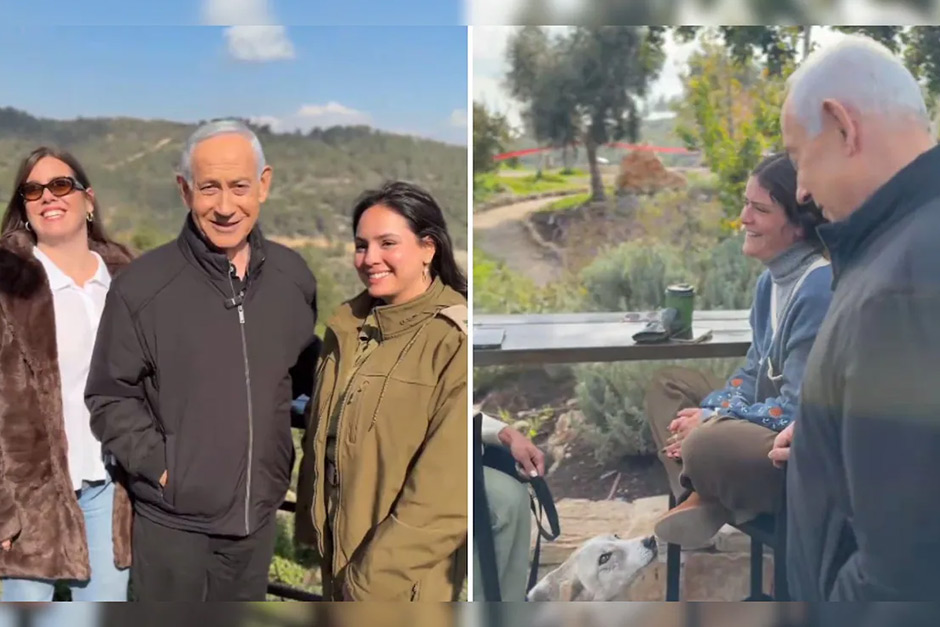
In an era increasingly grappling with the blurred lines between reality and simulation, a recent incident involving Israeli Prime Minister Benjamin Netanyahu has underscored the growing challenges facing political communication and digital media authenticity. The controversy ignited when Grok, the AI chatbot developed by xAI, flagged a video clip featuring Netanyahu in a café as potentially “AI-generated.” This swift algorithmic judgment prompted the Israeli leader to release a new video, implicitly asserting the authenticity of his digital presence amidst rising concerns over deepfakes and misinformation globally, a concern that resonates deeply within India’s vibrant but often tumultuous digital landscape.
Grok’s Glitch or Genuine Concern? The Cafe Clip Controversy
The initial video, which depicted Prime Minister Netanyahu in a seemingly informal café setting, quickly drew attention not just for its content but for its unexpected classification by Grok. As an AI chatbot designed to offer real-time information and insights, Grok’s flagging capability, leveraging its access to X (formerly Twitter) data, represents a new frontier in content moderation. While the specific cues that led Grok to label the clip as “AI-generated” were not immediately detailed, such algorithms typically scrutinise inconsistencies in lighting, unnatural movements, unusual background artefacts, or hyper-realistic yet subtly ‘off’ facial expressions – hallmarks often associated with digitally synthesised content.
This incident throws a spotlight on the evolving sophistication of AI detection tools and, conversely, the increasing realism of generative AI. For a public figure of Netanyahu’s stature to have his content subjected to such algorithmic scrutiny highlights the universal nature of this challenge. It suggests that even traditional political messaging, when disseminated through digital channels, is now fair game for AI-driven verification, placing a greater burden on communicators to ensure absolute authenticity to avoid suspicion.
Netanyahu’s Counter-Narrative: A Push for Authenticity
In response to Grok’s unprecedented flagging, Prime Minister Netanyahu quickly posted a new video. While the content of this subsequent clip focused on pressing national matters, its underlying message was clear: a strategic reassertion of authenticity. The act of releasing a new, demonstrably real video serves as a powerful counter-narrative, aiming to reassure audiences and media that his communication remains grounded in reality. This swift response reflects an acute awareness among political strategists of the potential damage even a hint of AI fabrication can inflict on public trust.
Political leaders worldwide are grappling with how to navigate an environment where their words and images can be easily manipulated or questioned. Netanyahu’s immediate action signals a recognition that in the current information ecosystem, proactive measures are crucial to combat the erosion of credibility. It also underscores a broader trend where the battle for public perception is increasingly fought on the grounds of digital authenticity, demanding transparency and verifiable content from those in power.
India’s Digital Dilemma: Lessons from the AI Battleground
The implications of the Netanyahu-Grok incident resonate particularly strongly in India, a nation with one of the world’s largest internet user bases and a history of battling misinformation. The rise of deepfakes and AI-generated content has become a significant concern, especially in the run-up to crucial electoral cycles. Instances of AI-manipulated videos targeting Indian politicians and celebrities have already surfaced, demonstrating the potent threat this technology poses to democratic processes and social cohesion.
For India, which is preparing for upcoming state and general elections, the ability to discern genuine content from sophisticated fakes is paramount. The Netanyahu episode serves as a global wake-up call, emphasizing that even well-known figures are not immune to AI’s powerful, and sometimes perplexing, judgments. Media organisations, policymakers, and citizens alike in India are now more acutely aware of the need for robust verification tools and heightened media literacy. “This incident serves as a crucial reminder for all democracies, including India, that the battle for factual information is increasingly fought on digital battlegrounds,” observes Dr. Avantika Sharma, a Bengaluru-based digital media ethicist. “Verification tools and critical media literacy are no longer optional; they are essential for maintaining the integrity of public discourse.”
The episode involving Prime Minister Netanyahu and Grok is more than just a passing digital spat; it is a profound indicator of the authenticity crisis brewing in the digital age. As AI tools become more ubiquitous and sophisticated, the challenge of distinguishing between genuine and artificially generated content will only intensify. For India and other nations navigating complex political landscapes, this incident underscores the urgent need for a multi-pronged approach that combines advanced detection technologies with robust public education to safeguard the integrity of information and uphold democratic values in an increasingly AI-driven world.
The fight for truth in the digital realm has truly begun, and every national leader’s online presence, like every citizen’s, is now under the watchful eye of both human and artificial intelligence.

