


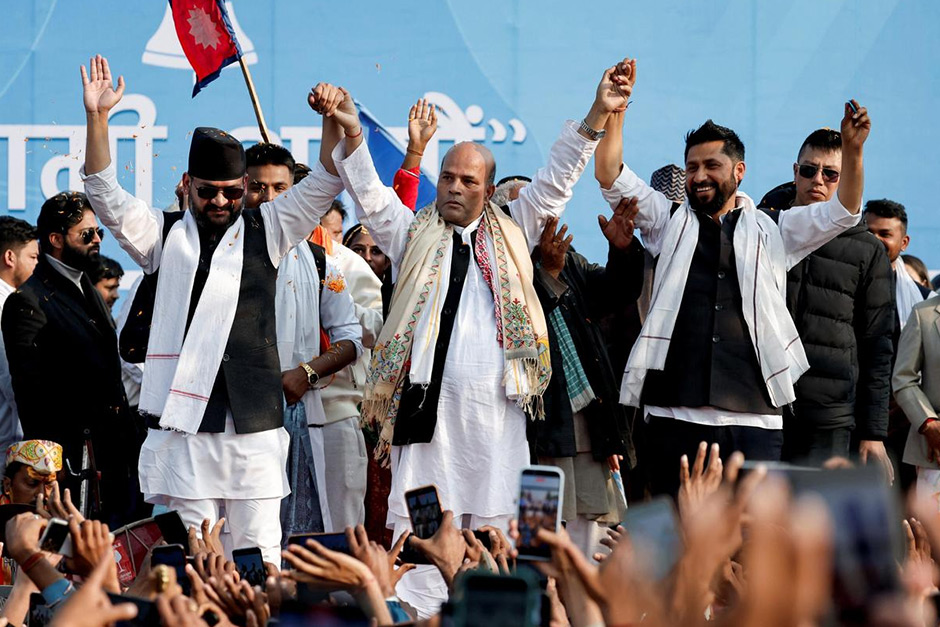
Nepal, a nation sharing an extensive, open border with India, consistently draws the attention of its southern neighbour, especially during periods of significant political transition. As the democratic process in the Himalayan republic gears up for its next national mandate, discussions around the timing and potential candidates for the “Nepal election 2026” are beginning to surface. For India, a stable and prosperous Nepal is not just a matter of good neighbourly relations but a strategic imperative, influencing everything from border security and regional trade to shared cultural heritage.
When is the Vote? Understanding Nepal’s Electoral Cycle
Understanding the precise timing of the next general election in Nepal requires looking at its constitutional provisions. The House of Representatives, Nepal’s lower house of parliament, has a five-year term. The last federal elections were held in November 2022. This constitutionally mandates that the next federal elections for the House of Representatives would typically be due in late 2027 or early 2028.
However, the mention of “Nepal election 2026” brings into focus Nepal’s notoriously dynamic and often volatile political landscape. While federal elections operate on a five-year cycle, political instability, dissolving of parliament, or calls for early elections have been features of Nepali politics in the past. Furthermore, local and provincial elections often fall between federal cycles, which could also be a point of discussion. For the purpose of discussing “main candidates” which typically refers to federal leadership, we focus on the upcoming parliamentary race, whenever it formally materialises. The political groundwork and potential alignments for the next national polls, regardless of the precise year, are already being laid by major parties and leaders.
Who are the Main Candidates and Key Political Players?
Nepal’s multi-party democracy is largely dominated by a few key political forces, often forming shifting alliances. The next federal election will likely see familiar faces and parties vying for power, though newer entrants could also make an impact, as seen in the 2022 elections.
The Major Political Parties:
- Nepali Congress (NC): Nepal’s oldest democratic party, historically advocating for democratic socialism. Its current president and former Prime Minister, Sher Bahadur Deuba, remains a central figure. The NC typically forms the backbone of democratic alliances.
- CPN (UML) – Communist Party of Nepal (Unified Marxist-Leninist): A major communist force, often leading nationalist narratives. KP Sharma Oli, its chairman and a two-time former Prime Minister, is a prominent and often controversial personality known for his assertive stance.
- CPN (Maoist Centre): Led by Pushpa Kamal Dahal ‘Prachanda’, another former Prime Minister, this party emerged from the decade-long civil conflict and has been a crucial player in coalition governments. It holds significant sway in forming or breaking alliances.
Beyond these established giants, newer parties like the Rastriya Swatantra Party (RSP), which made a significant splash in the 2022 elections with its anti-establishment and youth-centric platform, will be closely watched. Its leader, Rabi Lamichhane, has quickly risen to prominence. Regional parties, particularly from the Madhes plains, such as the Janamat Party and the People’s Socialist Party, Nepal (PSP-N), also play a crucial role in forming government coalitions, often holding the balance of power.
The political landscape is characterised by fluid alliances, with parties frequently switching partners. For instance, the Nepali Congress, CPN (Maoist Centre), and others often form a democratic-left alliance, while the CPN (UML) seeks partners from other factions. This inherent fluidity means that while individual leaders are important, the formation of viable coalitions is paramount to securing a majority. As a seasoned observer of Nepali politics once remarked, “In Nepal, forming a government is often more about arithmetic than ideology, and the next election will likely follow this intricate pattern of evolving alliances.”
Issues on the Campaign Trail: An Indian Perspective
The upcoming elections, whenever they occur, will undoubtedly be fought on critical domestic issues, many of which have direct or indirect implications for India. Economic stability and growth, particularly tackling inflation and creating employment for the significant youth demographic, will be front and centre. Nepal’s reliance on remittances and foreign aid means that candidates will focus on strategies for self-sufficiency and sustainable development.
Corruption remains a pervasive issue that resonates deeply with the electorate, providing fertile ground for new parties like the RSP. Debates around federalism, particularly the distribution of power and resources between the federal, provincial, and local governments, will also feature prominently. Border disputes with India, especially concerning Kalapani, Lipulekh, and Limpiyadhura, often become politicised during election cycles, requiring careful diplomatic handling from both sides.
From an Indian standpoint, the outcome of the Nepali elections is vital for several reasons. A stable government in Kathmandu, focused on development and good governance, translates to better border management, increased regional trade, and smoother cooperation on critical issues like hydropower projects and environmental conservation. Geopolitically, the political orientation of Nepal’s leadership influences its foreign policy, particularly its relations with India and China. India consistently seeks a strong, independent, and friendly Nepal, with whom it shares not just borders, but deep historical, cultural, and people-to-people ties. The next electoral contest will therefore be closely watched in New Delhi, anticipating a government that prioritises mutually beneficial engagement and regional harmony.
As Nepal prepares for its next democratic exercise, the interplay of veteran leaders, emerging forces, and pressing national issues will shape its future. For TrendLyric readers, understanding this intricate dance is key to appreciating the broader regional dynamics.

