


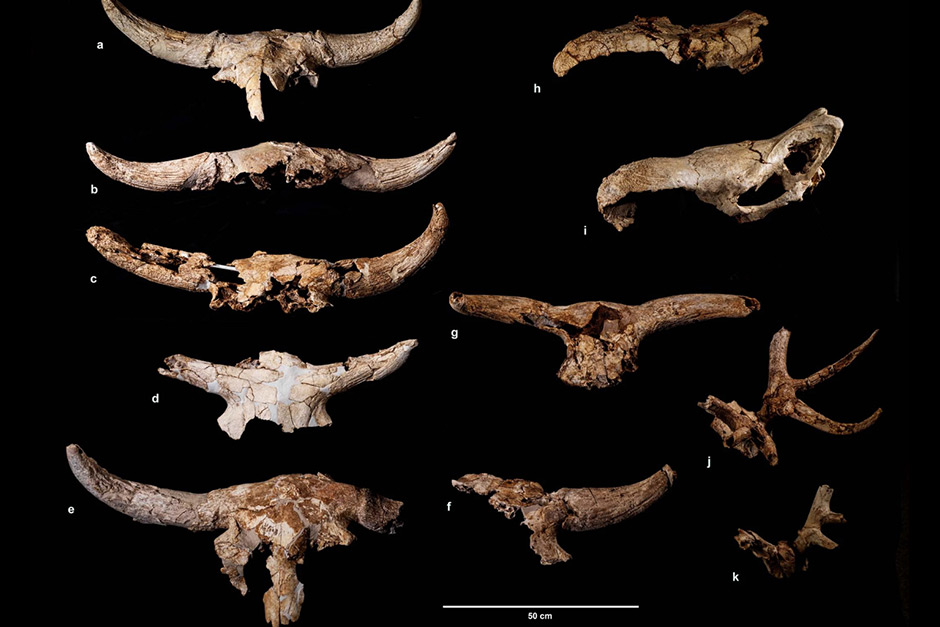
For millennia, our understanding of Neanderthals painted a picture of robust, pragmatic hominins focused primarily on survival. They were skilled hunters, toolmakers, and adaptable survivors of the Ice Age. However, recent archaeological revelations continue to challenge and enrich this narrative, peeling back layers to reveal a more complex, perhaps even symbolic, side to our ancient cousins. One such intriguing discovery revolves around their deliberate collection and storage of horned animal skulls – a practice that begs the question: why?
The Enigma of the Horned Skulls
Across various Middle Palaeolithic sites in Europe, archaeologists have unearthed evidence suggesting that Neanderthals engaged in more than just consuming animal carcasses. At locations like Regourdou Cave in France and the Salzgitter-Lebenstedt site in Germany, researchers have found aurochs (extinct wild cattle), bison, and ibex skulls, often with horns still attached, that appear to have been intentionally brought into shelters and sometimes even carefully arranged. These are not simply food discards; the skulls often show signs of being deliberately curated, separated from the rest of the skeletal remains, and stored in specific areas within the caves or settlements.
Consider the site of Lazaret Cave in France, where excavations revealed a carefully placed ibex skull, hinting at an organised approach to these finds. Similarly, discoveries at sites in Italy and Spain further underscore this pattern. The consistent nature of these findings across different geographical locations and timeframes suggests that this was not an isolated incident but potentially a widespread cultural behaviour among Neanderthal communities. The deliberate effort to transport, clean, and store these often heavy and cumbersome objects points towards a purpose beyond immediate utility or sustenance.
Beyond Sustenance: Unraveling the ‘Why’
The “why” behind this practice is what truly fascinates anthropologists and prehistorians. If not for food or tools, what motivated Neanderthals to collect these imposing symbols of the wild? Several compelling theories have emerged, each offering a glimpse into the sophisticated cognitive abilities of these ancient people.
One prominent hypothesis suggests a symbolic or ritualistic significance. Horns, powerful and distinctive, could have represented the prowess of the hunt, the spirit of the animal, or perhaps served as totems for protection or good fortune. The careful storage might indicate a form of veneration or a connection to the spiritual world, a concept long thought to be exclusive to modern humans. Could these skulls have been part of shamanistic practices, communal gatherings, or rites of passage?
Another theory posits that these collections were a display of hunting trophies. Bringing home the skull of a formidable aurochs or a sturdy ibex would have been a testament to a hunter’s skill and courage, enhancing their social standing within the group. Such a display could have served to reinforce social hierarchies or inspire younger hunters.
“The discovery of curated animal skulls among Neanderthal sites is a paradigm shift,” explains Dr. Ananya Sharma, a leading Indian archaeologist with a focus on ancient hominins. “It compels us to move beyond a purely utilitarian view of their existence. While challenging to definitively interpret, these collections strongly suggest a capacity for abstract thought, symbolic reasoning, and perhaps even early forms of cultural expression that we previously attributed solely to Homo sapiens.”
A Glimpse into the Neanderthal Mind
These findings, taken alongside other evidence of Neanderthal ingenuity – such as complex tool use, personal ornamentation like shell beads and eagle talons, and even early cave art – collectively paint a picture of a species far more complex and ‘human-like’ than once imagined. The act of collecting and storing specific items, particularly those with no immediate practical use, is a hallmark of symbolic behaviour and an indicator of advanced cognitive functions. It suggests a capacity for memory, planning, and abstract thought, enabling them to imbue objects with meaning.
For us in India, with our own rich tapestry of ancient cultures and archaeological treasures, these global insights into Neanderthal behaviour resonate deeply. They remind us that the story of humanity’s past is a shared narrative, continuously being rewritten by new discoveries. Understanding our hominin relatives, their cognitive abilities, and their cultural practices, even if enigmatic, enriches our appreciation for the diverse paths life took during the Palaeolithic era and our own place within this grand evolutionary journey.
While the precise “why” behind Neanderthals collecting horned animal skulls may forever remain a subject of scholarly debate and interpretation, the evidence unequivocally challenges long-held stereotypes. It invites us to view Neanderthals not as crude, brutish beings, but as sophisticated individuals with a rich inner world, capable of symbolic thought and perhaps even spiritual inclinations. Their fascination with the horns of powerful beasts opens a window into a past that is far more nuanced and intriguing than we ever dared to imagine.

