


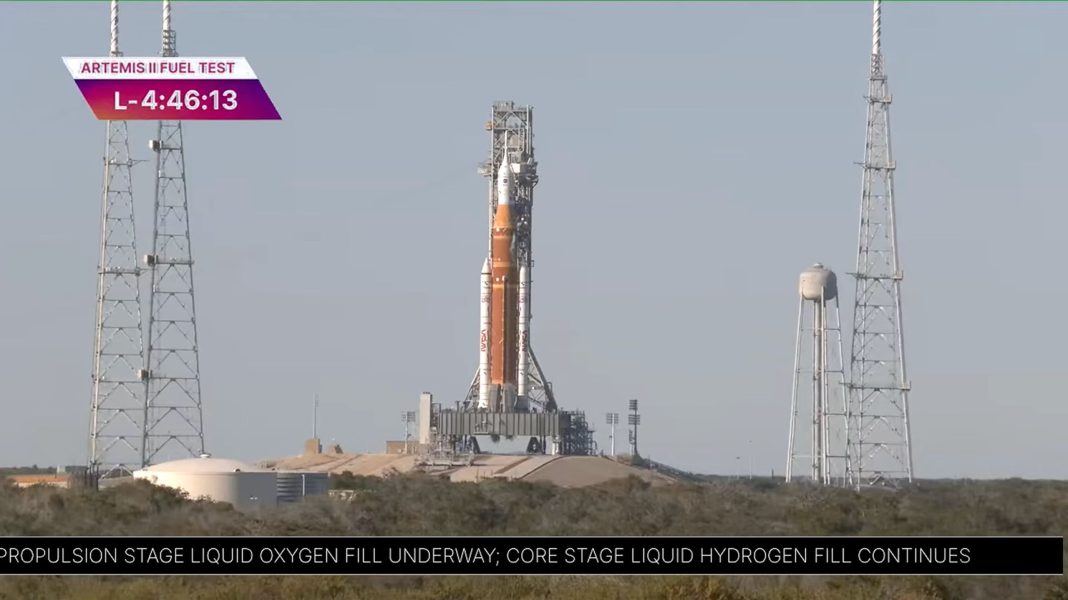
The moon. For generations, it’s been the silent, watchful sentinel in our night sky, a beacon of human ambition. Now, a new era of lunar exploration is upon us, spearheaded by NASA’s monumental Artemis program. At the heart of this audacious return is Artemis 2, a mission poised to carry humans around our celestial neighbor for the first time in over half a century. The excitement is palpable, but as with all grand ventures into the cosmos, there are intricate challenges. Right now, the colossal Space Launch System (SLS) rocket for Artemis 2 is undergoing critical fueling tests, and while the process is a spectacle of engineering might, a tiny, yet significant, hiccup has emerged: a small leak. The question on everyone’s mind: Is this giant good to go?
Moonward Bound: The Grand Ambition of Artemis 2
Imagine a journey where four astronauts embark on a voyage beyond Earth orbit, circling the moon and returning safely. That’s the audacious goal of Artemis 2. It’s not just a mission; it’s a stepping stone, a crucial test flight designed to pave the way for future lunar landings and eventually, missions to Mars. The scale of the endeavor is staggering: the most powerful rocket ever built, the Orion capsule, and the collective expertise of countless engineers and scientists pushing the boundaries of what’s possible. The stakes couldn’t be higher, and every component, every system, every drop of propellant must perform flawlessly.
The recent “wet dress rehearsal” — a full run-through of launch day procedures, including tanking the rocket with propellants — is a critical step. It’s during these rigorous tests that engineers learn how the massive vehicle behaves under immense stress. This is where the rubber meets the road, or rather, where the super-cooled liquid hydrogen and oxygen meet the rocket’s intricate plumbing.
A Little Hiccup: Understanding the Leak
During the fueling operations, a small hydrogen leak was detected. For those unfamiliar with rocket science, hydrogen might seem innocuous, but it’s one of the trickiest elements to contain. As the smallest molecule, it has a notorious tendency to seep through minuscule gaps that larger molecules can’t. When chilled to cryogenic temperatures, liquid hydrogen becomes an even more challenging substance to manage, requiring specialized seals and meticulous engineering.
So, is a small leak a big deal? In the world of spaceflight, there’s a saying: “There’s no such thing as a minor detail.” As one veteran engineer, Sarah Chen, often remarks, “In spaceflight, you have to be paranoid about everything. A small leak during a test might be manageable, but it gives us crucial data to understand and fix potential issues before crew are ever on board.” This kind of vigilance is precisely why these tests are performed. They’re designed to uncover problems when they can still be safely addressed on the ground, long before the countdown begins for real.
NASA engineers are now diligently assessing the nature and location of the leak. It could be anything from a faulty seal to a minor manufacturing imperfection in a line. The good news is that detecting it during a test allows them the opportunity to diagnose and implement a solution, whether that means tightening a bolt, replacing a component, or adjusting procedures. This meticulous approach is foundational to NASA’s safety culture, honed over decades of human spaceflight.
To Go or Not to Go? NASA’s Diligent Dance
The question of whether Artemis 2 is “good to go” isn’t a simple yes or no. It’s a complex equation involving risk assessment, engineering solutions, and mission objectives. NASA has a stringent set of “launch commit criteria” – a detailed checklist that must be met before any crewed mission can proceed. A hydrogen leak, even a small one, will certainly trigger careful scrutiny and likely require remediation before a launch attempt with astronauts aboard. The agency has a long history of delaying missions, sometimes for years, until every known anomaly is resolved to their exacting standards.
Ultimately, the decision will come down to whether engineers can either eliminate the leak or confidently demonstrate that it poses no threat to the safety of the crew or the success of the mission. This isn’t about rushing; it’s about methodical progress. The dream of returning humans to the moon is powerful, but the responsibility of ensuring their safe passage is paramount.
The Artemis 2 mission remains a beacon of human ingenuity and courage. While a small leak might represent a temporary pause, it’s also a testament to the rigorous testing and safety protocols that define modern space exploration. We can be sure that NASA will leave no stone unturned, no seal unchecked, until they are absolutely confident that their giant rocket is not just fueling up for the moon, but truly ready to go.

