


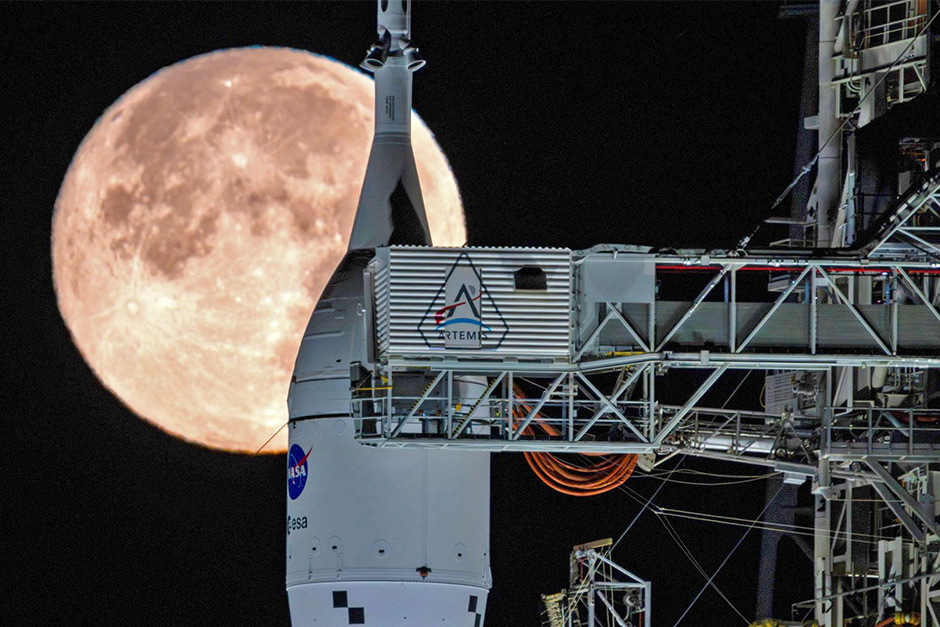
The quiet ambition of humanity’s return to the Moon is once again stirring, as NASA sets its sights on an upcoming mission that will send astronauts around our celestial neighbor. This isn’t just a re-enactment of past triumphs; it’s a crucial stepping stone in a broader, more ambitious plan for sustainable lunar presence and, ultimately, human exploration beyond the Moon.
The Artemis II Mission: A Critical Stepping Stone
The mission, known as Artemis II, represents the first crewed flight test for NASA’s Artemis program. Its primary objective isn’t to land on the Moon, but rather to serve as a comprehensive dress rehearsal, orbiting the Moon and returning safely to Earth. This unmissable journey will carry a team of astronauts further into space than any humans have ventured in over five decades.
The mission will thoroughly test the capabilities of the Orion spacecraft with humans aboard, focusing on vital life support systems, communications, and navigation in deep space. It will also evaluate the performance of the Space Launch System (SLS) rocket, the most powerful rocket ever built, during a crewed flight. The trajectory will take the Orion capsule and its crew on a lunar flyby, demonstrating the spacecraft’s ability to operate in the harsh environment beyond low Earth orbit before slingshotting back towards Earth.
Every maneuver, every system check, and every procedure during Artemis II is designed to gather essential data and validate the technologies and operations necessary for future lunar landings. It’s about proving that the hardware and the human systems can endure the rigors of deep space travel, paving the way for astronauts to touch down on the lunar surface once more.
Preparing for a Lunar Voyage
Behind this groundbreaking mission lies years of meticulous planning, engineering, and astronaut training. A dedicated team of astronauts has been preparing for this deep-space journey, undergoing rigorous simulations and exercises to ensure they are ready for every eventuality. Their experience will be invaluable as they operate the Orion spacecraft through its paces, far from Earth’s protective embrace.
The Orion spacecraft itself is a marvel of modern engineering, designed to safely transport astronauts through the vacuum of space, withstand the intense radiation environment beyond Earth’s magnetic field, and perform a high-speed re-entry into Earth’s atmosphere. Coupled with the immense power of the SLS rocket, it forms the backbone of NASA’s vision for lunar and Martian exploration.
The anticipation surrounding this mission is palpable within the scientific community and among space enthusiasts worldwide. “This mission isn’t just about reaching the Moon; it’s about meticulously proving every system and every procedure with human lives on the line,” commented a seasoned aerospace engineer. “It’s an immense undertaking that will push the boundaries of human endurance and technological capability, setting the stage for humanity’s next giant leap.” The insights gained from Artemis II will be critical for developing the protocols and technologies required for establishing a sustained human presence on the Moon and eventually venturing to Mars.
Looking Beyond the Lunar Horizon
Artemis II is more than just a trip around the Moon; it’s a vital component of the larger Artemis program, which aims to land the first woman and the first person of color on the lunar surface. It lays the groundwork for creating a permanent human presence at the Moon’s South Pole, a region believed to hold vital water ice resources. This lunar outpost would then serve as a proving ground and a launchpad for even more ambitious deep-space missions, including the ultimate goal of sending humans to Mars.
As the world watches, this upcoming mission represents a profound commitment to exploration, pushing the boundaries of what is possible. It embodies humanity’s enduring spirit of discovery and our innate desire to venture further into the cosmos, inspiring a new generation and laying the foundation for future generations to reach for the stars.

