


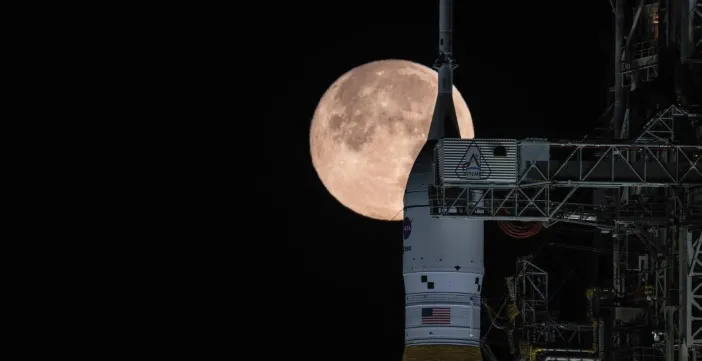
The global space race continues its exhilarating ascent, with NASA’s Artemis program leading the charge towards returning humans to the Moon. In a significant strategic move, the agency has announced the addition of a new low Earth orbit (LEO) test mission to its ambitious Artemis lunar exploration initiative. This seemingly minor adjustment carries profound implications, reflecting a heightened focus on safety, thorough testing, and risk reduction, lessons from which resonate deeply with India’s burgeoning space aspirations. For a nation that recently celebrated the soft landing of Chandrayaan-3 on the lunar south pole and is gearing up for Gaganyaan, understanding NASA’s methodical approach is more relevant than ever.
De-risking the Moon Shot: The Rationale for LEO Testing
NASA’s Artemis program is designed to establish a long-term human presence on the Moon, eventually paving the way for missions to Mars. This involves complex new technologies, from the powerful Space Launch System (SLS) rocket and Orion spacecraft to lunar landers and habitat modules. While previous Artemis missions have focused on uncrewed and crewed tests around the Moon, the inclusion of a dedicated LEO test mission highlights a critical philosophy: test thoroughly in a less demanding environment before committing to the unforgiving vacuum of deep space.
This new mission will likely involve testing critical systems in LEO – the orbital region just a few hundred kilometers above Earth, where the International Space Station (ISS) resides. It offers a valuable proving ground for essential components such as advanced life support systems, new propulsion technologies, communication relays, and sophisticated navigation equipment. Operating in LEO allows engineers to gather real-world data, identify potential flaws, and refine operational procedures without the higher risks and longer turnaround times associated with lunar missions. As a senior NASA official elaborated, “Our primary goal with Artemis is to ensure astronaut safety and mission success. Adding this LEO test allows us to rigorously evaluate key systems under flight conditions, mitigating risks and enhancing our confidence before we embark on the challenging journey to the Moon. It’s about building robustness into every step.” This proactive approach is a testament to NASA’s commitment to learning and adapting, ensuring that when humans return to the lunar surface, they do so with the highest degree of preparation.
India’s Growing Footprint and Collaborative Horizons
For India, a nation rapidly asserting its position as a major player in space, NASA’s strategic shift offers valuable insights and potential avenues for collaboration. India’s own Gaganyaan program, aimed at sending Indian astronauts to LEO, shares fundamental challenges with early-stage human spaceflight development. Testing life support, crew modules, and re-entry systems are common denominators. The detailed data and operational experience gained from NASA’s LEO tests could, directly or indirectly, benefit global space development, including India’s own programs.
India’s participation in the Artemis Accords, a set of principles guiding sustainable and peaceful lunar exploration, signifies its commitment to a shared future in space. Furthermore, collaborative missions like the NASA-ISRO Synthetic Aperture Radar (NISAR) underscore a robust partnership. As both nations advance their human spaceflight capabilities, the insights from missions focused on de-risking and thorough system validation become crucial. NASA’s new LEO mission not only strengthens the Artemis program but also contributes to the collective pool of knowledge, setting precedents for international standards in safety and operational excellence. It reinforces the idea that the journey to the Moon, while competitive, is also a shared human endeavor, where collective learning accelerates progress for all.
A Testament to Prudence and Progress
The inclusion of a new LEO test mission within the Artemis program is more than just a schedule adjustment; it’s a clear signal of NASA’s meticulous planning and dedication to safety. In an era where space exploration is becoming increasingly ambitious and accessible, such judicious steps are vital. For India, observing and potentially learning from these rigorous testing methodologies can only strengthen its own impressive strides in space. As humanity sets its sights further into the cosmos, careful preparation in the relative vicinity of Earth ensures that our grander ventures to the Moon and beyond are built on a foundation of sound engineering and unwavering prudence. This iterative approach to exploration promises a safer and more sustainable future for human spaceflight, with global implications that inspire nations like India to reach for their own stars.

