


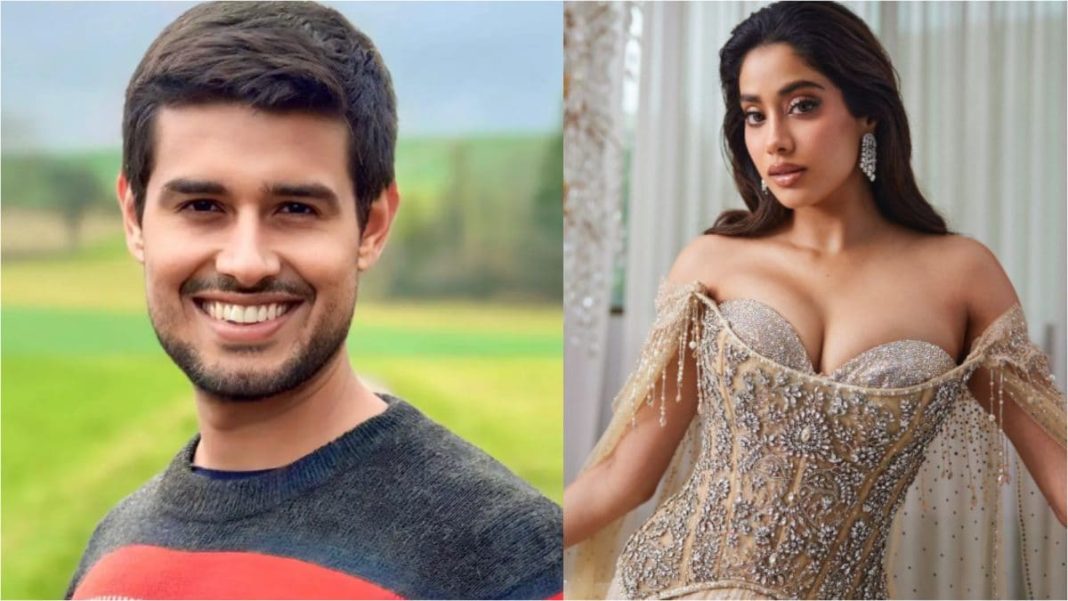
In the dynamic and often contentious landscape of Indian digital media, independent journalist and content creator Dhruv Rathee frequently finds himself at the nexus of public discourse. Known for his incisive socio-political commentary, Rathee recently sparked a significant online debate, not for the content of his latest video, but for its thumbnail. The image in question featured Bollywood actress Janhvi Kapoor, leading to widespread criticism and accusations of clickbait and exploitation. However, Rathee, in his characteristic fashion, addressed the controversy head-on, delivering a forceful rebuttal that has resonated across the digital sphere and underscored his commitment to journalistic independence.
The Genesis of the Thumbnail Controversy
The controversy originated with a video published by Dhruv Rathee titled “The Illusion of Bollywood Celebrities.” In this video, Rathee delved into the phenomenon of celebrity idolization in India, dissecting how public figures, particularly from Bollywood, are often placed on pedestals, influencing societal norms and political narratives. To illustrate his point about the broader culture of celebrity worship, the video’s thumbnail prominently featured Janhvi Kapoor, a popular young actress, alongside a critical commentary. This choice, however, quickly became a flashpoint for debate.
Social media platforms buzzed with reactions. Many viewers and commentators accused Rathee of using Kapoor’s image purely for clickbait, suggesting that it was a manipulative tactic to attract views by exploiting a female celebrity. Critics argued that the thumbnail, by singling out Kapoor, disproportionately focused on a woman and potentially subjected her to undue scrutiny, despite the video’s broader theme. Allegations of misogyny and a lapse in journalistic ethics were leveled against Rathee, creating a significant backlash that trended across various online platforms and media outlets. The incident ignited a discussion about the ethics of using public figures in thumbnails, the line between critical commentary and exploitation, and the responsibilities of independent content creators.
Dhruv Rathee’s Resolute Response and Justification
Unfazed by the mounting criticism, Dhruv Rathee chose to address the controversy directly in a subsequent video, offering a robust defense of his journalistic approach and the rationale behind his thumbnail choice. He asserted that the selection of Janhvi Kapoor for the thumbnail was not arbitrary, but rather representative of the larger phenomenon of celebrity culture that his video aimed to deconstruct. He emphasized that his commentary was directed at the system of celebrity idolization, not at Janhvi Kapoor personally.
In a powerful declaration that quickly went viral, Rathee asserted his independent stance, stating, “Na Main Tumhare Papa Se Darta, Na Bollywood Celebrity Se.” This forceful statement, translating to “I am neither scared of your father, nor of any Bollywood celebrity,” encapsulated his refusal to be intimidated by influential figures or the pressure from celebrity fan bases. He clarified that his intent was never to malign Kapoor, but to use a recognizable face to illustrate a societal trend, a common practice in journalistic pieces that critique broader phenomena through specific examples.
Rathee highlighted his consistent track record of critiquing powerful entities, from political figures to corporate giants, without fear or favour. He argued that if he can critique politicians and industrialists, he should also be free to critically examine celebrity culture, which holds immense sway in India. His defense underscored the principles of freedom of speech and the right of independent journalists to scrutinize public figures and societal trends without being accused of personal attacks or unethical practices, provided the critique is grounded in a broader issue.
Implications for Independent Media and Celebrity Culture
The Dhruv Rathee-Janhvi Kapoor thumbnail incident has sparked a multifaceted conversation about the evolving dynamics between independent media, celebrity culture, and public scrutiny in India. It highlights the delicate balance content creators must strike between producing engaging, relevant content and adhering to ethical journalistic standards, especially when dealing with public figures.
For many, Rathee’s firm stand is seen as a crucial assertion of independent journalism’s right to critique without fear, pushing back against what some perceive as an overly sensitive celebrity ecosystem. Others argue that content creators hold a responsibility to ensure their visual elements, such as thumbnails, do not inadvertently contribute to online harassment or misrepresentation, regardless of the video’s core message. The debate underscores the challenges of navigating a digital landscape where context can often be lost, and sensationalism, whether intended or not, can easily dominate the narrative.
Ultimately, this incident serves as a significant case study in India’s digital media space, forcing a deeper introspection into how news and commentary are packaged and consumed. It reiterates that while independent creators like Dhruv Rathee play a vital role in fostering critical thinking, the scrutiny they face from both supporters and detractors is an integral part of their journey in shaping public discourse.

