


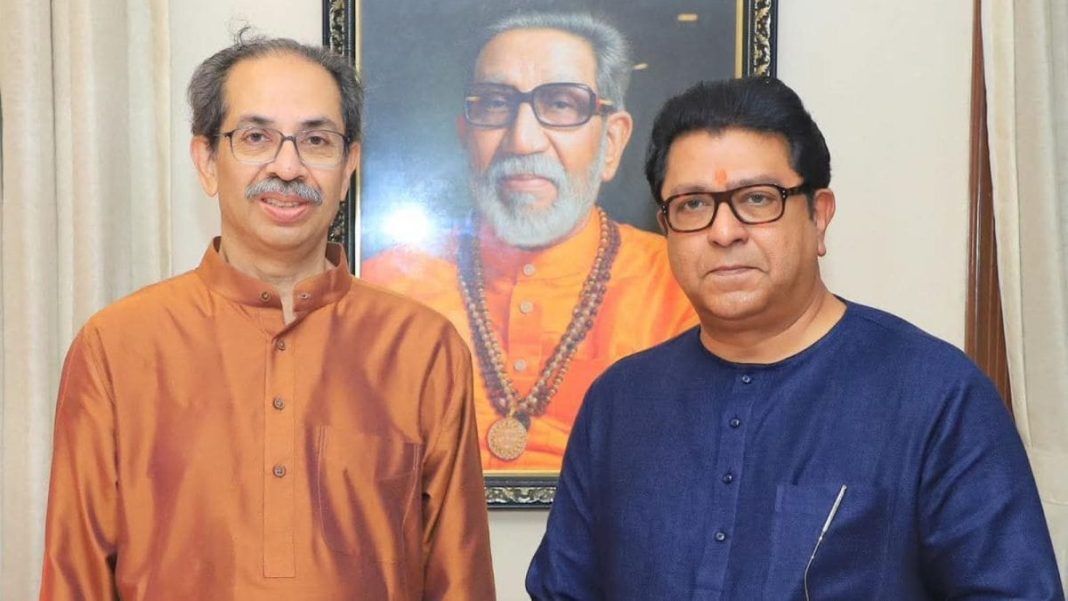
In the bustling political arena of Mumbai, few statements resonate as profoundly as those invoking Marathi identity. As the Brihanmumbai Municipal Corporation (BMC) elections loom, a seemingly unified chorus from cousins Uddhav Thackeray and Raj Thackeray has captured the city’s attention: “Mumbai’s Mayor will be a Maharashtrian.” This pronouncement, delivered amidst a backdrop of shifting alliances and fierce electoral battles, not only sets a clear agenda for the upcoming polls but also underscores the enduring potency of regional identity in India’s financial capital.
The BMC, often dubbed Asia’s richest civic body, has historically been a stronghold for parties championing Marathi pride. The control of this civic behemoth translates into immense political leverage and resource allocation. The Thackeray cousins, scions of the Shiv Sena founder Bal Thackeray, are now leveraging their shared lineage and ideological roots to rally support, reminding voters of a core tenet that has long defined their family’s political narrative.
The Enduring Appeal of the ‘Marathi Manoos’ Plank
The call for a Maharashtrian mayor is deeply embedded in Mumbai’s political history, particularly through the legacy of the Shiv Sena. Founded in 1966 by Bal Thackeray, the party’s initial raison d’être was to advocate for the rights and interests of the ‘Marathi manoos’ (Marathi common man) in Mumbai, at a time when migration from other states was perceived to threaten local employment and cultural dominance. This nativist plank proved incredibly successful, transforming the Shiv Sena from a regional outfit into a formidable political force, eventually dominating the BMC for decades.
Both Uddhav Thackeray, leading the Shiv Sena (Uddhav Balasaheb Thackeray) faction, and Raj Thackeray, head of the Maharashtra Navnirman Sena (MNS), have inherited and adapted this core ideology. While their political paths diverged dramatically, the principle of safeguarding Maharashtrian identity remains central to their respective appeals. For them, ensuring a Maharashtrian mayor is not just about administrative leadership but about reaffirming cultural hegemony and political control over a city they view as intrinsically Marathi. This shared sentiment, despite their often-antagonistic relationship, highlights a fundamental agreement on a critical issue for their respective voter bases.
A Converging Narrative Amidst Shifting Alliances
The timing of this unified stance by the Thackeray cousins is particularly crucial given the highly fragmented and competitive political landscape of Maharashtra. Uddhav Thackeray’s Shiv Sena (UBT) is locked in a bitter battle with the Eknath Shinde-led Shiv Sena faction, which, backed by the Bharatiya Janata Party (BJP), now holds power at the state level and has claimed the original party name and symbol. For Uddhav, re-emphasizing the “Maharashtrian Mayor” narrative is a strategic move to re-assert his faction’s claim to the authentic Shiv Sena ideology and its traditional voter base.
Raj Thackeray’s MNS, while never achieving the electoral dominance of its parent party, has consistently championed similar causes, often positioning itself as an even more ardent protector of Marathi interests. His voice joining Uddhav’s, even if not an explicit alliance, creates a powerful echo chamber that amplifies the message, making it harder for other parties to ignore. The BJP and the Shinde faction, while attempting to broaden their appeal, must also carefully navigate this potent identity politics, as alienating the Marathi electorate could be electorally costly.
“This pronouncement by both Uddhav and Raj Thackeray is a shrewd political manoeuvre,” observes Dr. Aditi Kulkarni, a Mumbai-based political analyst. “It taps into a deep-seated sentiment among a significant portion of Mumbai’s electorate. For Uddhav, it’s about reclaiming his legacy and ideological ground. For Raj, it reinforces his consistent stance. Together, it presents a formidable challenge to any party that tries to downplay the Maharashtrian identity in the BMC polls.”
The shared rhetoric also raises questions about potential electoral collaborations or strategic tacit understandings between the estranged cousins. While a formal alliance might seem distant given their past rivalries, a convergence on key ideological planks could sway public opinion and consolidate a critical vote bank against common adversaries.
Stakes and Implications for Mumbai’s Future
The demand for a Maharashtrian mayor carries significant implications beyond mere symbolism. Control over the BMC allows for direct influence on urban planning, infrastructure projects, public health initiatives, and cultural policies, all of which can be shaped to reflect the priorities of the ruling party’s core constituency. For the Thackeray factions, this means ensuring that the city’s development continues to align with their vision of a Marathi-centric Mumbai.
However, Mumbai is a melting pot of diverse cultures and communities. While the ‘Marathi manoos’ plank resonates strongly with one section, other communities might perceive such exclusive rhetoric differently. The BMC elections are not solely fought on identity; issues like infrastructure, civic amenities, corruption, and economic development also play a crucial role in voter decision-making. The challenge for all parties will be to balance this powerful identity politics with the broader developmental needs and aspirations of a cosmopolitan metropolis.
As the BMC elections approach, the declaration by Uddhav and Raj Thackeray serves as a potent reminder that identity politics remains a central, often decisive, factor in Mumbai’s electoral landscape. The battle for the Mayor’s chair will undoubtedly be fierce, shaped not just by development agendas, but also by deep-rooted historical narratives and the powerful assertion of local identity.

