


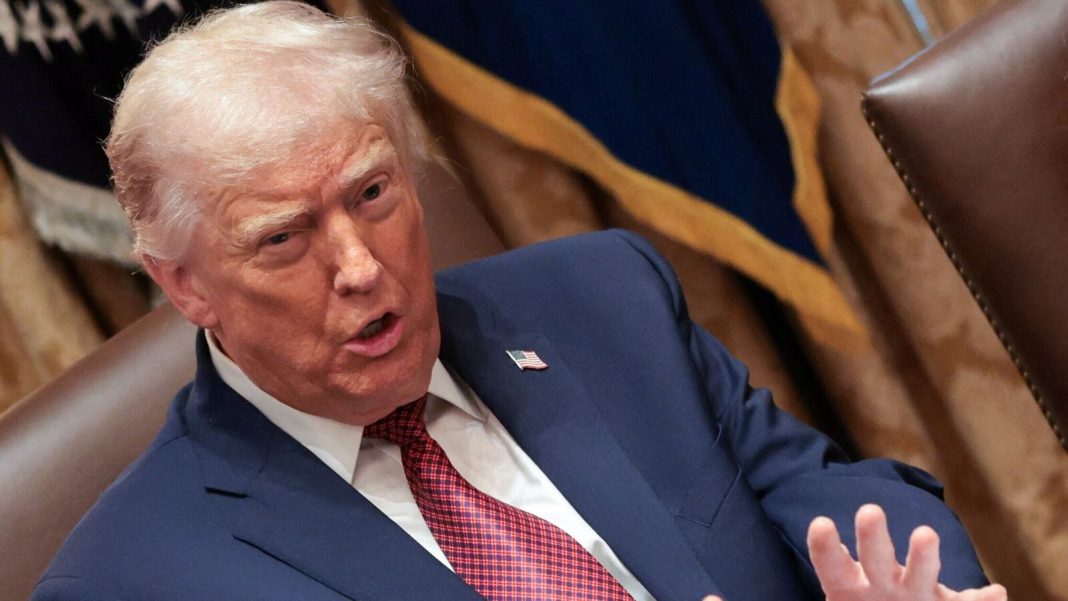
The specter of trade tensions between the United States and India appears to be rising again, following recent remarks from former President Donald Trump hinting at the possibility of imposing tariffs on Indian rice imports if he were to return to office. This development has sent ripples through India’s agricultural sector and trade circles, prompting a re-evaluation of potential economic ramifications for one of the world’s largest food exporters.
The Trump Announcement and its Context
During a recent campaign event, Donald Trump explicitly stated his intention to consider duties on Indian rice, among other goods, as part of his broader strategy to rebalance trade relationships. This aligns with his previous administration’s ‘America First’ approach, which saw the imposition of tariffs on various imports from multiple countries, including steel and aluminum from India, and the withdrawal of India’s Generalized System of Preferences (GSP) status.
His rationale often centers on protecting American industries and reducing what he perceives as unfair trade practices or significant trade deficits. While his comments are currently speculative, reflecting a potential policy direction rather than an immediate action, they signal a possible shift in US trade policy towards India should he win the upcoming presidential elections. This makes it a critical point of concern for Indian exporters, farmers, and policymakers who remember the trade skirmishes of his previous term.
India’s Rice Powerhouse and the Tariff Impact
India stands as the world’s largest rice exporter, playing a pivotal role in global food security. Our agricultural prowess in rice ranges from the aromatic Basmati, a premium commodity with a dedicated global market including the US, to various non-Basmati varieties crucial for food staples across Asia and Africa. In the fiscal year 2022-23, India exported over 22 million metric tons of rice, accounting for roughly 40% of the world’s rice trade.
While the US is not India’s largest overall rice market, it is a significant destination for specific premium varieties, particularly Basmati. A tariff imposition could lead to an immediate price increase for Indian rice in the US market, making it less competitive against supplies from other countries or domestically produced alternatives. This would directly impact the thousands of farmers, particularly in states like Punjab, Haryana, and Uttar Pradesh, who cultivate Basmati rice, as well as the numerous rice millers and exporters.
The ripple effect could extend beyond just export volumes; it could depress domestic prices for affected varieties, reduce farmer incomes, and potentially strain India’s foreign exchange earnings from agricultural exports. Finding alternative markets for specific varieties might prove challenging in the short term, putting pressure on the government to act strategically.
Economist Dr. Maya Sharma, specializing in international trade, commented, “Such tariff threats, even if speculative, inject significant uncertainty into bilateral trade relations. India’s agricultural sector, particularly rice, has developed sophisticated export value chains, and any disruption could have a disproportionate impact on rural livelihoods. It underscores the need for India to continue diversifying its export markets and strengthen trade agreements beyond traditional partners.“
Broader Bilateral Trade Implications
The potential tariff on rice must be viewed within the broader context of the evolving India-US trade relationship. Despite occasional friction, the US remains one of India’s largest trading partners, with bilateral trade crossing $120 billion in goods in 2022-23. Agricultural products, while a smaller component of this overall trade, are highly sensitive due to their impact on large farming populations and their symbolic importance in a diverse economy like India’s.
An aggressive tariff stance by a future US administration could reignite past trade disputes and potentially lead to retaliatory measures from India, impacting a wider array of goods and services. This scenario highlights the delicate balance in international trade diplomacy. India might explore avenues like the World Trade Organization (WTO) to challenge such tariffs if they are deemed discriminatory or inconsistent with global trade rules. Simultaneously, there would be increased impetus for India to accelerate its Free Trade Agreement (FTA) negotiations with other significant economies and further bolster initiatives like the ‘Produce in India, Export from India’ strategy to build resilience against such external shocks.
While former President Trump’s statements are currently an election promise rather than immediate policy, they serve as a stark reminder of the volatile nature of international trade and the ‘America First’ approach that could redefine global commerce. For India, this signals a need for proactive diplomacy, strategic market diversification, and robust domestic policies to safeguard its agricultural sector and overall economic interests. The road ahead for India-US trade relations appears fraught with potential challenges, demanding careful navigation to protect the livelihoods dependent on this crucial export commodity.

