


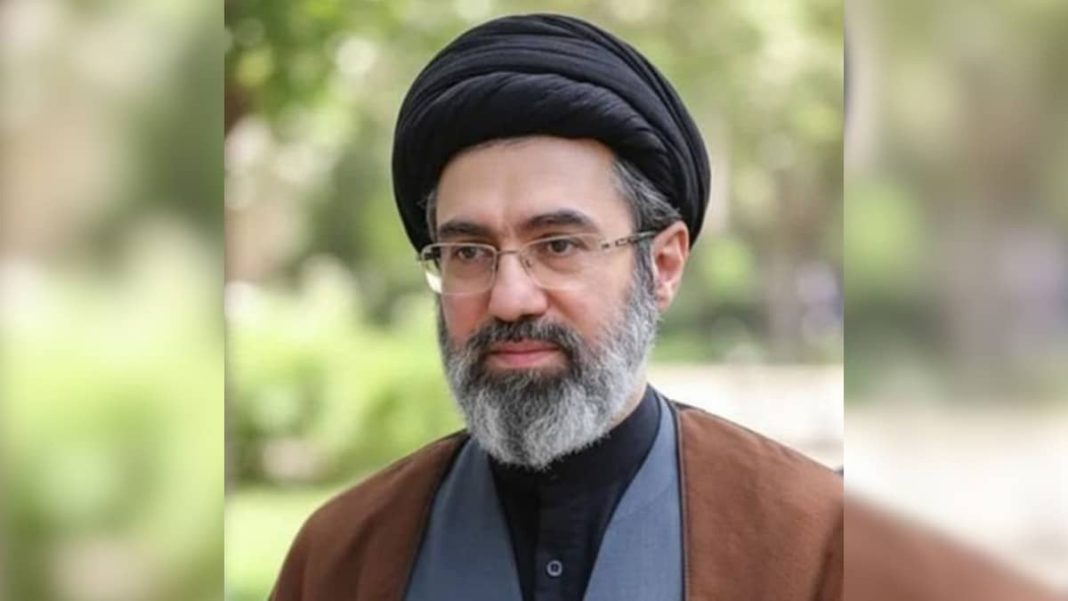
In a geopolitical landscape often defined by subtle signals and coded messages, a recent public statement by Mojtaba Khamenei, the influential yet largely unseen son of Iran’s Supreme Leader Ayatollah Ali Khamenei, has sent ripples through diplomatic circles. His expression of gratitude to Iraq for its support “in the face of aggression” is exceedingly rare, given his customary low profile, and has sparked widespread analysis regarding its timing, implications, and the evolving regional dynamics. For India, a nation with significant strategic interests in the Middle East, such developments warrant close observation.
A Glimpse Behind the Veil of Power
Mojtaba Khamenei is often described as one of the most powerful figures in Iran, despite holding no official government position. He is widely believed to control a significant portion of the Supreme Leader’s office and is frequently named as a potential successor, alongside President Ebrahim Raisi. His influence, however, typically operates behind the scenes, making any public pronouncement from him an extraordinary event, interpreted as carrying considerable weight and intent. This recent message, reportedly issued during a religious gathering in Iraq, deviates sharply from his established pattern of discretion.
The decision for Mojtaba Khamenei to personally deliver a message of thanks, specifically acknowledging Iraq’s support “in the face of aggression,” signals a deliberate and high-level communication. It suggests a strategic move to reinforce alliances and project a united front amidst escalating regional tensions. Analysts are scrutinising whether this marks a step towards a more public role for Mojtaba or if it’s a specific, one-off declaration aimed at a particular audience, both domestic and international. Regardless, its rarity underscores the significance of the moment and the critical nature of the ‘aggression’ Iran perceives itself to be facing.
The Deepening Iran-Iraq Entente
The relationship between Iran and Iraq has historically been complex, marked by periods of intense conflict, notably the devastating Iran-Iraq War, and more recently, by increasing rapprochement. Both nations share a predominant Shi’ite Muslim identity, fostering strong religious and cultural ties. In the post-Saddam Hussein era, Iran has exerted considerable influence in Iraq, through religious institutions, political factions, and various armed groups. Iraq, in turn, serves as a crucial strategic partner for Iran, providing geographic depth and a conduit for its regional influence.
Mojtaba Khamenei’s message underscores the strength of this bond, particularly when Iran feels under pressure. The reference to “aggression” is widely understood to refer to recent regional events, including heightened tensions with Israel and the United States. In this context, Iraq’s neutrality or overt support becomes invaluable. The Iraqi government, while navigating its own complex internal and external pressures, has often sought to mediate between regional rivals and has generally maintained a position that avoids direct confrontation with Iran. This diplomatic stance, coupled with security cooperation, appears to be the ‘support’ Mojtaba Khamenei was acknowledging.
“We express our profound gratitude to the brotherly nation and government of Iraq for their unwavering support and solidarity in the face of ongoing aggression,” Mojtaba Khamenei was quoted as saying, emphasising the depth of Tehran’s appreciation for Baghdad’s stance during a period of significant regional instability.
India’s Strategic Stake in a Volatile Region
For India, developments in the Middle East, particularly those involving key energy suppliers like Iran and Iraq, are of paramount concern. India relies heavily on crude oil imports from the region, making stability in the Persian Gulf critical for its energy security and economic well-being. Any escalation of conflict or significant shifts in regional alliances have direct implications for global oil prices, shipping routes, and supply chains, all of which directly affect the Indian economy.
Furthermore, India maintains strong bilateral ties with both Iran and Iraq. With Iran, India has cultivated strategic partnerships, including the development of the Chabahar Port, vital for connecting India to Afghanistan and Central Asia, bypassing Pakistan. With Iraq, India has significant trade relations and a large diaspora. India’s foreign policy has traditionally aimed at maintaining a delicate balance, avoiding alignment with any single regional power and advocating for de-escalation and peaceful resolution of disputes.
Mojtaba Khamenei’s rare message, signaling a potential tightening of the Iran-Iraq axis in response to perceived external threats, presents a new layer of complexity. India will be closely monitoring how this strengthened bond might influence regional security dynamics, its own diplomatic space, and the broader geopolitical chessboard, ensuring its strategic interests are safeguarded amidst evolving partnerships and rivalries in a vital part of the world.
The unprecedented public statement from such a reclusive figure thus becomes more than just a diplomatic nicety; it is a critical indicator of Iran’s strategic posture and a development that warrants sustained attention from global powers, including India.

