


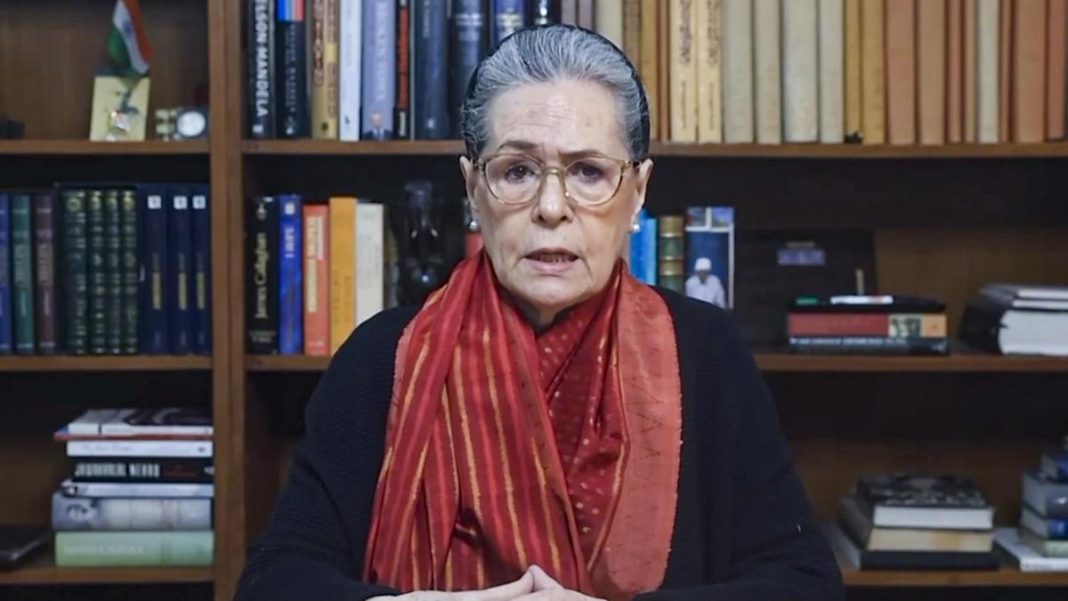
New Delhi – The political landscape in India is once again witnessing a sharp exchange over the Mahatma Gandhi National Rural Employment Guarantee Act (MGNREGA), a flagship rural employment scheme. Senior Congress leader and former party president, Sonia Gandhi, has launched a scathing attack on the Modi government, accusing it of systematically “bulldozing” the crucial program. Her remarks, made during a recent address, have reignited a significant debate about the scheme’s future and its implementation, with Gandhi vowing to fight against what she termed a “black law.”
Sonia Gandhi’s Allegations: A “Black Law” and Systemic Weakening
Sonia Gandhi’s criticism is not merely a passing comment but a direct challenge to the government’s handling of a program often hailed as a lifeline for millions in rural India. She asserted that the Modi government has deliberately undermined MGNREGA through various policy changes and budgetary allocations, effectively weakening its foundational principles. The phrase “black law” used by Gandhi primarily refers to the mandatory Aadhaar-Based Payment System (ABPS) for wage disbursements under the scheme.
According to Gandhi and other critics, the ABPS mandate, intended to enhance transparency and reduce leakages, has instead become a significant barrier for many genuine beneficiaries. They argue that technical glitches, network issues, and a lack of proper Aadhaar seeding have led to widespread exclusions, delayed payments, and denial of work. “The Modi government has systematically bulldozed MGNREGA, reducing its effectiveness and impacting the poorest of the poor,” Gandhi stated, emphasizing the human cost of these policy decisions. She further pledged that the Congress party would continue to fight against this “black law” and advocate for the restoration of the scheme’s original spirit and efficacy.
Beyond the ABPS, criticisms also encompass alleged budget cuts that constrain the scheme’s ability to meet demand for work, and persistent delays in wage payments across several states. Activists and civil society organizations have frequently highlighted how these issues collectively erode the scheme’s protective function, particularly for marginalized communities and migrant workers who rely on it during times of distress.
Government’s Perspective and Scheme Adjustments
The Modi government, on its part, has consistently defended its approach to MGNREGA, maintaining that its measures are aimed at improving efficiency, transparency, and accountability within the scheme. Officials often highlight the transition to Direct Benefit Transfer (DBT) and the push for Aadhaar linkage as crucial steps to eliminate middlemen, prevent corruption, and ensure that funds reach the intended beneficiaries directly.
The Ministry of Rural Development has often pointed to the increased budget allocations in certain years and the emphasis on asset creation through MGNREGA works as proof of its commitment to the scheme. They argue that the technological interventions, including the ABPS, are designed to streamline operations and ensure timely payments once the initial teething issues are resolved. The government contends that the ABPS prevents fraudulent activities and ensures that wages are disbursed to genuine workers without diversion.
However, the implementation has faced scrutiny. While the government stresses the benefits of digital payments, reports from various ground-level surveys suggest that a significant percentage of workers, particularly in remote areas, face challenges due to incorrect Aadhaar mapping, dormant bank accounts, or technical failures, leading to wages being withheld or misdirected. This gap between policy intent and ground reality remains a central point of contention.
MGNREGA: A Pillar of Rural Livelihoods
The Mahatma Gandhi National Rural Employment Guarantee Act, enacted in 2005, guarantees 100 days of wage employment in a financial year to every rural household whose adult members volunteer to do unskilled manual work. It stands as one of the world’s largest social welfare programs, designed to enhance livelihood security in rural areas by providing a safety net against unemployment and underemployment.
Over the years, MGNREGA has played a pivotal role in poverty reduction, promoting inclusive growth, and empowering women, Scheduled Castes, and Scheduled Tribes. Its significance was particularly evident during the COVID-19 pandemic, when it served as a crucial source of income for millions of returning migrant workers and rural households grappling with economic distress. The scheme’s ability to provide immediate relief and inject liquidity into rural economies has made it an indispensable component of India’s development strategy.
The ongoing political spat underscores the profound importance of MGNREGA and the deep concern surrounding any changes that might dilute its impact. As Sonia Gandhi vows to fight against policies she deems detrimental to the scheme, the debate continues to highlight the delicate balance between administrative efficiency and ensuring equitable access to a fundamental right to work for India’s rural poor.
The coming months are likely to see this issue remain a key point of political discourse, with both sides presenting their arguments to the public as the nation approaches various state elections and the general elections in 2024. The effectiveness and future direction of MGNREGA will undoubtedly remain under intense scrutiny.

