


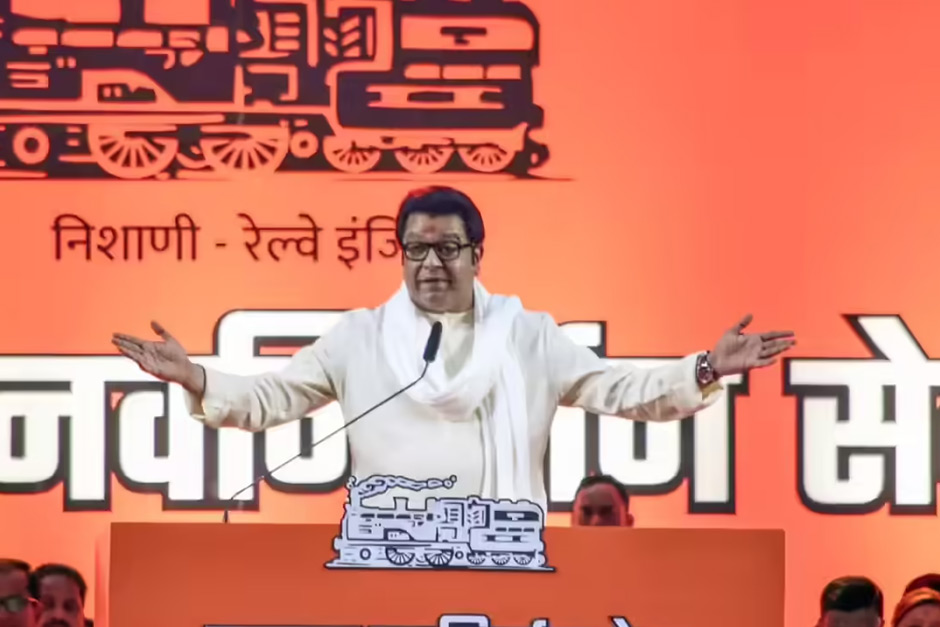
In a powerful display of political defiance, Maharashtra Navnirman Sena (MNS) chief Raj Thackeray has issued a scathing directive to his party corporators, instructing them to transform municipal houses into “battlegrounds.” The pronouncement, delivered with characteristic fervor, also included a potent vow to “bury the rulers,” signaling an intensifying confrontational stance against the incumbent government. This aggressive call to action comes at a crucial juncture for the MNS, as it seeks to reassert its influence in Maharashtra’s complex political landscape.
The Call to Arms: Municipal Houses as ‘Battlegrounds’
Addressing a gathering of MNS corporators and party workers, Raj Thackeray minced no words, urging them to shed any hesitation and adopt an uncompromising approach within civic bodies. His message was clear: municipal corporations, often seen as bureaucratic hubs, must instead become arenas for vigorous advocacy on behalf of citizens. “Do not sit idly by. If they try to suppress you, fight back with all your might. Turn every municipal house into a battleground for the common man’s issues,” Thackeray reportedly exhorted, emphasizing a proactive and combative role for his party members.
This directive targets the core of local governance, where decisions affecting everyday lives – from infrastructure to public services – are made. By instructing his corporators to be relentless in raising public grievances, Raj Thackeray aims to highlight what the MNS perceives as the failures and lethargy of the current administration. The party intends to amplify concerns ranging from dilapidated roads, inadequate public transport, and water supply issues to broader matters of civic development and urban planning. The strategic focus on municipal bodies underscores their importance as a direct interface between the government and the populace, offering a visible platform for opposition.
Vowing to ‘Bury the Rulers’: A Promise of Political Reckoning
Beyond the immediate call for agitation within civic halls, Raj Thackeray’s declaration of a resolve to “bury the rulers” underscores a much larger political ambition. This loaded statement, delivered amidst a backdrop of simmering discontent, suggests a long-term strategy to challenge the established political order in Maharashtra. While interpreted by some as strong rhetoric typical of political rallies, it also hints at a deeper frustration with governance and a determination to effect significant political change.
The MNS has often positioned itself as a vocal champion of Marathi identity and local issues, criticizing what it views as neglect by successive governments. Thackeray’s recent pronouncements appear to be an attempt to galvanize his party base and project an image of a fearless opposition, ready to hold power accountable. This strategy could be seen as an effort to reclaim political ground, especially in urban centers where the party once enjoyed significant support. The ‘bury the rulers’ vow signifies not just electoral defeat, but a complete dismantling of the current political narrative and the forces perceived as detrimental to the state’s progress and its people’s welfare.
Implications for Maharashtra’s Political Landscape
The MNS’s renewed aggression is likely to reverberate across Maharashtra’s political spectrum, especially with upcoming local body elections in sight. Raj Thackeray’s statements inject a fresh dose of combativeness into a political environment already characterized by shifting alliances and intense rivalry. For the ruling parties, this poses a challenge to their narrative of stable governance, as the MNS seeks to expose perceived weaknesses at the local level.
Observers suggest that this move could be a deliberate attempt by Raj Thackeray to carve out a distinct identity for the MNS, differentiating it from other opposition parties. By focusing on grassroots issues and adopting a fierce, no-holds-barred approach, the MNS hopes to resonate with voters disillusioned by traditional politics. The success of this strategy will depend on the party’s ability to translate its rhetoric into tangible action and sustained pressure within municipal corporations, turning the proclaimed “battlegrounds” into effective platforms for change. As Maharashtra braces for another round of political maneuvering, the MNS’s defiant stance ensures that the civic halls will indeed be far from quiet.
The coming months will reveal whether Raj Thackeray’s audacious directives can truly energize his party and significantly alter the state’s political dynamics, or if they remain powerful but ultimately contained rhetoric. What is clear, however, is that the MNS has signaled its intent to be a formidable and vocal player in the ongoing political discourse.

