


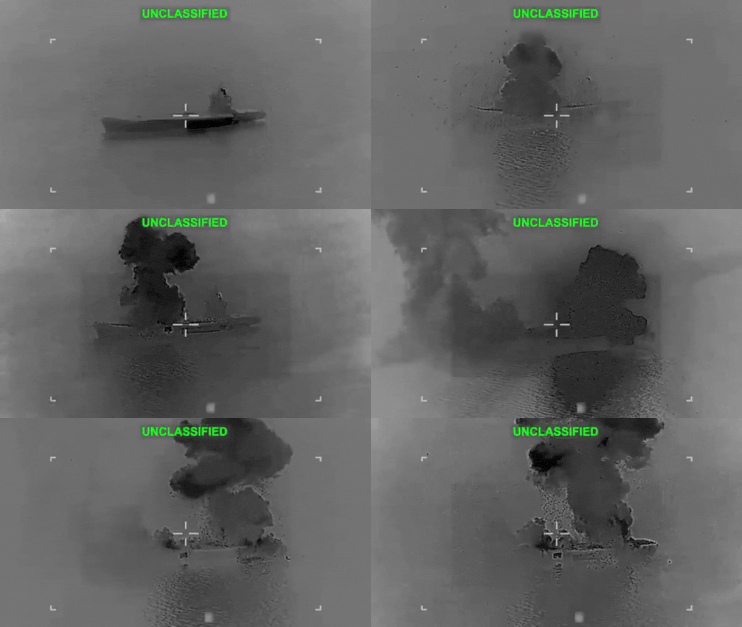
Amidst escalating tensions in the Red Sea, a striking video shared by US Central Command (CENTCOM) recently sent ripples across global geopolitical circles, particularly with its provocative caption: “Mission to sink navy.” The footage, depicting a precision strike on what CENTCOM described as Iranian-backed Houthi maritime assets, underscores the volatile situation in one of the world’s most critical shipping lanes. While the specific target was detailed as Houthi unmanned surface vessels (USVs) and other maritime drones, the underlying message points towards a broader confrontation against capabilities the U.S. attributes directly to Iran’s influence in the region.
CENTCOM’s Stark Warning and the Red Sea Front
The video released by CENTCOM illustrated a definitive engagement, showcasing the destruction of Houthi maritime assets in the Red Sea and Gulf of Aden. These unmanned surface vessels, often laden with explosives, have been repeatedly used by the Yemen-based Houthi rebels in their attacks against commercial shipping and naval vessels. CENTCOM’s statement accompanying the video made it clear: these actions are part of a concerted effort to degrade the Houthis’ ability to threaten international maritime commerce, an effort primarily spearheaded by Operation Prosperity Guardian, a multinational initiative to safeguard freedom of navigation.
The phrase “Mission to sink navy” carries significant weight. It implies a strategic objective far beyond mere defensive interception. By targeting these Houthi USVs and other maritime drones, the US is not just responding to individual attacks but aiming to dismantle the very naval capabilities that enable these assaults. The US narrative consistently links these Houthi capabilities – from their advanced drones to their ballistic missiles – directly to Iranian material support, training, and intelligence. Thus, while the strike itself was on Houthi assets, the subtext of CENTCOM’s message points towards the ultimate enabler: Iran.
The Red Sea, connecting the Indian Ocean to the Mediterranean via the Suez Canal, is an economic lifeline for global trade, including a significant portion of India’s import and export traffic. The Houthis’ persistent attacks, initiated in solidarity with Palestinians amidst the Gaza conflict, have forced many shipping companies to re-route vessels around the Cape of Good Hope, adding considerable time and cost to journeys. This disruption has had a tangible impact on global supply chains and freight insurance premiums, making the US and its allies’ intervention a critical, albeit risky, move to restore stability.
Geopolitical Currents and India’s Maritime Stakes
The escalating confrontation in the Red Sea is a direct spillover from the broader geopolitical instability gripping the Middle East. The Israel-Hamas conflict has reinvigorated various proxy groups, with Iran playing a central role in supporting non-state actors like the Houthis, Hezbollah in Lebanon, and various militias in Iraq and Syria. The US perceives these groups as extensions of Iran’s regional foreign policy, aiming to challenge American and allied influence and to project Tehran’s power. The “Mission to sink navy” serves as a robust warning against continued Iranian-backed aggression.
For India, a major maritime nation with deep economic ties to the Middle East and Europe, the situation in the Red Sea is a matter of profound concern. A substantial volume of India’s crude oil imports and merchandise exports transit through these waters. The safety of Indian-flagged vessels and the freedom of navigation are paramount to its economic stability and energy security. The Indian Navy has significantly augmented its presence in the Arabian Sea and Gulf of Aden, deploying destroyers and patrol vessels for anti-piracy and anti-drone operations, underscoring New Delhi’s proactive approach to protecting its maritime interests.
India’s diplomatic stance has consistently called for de-escalation of tensions and adherence to international law, emphasizing the importance of freedom of navigation. While not part of Operation Prosperity Guardian, India maintains its independent maritime security deployments, collaborating with international partners on a case-by-case basis. The implicit targeting of Iranian-backed capabilities by the US, however, places India in a delicate position, balancing its strategic partnership with the US with its historical ties and energy dependence on Iran.
As one maritime security analyst observed, “Actions in the Red Sea have immediate and profound implications for global trade and geopolitical stability, affecting nations far beyond the immediate conflict zone. India, with its extensive maritime interests, remains a key stakeholder closely monitoring every development.” This sentiment highlights the interconnectedness of regional security with broader global economic and strategic interests.
Conclusion: A Precarious Balance
The release of CENTCOM’s video and its stark caption signals an undeniable hardening of resolve from the US against threats in the Red Sea, firmly attributing them to Iran and its proxies. While it aims to deter future attacks and secure vital shipping lanes, such assertive actions also carry the inherent risk of further escalation, potentially drawing the US into a more direct confrontation with Iran. The coming months will be crucial in determining whether this “mission to sink navy” achieves its objectives of restoring maritime stability or inadvertently triggers a wider regional conflict.
For nations like India, the evolving situation demands a careful calibration of foreign policy and security strategies. Safeguarding its economic lifelines while navigating the complex geopolitical currents of the Middle East remains a formidable challenge, emphasizing the need for robust diplomatic engagement and a strong, independent naval presence in its extended maritime neighbourhood.
Meta Title: US CENTCOM Strikes Houthi Drones, Signals Iran
Meta Description: US Central Command’s video of a strike on Iranian-backed Houthi maritime drones in the Red Sea signals escalating tensions and global concerns.
Tags: Red Sea, US CENTCOM, Houthi, Iran, Maritime Security, Indian Navy, Geopolitics, Middle East Conflict

