


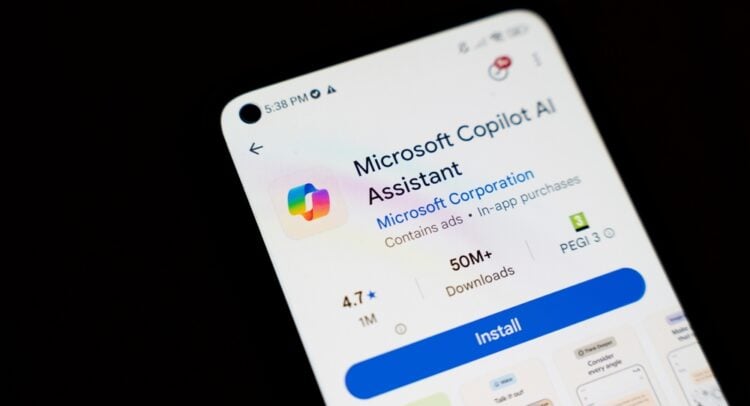
Microsoft, a leading player in the rapidly evolving artificial intelligence landscape, has recently seen its stock performance influenced by factors beyond mere technological breakthroughs. Amidst the excitement and rapid advancements, a nuanced human element is emerging, where the very personal and sometimes unconventional ways users engage with AI are starting to capture market attention and, consequently, investor sentiment.
The Blurring Lines of Human-AI Interaction
The rise of sophisticated AI models has opened doors to interactions that were once the stuff of science fiction. Users are no longer just asking AIs to write code or summarize documents; they are seeking companionship, emotional support, and engaging in deeply personal conversations. This includes everything from confiding daily struggles to exploring philosophical questions, and in some instances, even pushing boundaries into role-play or attempts at forming quasi-relationships with the AI itself.
This evolving dynamic, while fascinating, introduces a new layer of complexity. As one AI enthusiast, Sarah Chen, put it, “It’s fascinating to see how quickly people start treating these models as confidantes. We’re exploring boundaries none of us really anticipated.” The sheer novelty means there are no established social norms for these interactions, leading to a wide spectrum of user behavior, some of which can be perceived as “unusual” or “weird” from a traditional human perspective. This isn’t necessarily a critique of users, but an acknowledgment of how quickly people adapt to and personalize new technologies.
Market Implications: Reputation, Trust, and Regulation
The market’s reaction to these deeply personal human-AI interactions isn’t just about the technology’s capability; it’s fundamentally about its societal integration and the potential risks it introduces. When user interactions become overly personal or veer into ethically ambiguous territory, it raises several red flags for investors:
- Brand Reputation and Trust: If AI models are perceived as facilitating problematic or unsafe interactions, it can severely damage the brand image of the developer. Public perception of AI being “creepy” or “unstable” can erode trust, impacting adoption rates and future growth.
- Ethical Development Challenges: Ensuring AI models are safe, fair, and unbiased, especially when dealing with sensitive user input, becomes an even greater challenge. Developers must invest heavily in guardrails, content moderation, and ethical guidelines, which can be costly and slow down product development.
- Privacy Concerns: The sharing of deeply personal information with AI raises significant privacy questions. How is this data stored? Who has access? The potential for misuse or data breaches in such sensitive contexts is a major concern.
- Regulatory Scrutiny: As these human-AI dynamics become more prevalent, the likelihood of governmental oversight and regulation increases. New laws around data privacy, AI ethics, and user protection could impact operational costs and restrict certain functionalities.
For investors, these concerns translate into perceived instability and potential long-term liabilities. They look for predictable growth and ethical operations. The current landscape, with its nascent and sometimes unpredictable human-AI dynamics, introduces an element of uncertainty that can make them hesitant.
Navigating the Future of AI Development
The fluctuations in Microsoft’s stock, therefore, serve as a potent reminder that the success of AI isn’t solely about processing power or algorithmic sophistication. It’s increasingly intertwined with the complex, sometimes unpredictable, psychology of human interaction. The challenge for Microsoft, and indeed the entire AI industry, is to balance rapid innovation with a profound sense of responsibility. This means not just building smarter AI, but building AI that can gracefully navigate the full spectrum of human engagement, fostering positive interactions while mitigating the risks posed by those that are less straightforward.
Ultimately, the market is signaling a demand for maturity in the AI space—a call for developers to deeply understand the human element and proactively shape the future of these incredibly personal relationships we are forming with machines.

