


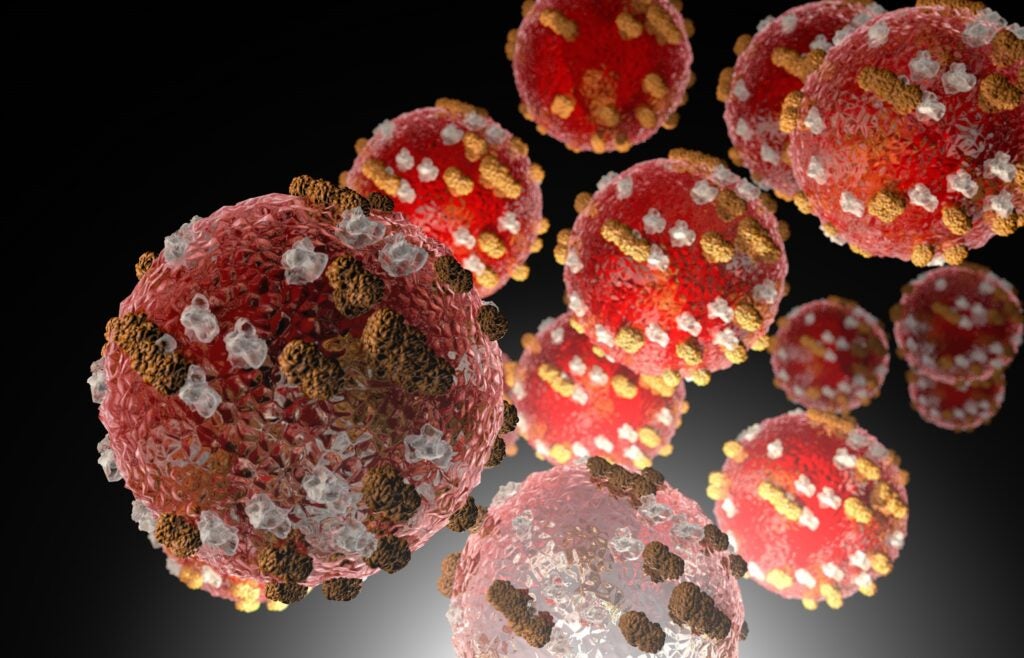
In a world increasingly awash with health information, both accurate and misleading, a concerning myth has resurfaced alongside recent measles outbreaks in parts of India: the belief that contracting measles might offer protection against cancer. As public health officials grapple with rising cases, particularly in urban centres and densely populated regions, medical experts are stepping forward with a unified caution: this notion lacks any scientific basis and is, in fact, dangerously misleading.
The Persistent Myth: Measles and Cancer Protection
The idea that a childhood viral infection like measles could ward off a complex disease like cancer is not new, though it gains renewed traction with every public health scare. This misconception likely stems from a conflation of several unrelated observations. For instance, some highly modified viruses are indeed being explored in cutting-edge oncolytic virotherapy – a controlled, targeted treatment where viruses are engineered to infect and destroy cancer cells. However, this sophisticated medical intervention bears no resemblance to natural measles infection.
Historically, anecdotal reports or misinterpreted early-stage research might have also fueled this narrative. The human body’s immune response to any severe infection is robust, and some might mistakenly equate a strong immune reaction with universal disease protection. Unfortunately, such interpretations often ignore decades of rigorous scientific study that defines the true nature of measles and its long-term effects.
Expert Consensus: No Scientific Basis
Medical and public health bodies worldwide, including the World Health Organization (WHO) and India’s own health authorities, unequivocally state that there is no scientific evidence to support any protective link between natural measles infection and a reduced risk of cancer. On the contrary, measles is a severe and highly contagious disease with known, significant health risks.
“There is absolutely no scientific evidence to support the claim that natural measles infection protects against cancer,” cautions Dr. Priya Sharma, a leading oncologist and public health advocate based in Bengaluru. “In fact, measles significantly weakens the immune system, making an individual more susceptible to secondary infections and complications, potentially even months after the initial illness. Promoting such a myth not only undermines public health efforts but also puts individuals at grave risk by discouraging proven preventive measures.”
Measles works by suppressing the immune system, leaving the body vulnerable to bacterial infections like pneumonia and ear infections, and in severe cases, complications like encephalitis (brain swelling). Far from bolstering immunity against complex diseases like cancer, it temporarily compromises the body’s natural defences, which are crucial for combating abnormal cell growth and disease.
The Real Threat: Dangers of Measles and Importance of Vaccination
The true dangers of measles are well-documented and devastating, particularly in developing countries like India where malnutrition can exacerbate outcomes. Complications range from severe diarrhoea and pneumonia to blindness, deafness, and even brain damage. Globally, measles remains a significant cause of vaccine-preventable child mortality. The resurgence of cases in India highlights the critical importance of maintaining high vaccination coverage.
The Measles-Rubella (MR) vaccine, or the combined Measles, Mumps, and Rubella (MMR) vaccine, is a safe, effective, and scientifically proven way to protect against measles. It works by introducing a weakened form of the virus, allowing the immune system to develop antibodies without experiencing the full-blown disease. Widespread vaccination not only protects the individual but also contributes to herd immunity, safeguarding those who cannot be vaccinated due to age or medical conditions.
Misinformation campaigns, often amplified by social media, pose a serious threat to public health by fostering vaccine hesitancy and encouraging risky behaviours based on unsubstantiated claims. It is imperative that individuals rely on credible sources of information, such as healthcare professionals and established public health organizations, to make informed decisions about their health and the health of their families.
In conclusion, while the allure of a simple, natural “cure” for complex diseases like cancer can be powerful, it is crucial to differentiate between scientific fact and unfounded rumour. Experts are clear: measles infection does not protect against cancer. The only proven protection against measles itself, and its myriad complications, remains timely and complete vaccination.
—

