


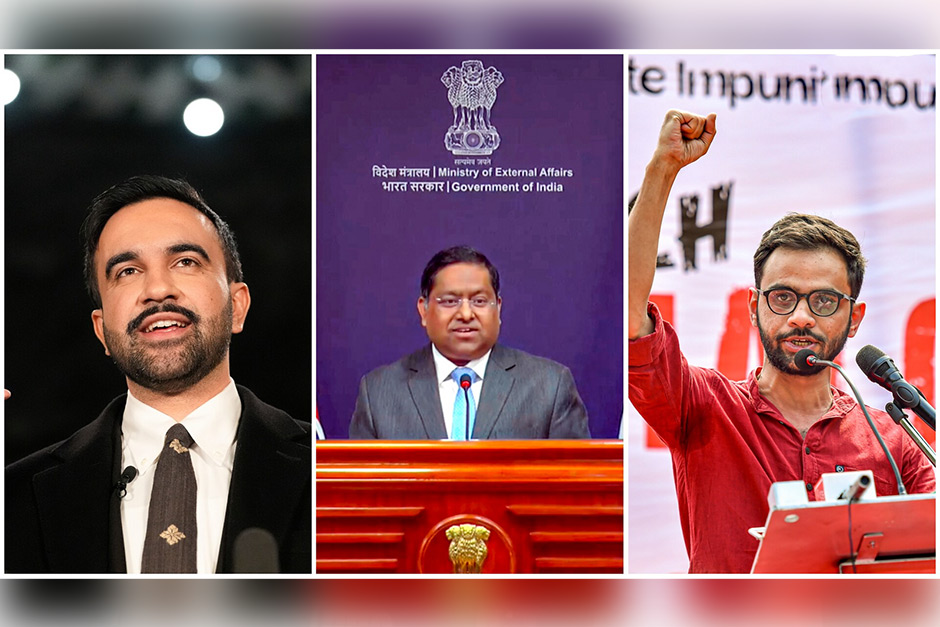
In a recent diplomatic exchange that underscored India’s firm stance on its internal judicial processes, the Ministry of External Affairs (MEA) delivered a sharp rebuke to New York State Assembly member Zohran Mamdani. The controversy erupted after Mamdani penned a letter to incarcerated Indian activist Umar Khalid, prompting the MEA to dismiss the gesture as merely “expressing personal prejudices” and reflecting a “grossly misinformed” understanding of India’s legal system. The incident has once again highlighted India’s consistent position against external interference in its sovereign affairs, particularly concerning matters under judicial review.
The Catalyst: Mamdani’s Letter to Khalid
The genesis of this diplomatic spat lies in a letter written by Zohran Mamdani, an elected representative in the New York State Assembly of Indian origin, addressed to Umar Khalid. Khalid, a former Jawaharlal Nehru University (JNU) student activist, has been in pre-trial detention since September 2020 under the stringent Unlawful Activities (Prevention) Act (UAPA). He stands accused of being a conspirator in the February 2020 Delhi riots, charges he and his legal team vehemently deny.
Mamdani’s letter, which gained significant traction on social media, expressed solidarity with Khalid, describing him as a “political prisoner.” The letter not only voiced concerns over Khalid’s prolonged detention without trial but also alluded to what Mamdani perceived as a broader crackdown on dissent and human rights in India. He urged for Khalid’s release and called for an impartial judicial process, thereby entering a domain that India unequivocally considers its sovereign internal matter. Coming from a foreign elected official, the letter was seen by many as an attempt to exert external pressure on India’s judiciary and legal system.
MEA’s Strong Rebuke: Upholding Sovereignty
The Indian Ministry of External Affairs wasted no time in issuing a strong rebuttal. Speaking to the media, MEA spokesperson Arindam Bagchi articulated India’s categorical rejection of Mamdani’s assertions. The MEA termed the letter as an outcome of a “grossly misinformed” perspective, lacking a comprehensive understanding of India’s robust legal framework and independent judiciary.
The core of India’s response revolved around the principle of non-interference in the internal affairs of a sovereign nation. The MEA emphasized that the Indian judiciary operates with complete independence, guided by established laws and due process. Khalid’s case, like any other, is proceeding through the courts, where legal remedies and safeguards are available. The Ministry made it clear that characterizations such as “political prisoner” are not only unwarranted but also reflect a biased and prejudiced viewpoint.
During the press briefing, a spokesperson for the MEA stated, “Such remarks by a foreign lawmaker not only reflect a poor understanding of India’s constitutional and legal framework but are also an expression of personal prejudices. India’s judiciary is independent and functions on the basis of due process, and any external commentary attempting to cast aspersions on it is unwarranted and unacceptable.” This direct and unequivocal statement underscored India’s resolve to counter narratives that it perceives as undermining its democratic institutions and judicial integrity.
Broader Implications: Diplomacy and Domestic Justice
This incident is not an isolated one but rather indicative of a recurring theme in India’s diplomatic engagements, especially with Western nations and their political representatives. India has consistently pushed back against international scrutiny or commentary on its human rights record, treatment of minorities, or judicial processes, particularly when such comments originate from foreign political figures who may not have a complete grasp of the complex ground realities or legal intricacies.
The government views such interventions as an overreach and an attempt to meddle in its internal affairs, often driven by selective information or ideological biases. The swiftness and firmness of the MEA’s response to Mamdani’s letter send a clear message: India is confident in the fairness and independence of its legal system and will not tolerate external attempts to influence or discredit it. This stance is crucial for upholding national sovereignty and ensuring that domestic justice systems are not subject to unwarranted foreign pressure.
Furthermore, such episodes often ignite debates within India about the role of the diaspora and foreign-origin politicians in shaping narratives about the country. While some view it as a legitimate expression of concern, others see it as a misguided attempt to dictate India’s internal policies, often without understanding the full context or the democratic safeguards in place.
The MEA’s sharp response to Zohran Mamdani’s letter to Umar Khalid serves as a potent reminder of India’s unwavering commitment to safeguarding its judicial independence and sovereignty. By unequivocally dismissing the letter as an expression of “personal prejudices” and a “grossly misinformed” viewpoint, India has reiterated its position: its legal processes are internal matters, and external interference, especially from foreign political entities, will be met with a firm and articulate rejection. This incident underscores the continued importance for diplomatic channels to respect national sovereignty and the integrity of independent judicial systems worldwide.
*

