


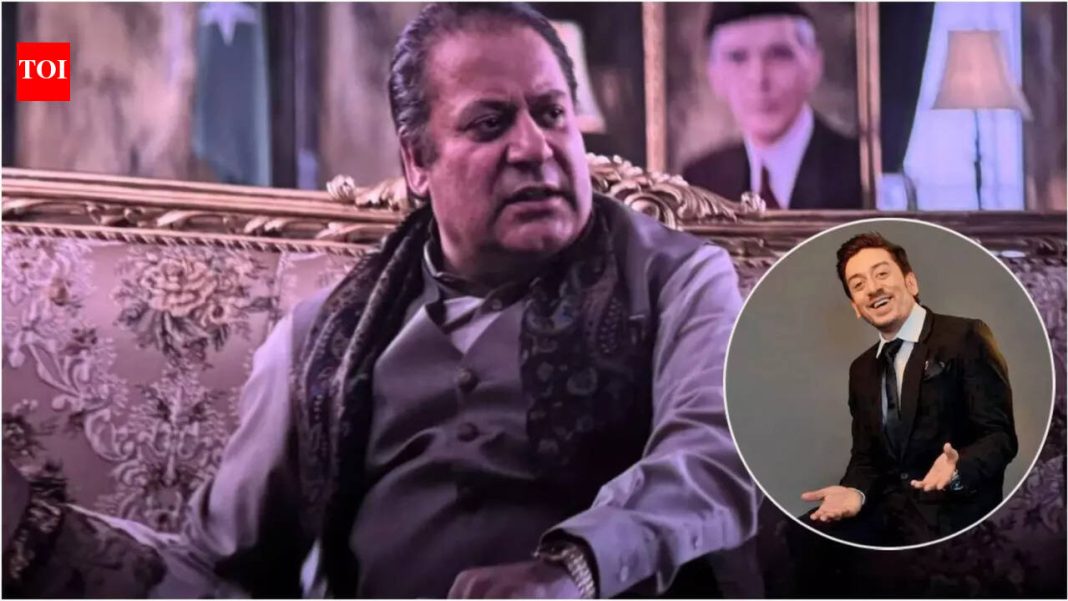
In the dynamic landscape of Indian cinema, where visual storytelling often pushes boundaries, an actor’s ability to undergo a profound metamorphosis for a role invariably captures the collective imagination. Such is the buzz surrounding veteran actor Mashhoor Amrohi’s startling transformation into the enigmatic Nawab Shafiq for the much-anticipated film, ‘Dhurandhar: The Revenge’. The initial glimpses of Amrohi in character have ignited widespread discussion, with many viewers finding his portrayal so remarkably different from his usual persona that a curious speculation has emerged: “Some are saying that it’s AI,” Amrohi himself remarked, highlighting the sheer disbelief his new avatar has generated.
The Genesis of Nawab Shafiq: A Challenge Embraced
The character of Nawab Shafiq in ‘Dhurandhar: The Revenge’ is reportedly a complex antagonist, rooted deeply in a historical or period setting, demanding not just a change in appearance but a complete psychological overhaul. For Mashhoor Amrohi, known for his nuanced performances across various genres, this role presented a unique canvas. The director, whose vision often drives such dramatic transformations, reportedly had a very specific image for Nawab Shafiq – a figure of aged gravitas, cunning intelligence, and a distinct aristocratic bearing that transcends mere cosmetic adjustments. Achieving this required Amrohi to delve into a character study that went far beyond surface-level acting.
Sources close to the production indicate that Amrohi immersed himself in extensive research, exploring historical figures and social etiquette of the era to authentically embody Shafiq. This wasn’t merely about adopting a dialect or a specific posture; it was about understanding the very worldview of a character from a different time, complete with their inherent prejudices, power dynamics, and subtle mannerisms. The challenge was to create a persona that felt lived-in and organic, rather than a mere caricature.
Beyond Prosthetics: The Art of Internal Transformation
The speculation about AI-generated visuals for Mashhoor Amrohi’s Nawab Shafiq is a testament to the effectiveness of his transformation. However, Amrohi clarifies that this striking metamorphosis is the result of painstaking human effort and artistry. “Some are saying that it’s AI,” he mentioned, reflecting on the audience’s reaction, “but it’s all organic. It’s a lot of work from the makeup team, the costume designers, and my own preparation.” This statement underscores the collaborative genius behind the illusion.
The process reportedly began months before filming, with workshops focusing on body language and voice modulation. Amrohi worked closely with dialect coaches to refine Nawab Shafiq’s speech patterns, ensuring they conveyed both authority and the specific regional nuances required. Physically, he underwent rigorous training to adapt his posture and gait, shedding his contemporary bearing to adopt the more measured and often rigid demeanour of an older aristocratic figure. This included extensive sessions with prosthetics experts and makeup artists who meticulously crafted every wrinkle, every change in skin texture, and even the subtle effects of age on the eyes and hair, ensuring they seamlessly integrated with Amrohi’s natural features rather than appearing as an add-on.
Costume designers also played a pivotal role, meticulously curating Nawab Shafiq’s wardrobe to reflect his status and era, further enhancing the character’s visual impact. Each element, from the fabric choices to the intricate embroidery, was designed to contribute to the overall authenticity. This holistic approach, where every department aligns to create a singular vision, is what ultimately blurs the line between actor and character, making the transformation so convincing that it sparks the “AI” debate.
A Testament to Method and Dedication
Mashhoor Amrohi’s dedication to becoming Nawab Shafiq is a powerful reminder of the enduring power of method acting in Indian cinema. In an age where digital enhancements are increasingly prevalent, Amrohi’s organic, deeply internalised transformation stands out as a beacon of traditional craft. His willingness to completely shed his established image and immerse himself so thoroughly in a challenging role not only elevates his performance but also sets a new benchmark for character portrayals.
The conversation around whether his look is AI-generated, while amusing, inadvertently highlights the profound success of his efforts and the artistry of the entire team. It proves that when human creativity, dedication, and collaborative effort come together, the results can be so extraordinary that they defy easy explanation. As ‘Dhurandhar: The Revenge’ prepares for its release, the anticipation around Mashhoor Amrohi’s Nawab Shafiq only continues to grow, promising a performance that will likely be discussed for years to come.

