


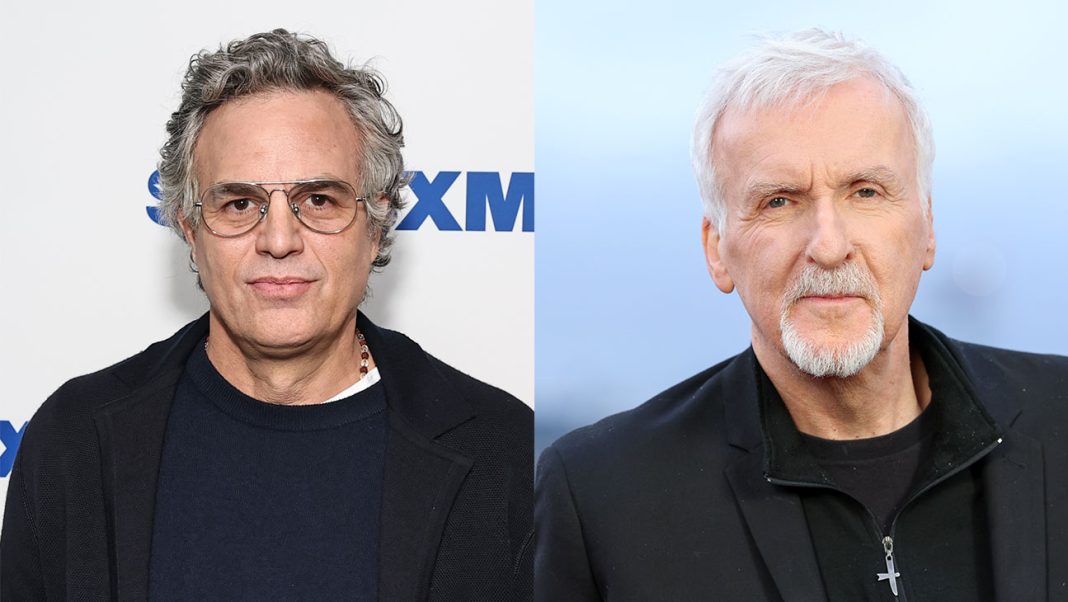
The ever-shifting sands of Hollywood’s landscape have once again kicked up a storm of discussion, and this time, it’s not just studio heads and financial analysts doing the talking. It’s the creatives themselves, prompting questions that cut to the heart of artistic integrity versus corporate strategy. Leading the charge with a notably pointed query is Mark Ruffalo, the beloved Hulk actor, who recently put legendary director James Cameron on the spot. The essence of Ruffalo’s question? A perceived inconsistency in Cameron’s stance on major studio deals: why be vocally against the Netflix-Warner Bros. deal, yet seemingly supportive or silent regarding Paramount’s fate?
The Cameron Conundrum: A Tale of Two Studios?
James Cameron is a titan of cinema, a visionary whose films push the boundaries of technology and storytelling. When he speaks, Hollywood listens. His previous criticisms regarding certain industry consolidations, particularly those involving Warner Bros. and its content strategy with Netflix, have often centered on concerns about the erosion of cinematic experience, the sanctity of theatrical releases, and perhaps the commodification of art. These are valid points, resonating with many who fear the impersonal grip of streaming giants on the creative process.
However, Ruffalo’s challenge shines a spotlight on a potentially different perspective. If the concern is truly about preserving legacy studios and artistic control, why the apparent quietude, or even implicit approval, when it comes to Paramount? Is it about the specifics of the deals – the buyer, the terms, the perceived impact on creative freedom? Or is it a more nuanced position, where some mergers are seen as necessary evils or even beneficial realignments, while others threaten the very soul of filmmaking as Cameron knows it? This isn’t just a trivial celebrity squabble; it highlights the complex, often contradictory pressures faced by those at the pinnacle of the film industry.
Navigating Hollywood’s Evolving Chessboard
The truth is, Hollywood is undergoing a seismic transformation, driven by technological advancements, changing audience habits, and an insatiable demand for content. Studio consolidation isn’t a new phenomenon, but the pace and scale of recent mergers and acquisitions feel unprecedented. Every major player is scrambling to secure intellectual property, expand their global reach, and build robust streaming libraries. In this high-stakes game, studios like Warner Bros. and Paramount, each with their rich histories and iconic franchises, become valuable pawns or, depending on your view, prized jewels.
For filmmakers like Cameron, known for crafting immersive, grand-scale cinematic experiences, the stakes are profoundly personal. The fear is often that creative integrity will be diluted, that storytelling will be dictated by algorithms and quarterly earnings calls rather than artistic vision. Yet, the financial realities are inescapable. As one industry analyst, Dr. Eleanor Vance, recently noted, “It’s not simply about ‘good’ or ‘bad’ deals; it’s about survival and adaptation in a market that demands constant evolution. Directors like Cameron have a right to their artistic concerns, but the business side of Hollywood waits for no one.”
The Heart of the Matter: Art, Commerce, and Consistency
Ruffalo’s direct question forces us to consider the underlying philosophy behind such public stances. Is Cameron’s concern genuinely universal for the preservation of traditional cinema, or does it manifest more strongly when specific deals or entities challenge his particular vision or interests? Perhaps his perspective on Paramount involved a belief that its path, whatever it was, offered a better chance for its legacy and unique identity to persist, or at least a less damaging alternative than the Warner Bros. scenario in his eyes. Without direct clarification from Cameron, it remains a fascinating point of conjecture.
Ultimately, this isn’t just about James Cameron or Mark Ruffalo. It’s about the broader conversation Hollywood needs to have with itself: how do you balance the relentless march of commerce with the invaluable, often fragile, art of storytelling? Ruffalo’s question isn’t accusatory so much as it is an invitation for transparency, a request for the complex calculus behind these seemingly inconsistent positions to be laid bare for those who love cinema, both behind and in front of the camera.

