


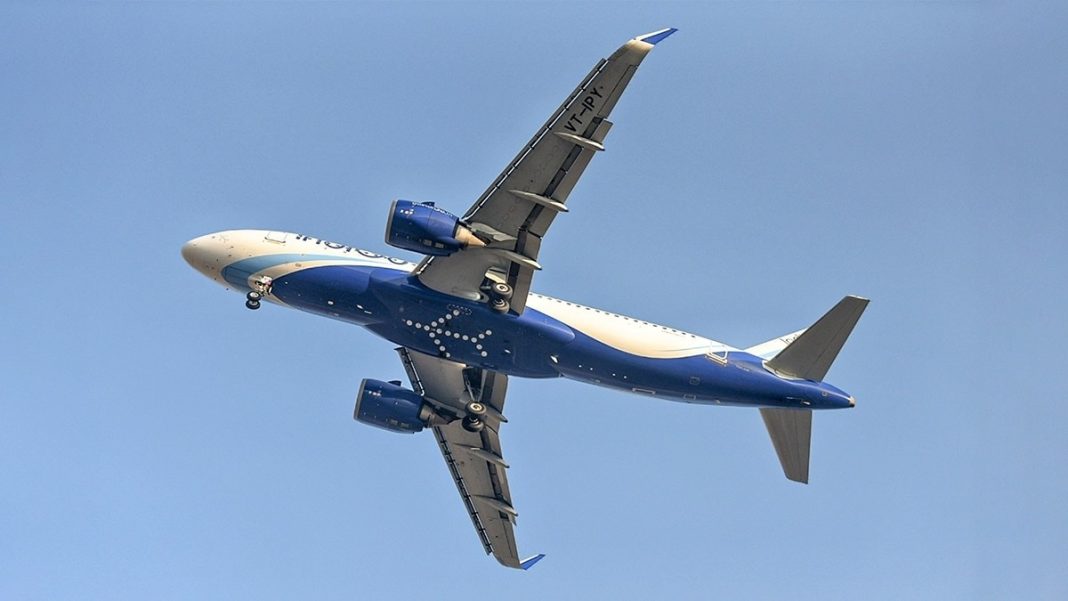
The hum of jet engines, the anticipation of a distant destination, and then, a sudden, unexpected pivot – this was the reality for hundreds of passengers aboard IndiGo flight 6E-17, bound for Manchester from Delhi. Hours into its journey, the aircraft executed a dramatic U-turn near the Ethiopian border, turning its nose back towards India and eventually landing safely back at Indira Gandhi International Airport (IGIA) in Delhi. The incident, attributed to an unspecified operational reason, underscored the non-negotiable emphasis on safety in the aviation industry, even if it meant significant inconvenience for travellers.
The Unexpected Turn: Delhi to Delhi via Ethiopia’s Borders
IndiGo flight 6E-17 departed from Delhi on its scheduled route to Manchester, UK, carrying passengers with diverse plans and expectations. The flight had traversed a significant portion of its long-haul journey, crossing international airspace and nearing the Horn of Africa, approximately 4-5 hours into its flight. It was at this juncture, close to the Ethiopian border, that the pilots made the crucial decision to turn the aircraft around and initiate a return to its origin.
The exact nature of the “operational reason” for the U-turn was not immediately specified by the airline, but such decisions are invariably rooted in safety protocols. Whether it was a technical snag, a medical emergency that required advanced facilities, or another unforeseen circumstance, the call to return to Delhi signifies that the crew deemed the originating airport as the most suitable location for resolving the issue safely and efficiently. The return journey added several more hours to an already lengthy flight, bringing the total time spent in the air to nearly 9-10 hours, only for passengers to find themselves back at the airport they had left just hours prior. This unexpected trajectory certainly left many on board bewildered and frustrated, yet it firmly highlighted the airline’s commitment to passenger well-being above adherence to schedule.
Passenger Experience and IndiGo’s Swift Response
For the hundreds of passengers aboard 6E-17, the announcement of the U-turn must have been disorienting. From the anticipation of landing in Manchester and moving onto their respective commitments, they were suddenly faced with the prospect of returning to Delhi and an uncertain onward journey. The ordeal involved not just the physical discomfort of prolonged air travel but also the mental stress of disrupted plans, missed connections, and the unknown.
Upon the flight’s safe landing back at IGIA, IndiGo reportedly mobilized its ground staff to assist the affected passengers. This included providing immediate refreshments, managing rebooking options on alternative flights, and arranging accommodation for those facing extended delays. The airline communicated that the decision was taken purely for safety reasons, a standard operating procedure when an in-flight issue cannot be resolved en route or when the originating airport provides the best facilities for assessment, repair, and potential aircraft replacement. The decision to return to a major hub like Delhi, rather than diverting to a closer, potentially less-equipped airport, suggests that the issue might have required the airline’s full maintenance capabilities, access to specific spare parts, or the availability of standby aircraft and crew.
An IndiGo spokesperson, addressing similar situations, commented, “The safety of our passengers and crew is paramount. Our pilots are trained to make critical decisions that prioritize well-being above all else. While we regret the inconvenience caused, these diversions are a testament to the rigorous safety standards we uphold, ensuring that no stone is left unturned when it comes to operational integrity and passenger security.” This statement underscores the airline’s perspective on such incidents – a necessary measure, however inconvenient, to uphold the highest safety benchmarks.
Aviation Safety: A Non-Negotiable Priority
Incidents like IndiGo flight 6E-17’s U-turn, though relatively rare, serve as potent reminders of the complex and robust safety architecture governing modern air travel. Airlines operate under stringent regulations set by bodies like India’s Directorate General of Civil Aviation (DGCA) and international organizations such as ICAO. Every aircraft undergoes meticulous pre-flight checks, and flight crews are rigorously trained to handle a myriad of in-flight scenarios, from minor technical glitches to more severe emergencies.
A U-turn from international airspace, especially over remote regions, is not a snap decision. It is often the result of a well-thought-out assessment by the flight crew and the airline’s operations control centre, considering factors like the nature of the snag, the closest suitable diversion airports, the capabilities available at different locations, and the time remaining in the flight. Returning to a home base or a major hub like Delhi often ensures access to the airline’s full suite of maintenance facilities, engineering expertise, and resources required for a comprehensive resolution, thereby minimizing further risks.
The IndiGo flight 6E-17’s unexpected return to Delhi serves as a crucial case study in the non-negotiable emphasis on safety in aviation. While undoubtedly frustrating for passengers whose travel plans were severely disrupted, the incident ultimately underscores the unwavering commitment of airlines and their crews to prioritize human life above schedule or convenience. IndiGo has confirmed its efforts to re-accommodate all affected passengers, ensuring they reach their destination safely, even if it meant taking an unexpected detour back home.
For now, this event stands as a testament to the robust safety net that ensures air travel remains one of the safest modes of transportation, even when it involves unforeseen returns.

