


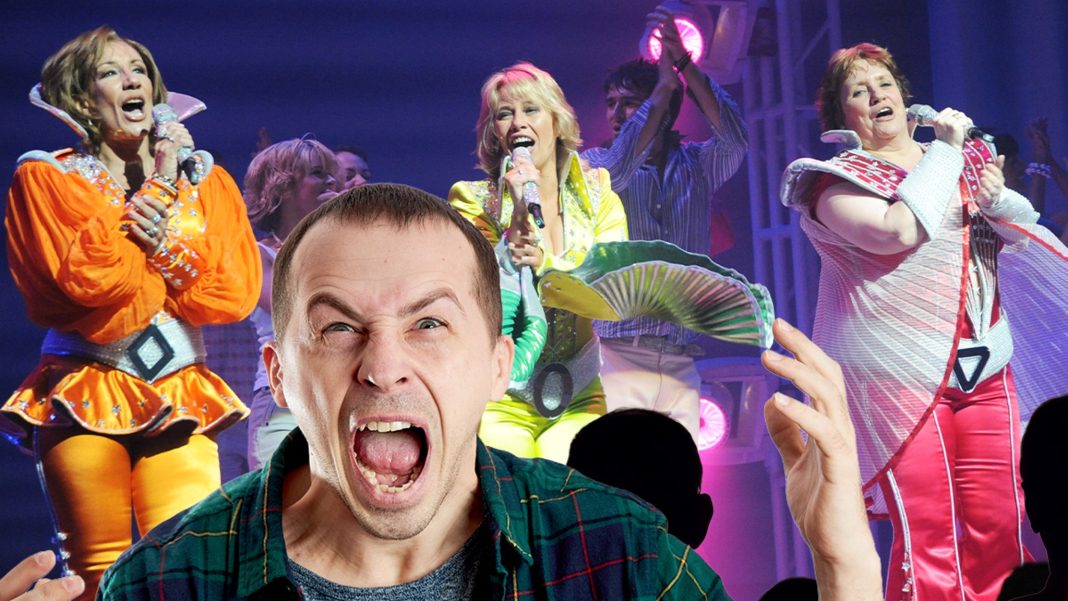
Broadway. The very word conjures images of dazzling lights, soaring melodies, and stories unfolding live before your eyes. It’s a sacred space, a shared ritual where audiences surrender to the magic, if only for a few hours. But recently, that hallowed atmosphere got a rather jarring, off-script interruption that ricocheted across the internet, leaving a collective gasp in its wake: a man, at a packed performance of Mamma Mia!, had a public meltdown that quickly went viral.
The Curtain Call That Went Off Script
Picture it: the infectious energy of a Mamma Mia! finale. The cast, bathed in the glow of the stage lights, taking their bows to thunderous applause. The audience, still buzzing from the disco-infused joy, perhaps already humming “Dancing Queen” under their breath. It’s a moment of pure, unadulterated escapism. Then, from the orchestra section, a voice shatters the illusion. Not a cheer, not a clap, but a torrent of angry, unhinged shouts directed at the stage. The entire theatre held its breath, a collective silence momentarily replacing the applause, as ushers moved in swiftly to escort the disruptive patron out.
The immediate reaction was a blend of shock, embarrassment, and a fierce protectiveness over the performers and the sanctity of the show. For many, it felt like a violation of an unspoken contract – the agreement between audience and artist to respect the space, the effort, and the shared experience. The raw, unfiltered anger of the outburst was a stark contrast to the lighthearted, celebratory mood of the musical, leaving an indelible mark on what should have been a joyful memory for many.
Beyond the Footlights: Why We’re All Talking
This wasn’t just another bad-tempered individual. The incident exploded online, fueling countless discussions and debates. Why did this particular moment resonate so deeply? Perhaps it’s because it tapped into a broader cultural nerve. In an increasingly polarized world, where boundaries often feel blurred and public civility seems to be eroding, the theatre has remained one of the few bastions of collective etiquette. This outburst felt like a direct assault on that last vestige of shared decorum.
There’s also the unique vulnerability of live theatre. Unlike film or TV, where the fourth wall is absolute, performers are right there, exposed to the immediate reactions of their audience. An unexpected shout, a disruptive phone, or a public tantrum can genuinely affect their concentration and the energy of the show. “It’s like people forgot how to just be in a room together,” mused one commenter online, encapsulating a sentiment many share about the growing struggle with public interaction and respect.
The Echo in the Digital Theatre
The virality of the incident is, of course, a critical part of its story. Someone with a phone captured the raw moment, shared it, and within hours, it was everywhere. This rapid dissemination turned a localized disruption into a global conversation about audience etiquette, mental well-being, and the pressures of public life. It sparked empathy for the performers, outrage at the perpetrator, and a collective sigh for the lost innocence of an evening out.
The digital echo chamber amplified the incident, making it a case study in how quickly a breach of decorum can become a trending topic. It forced us to confront questions about the line between passionate fandom and entitlement, and the societal pressures that might lead someone to such a public display. Was it stress? A bad day? A lack of self-awareness? The internet provided no easy answers, but it certainly provided a platform for endless speculation.
Ultimately, the Mamma Mia! incident serves as a jarring reminder of the delicate balance that sustains the magic of live performance. It’s a testament to the power of a shared experience, and how profoundly that experience can be shaken by a single, disruptive act. As we return to the communal spaces of entertainment, perhaps this viral moment will prompt a renewed appreciation for the unspoken rules that make these gatherings truly special.

